
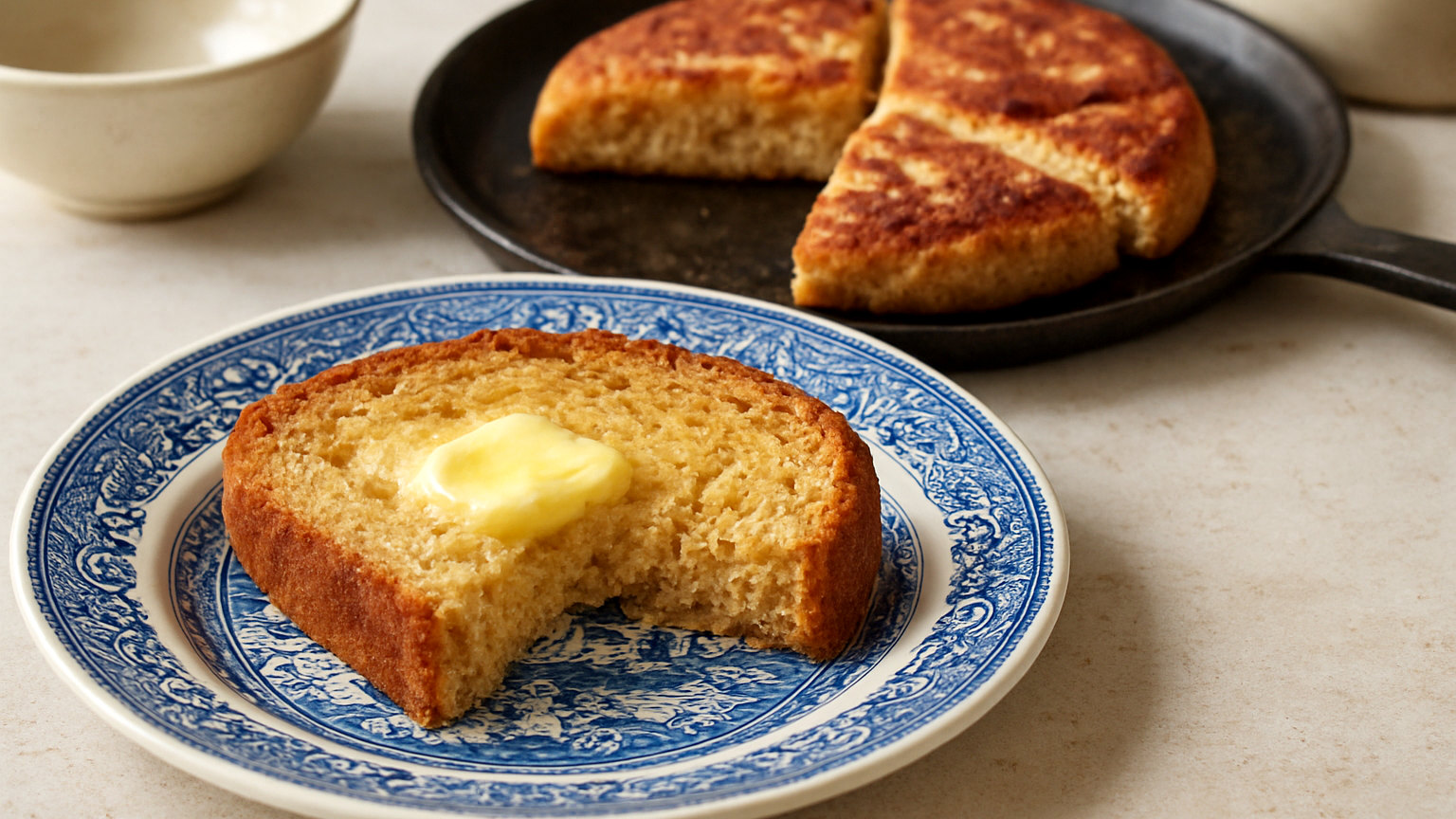
Wheaten bread is the wholemeal cousin of soda bread, baked in a loaf tin, usually with a little sugar or treacle and often with oats or seeds. It is eaten across Northern Ireland with soup, cheese, smoked salmon and butter, and it takes about ten minutes to mix. There is no kneading and no proving at all.
What do you need for a 900g loaf?
- 350g wholemeal flour
- 100g plain flour
- 50g porridge oats, plus extra for the top
- 1 and a half teaspoons bicarbonate of soda
- 1 teaspoon salt
- 2 tablespoons black treacle or 25g soft brown sugar
- 50g butter, melted
- About 450ml buttermilk
How do you make it?
- Heat the oven to 170C fan, 190C conventional, gas mark 5.
- Grease and line a 900g loaf tin.
- Combine both flours, the oats, bicarbonate of soda and salt.
- Warm the treacle with the melted butter until loose.
- Add the treacle mixture and buttermilk to the dry ingredients.
- Stir just until combined into a wet, sloppy batter.
- Scrape into the tin, level the top and scatter with oats.
- Bake for 50 to 60 minutes until it sounds hollow tapped underneath.
The mixture should be a wet batter rather than a dough. It is poured rather than shaped, and adding flour to firm it up gives a dry, heavy loaf.
Why does it need no kneading?
There is no yeast and no gluten structure to build. The lift comes entirely from bicarbonate of soda reacting with the buttermilk.
Stirring beyond the point of combining only knocks the gas out.
Why wholemeal and plain flour together?
All wholemeal gives a very dense loaf. A quarter plain flour lightens it noticeably without losing the character.
Can it be made with all wholemeal?
Yes, and the loaf is denser and heavier. Add an extra splash of buttermilk, since wholemeal absorbs more liquid.
What does the treacle do?
It adds colour, a slight bitterness and moisture, and it is traditional in many versions. Brown sugar is the milder alternative.
It can be left out entirely for a plainer loaf.
How do you know it is baked?
Turn it out and tap the base, which should sound hollow. A skewer into the centre should come out clean.
Around 55 minutes is usual for a 900g tin.
Should the oats go inside or on top?
Both. Oats in the mixture add texture and moisture, and a scattering on top gives the characteristic finish.
Why does it crack on top?
The crust sets before the loaf has finished rising, which is normal and expected in soda breads.
Should it be sliced thickly?
Fairly thickly, about 1.5cm, since it is a close textured loaf and thin slices crumble.
Butter it generously while it is still slightly warm.
What is it eaten with?
Butter above all, then soup, cheese, smoked salmon or ham. It is standard in cafes across Northern Ireland.
Why does it sink in the middle?
Usually underbaking, since the batter is wet and takes longer than it looks. Give it the full hour if in doubt.
Too much bicarbonate of soda causes the same fault.
Can you add seeds?
Sunflower, pumpkin or linseed all work, about 50g stirred in with the dry ingredients.
Why is it baked in a tin?
The batter is too wet to hold a free standing shape, unlike a white soda loaf which is stiff enough to shape by hand.
A tin also gives the even slices it is usually cut into.
What is the difference from soda bread?
Wheaten bread is wholemeal, usually sweetened slightly and baked in a tin as a wet batter. White soda bread is a shaped dough, plain and often griddled.
Both use the same raising method.
How long does it keep?
Three days wrapped, which is longer than white soda bread. It freezes for three months, whole or sliced.
It is very good toasted on the second and third days.
See also Soda Bread and Soda Farls, or browse more Regional recipes.


