
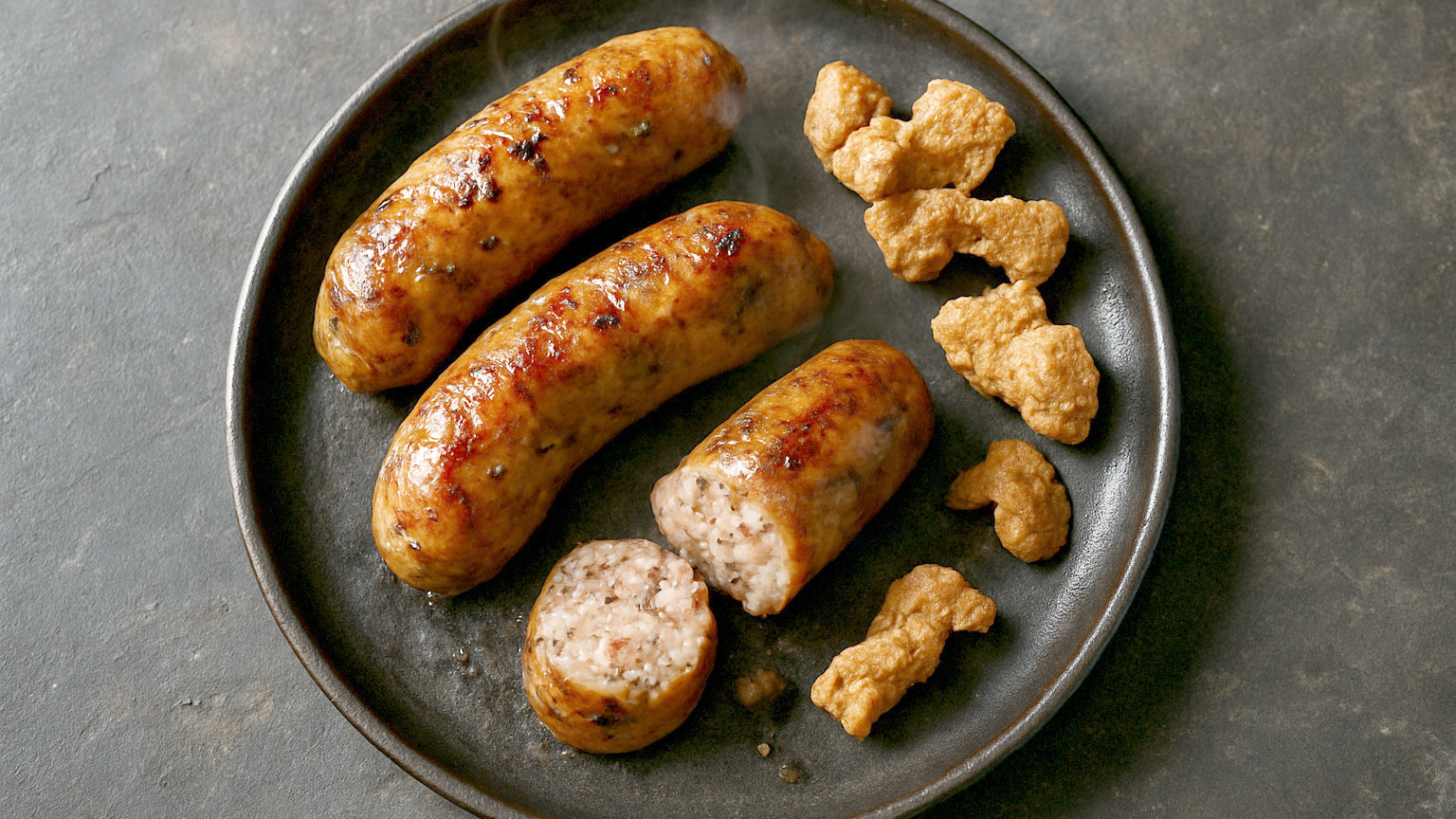
A Lincolnshire sausage is defined by two things: a coarse open texture and a generous quantity of sage. It is not smooth, it is not heavily spiced and it contains no herbs beyond the sage in the traditional version. Making them at home is straightforward if you can get casings, and the flavour is considerably better than most bought sausages.
What do you need for about 12 sausages?
- 800g pork shoulder, cubed
- 200g pork back fat, cubed
- 2 tablespoons chopped fresh sage, or 2 teaspoons dried
- 2 teaspoons salt
- 1 teaspoon ground white pepper
- 75g fresh breadcrumbs or rusk
- 75ml very cold water
- Natural hog casings, soaked
How do you make them?
- Chill the meat and fat thoroughly, almost to freezing.
- Mince coarsely through a large plate, or chop by hand.
- Mix with the sage, salt, pepper, breadcrumbs and cold water.
- Fry a small patty and taste for seasoning.
- Soak the casings in cold water for 30 minutes and rinse them through.
- Fill the casings without packing them too tightly.
- Twist into links of about 12cm, alternating direction each time.
- Rest in the fridge overnight before cooking.
Keep everything as cold as possible. Warm fat smears rather than staying in distinct pieces, which gives a greasy, dense sausage instead of a coarse open one.
How much fat should there be?
Around 20 per cent, so 200g of fat to 800g of meat. Less than that gives a dry sausage whatever else is done.
Back fat is firmer and better than belly fat for this.
Why sage?
It is the traditional and defining herb of a Lincolnshire sausage and the county grew it commercially.
Be generous, since sage mellows considerably during cooking.
How cold should the meat be?
Almost frozen, with the mincer parts chilled too if possible. Warm fat smears and ruins the texture.
Why coarsely chopped?
It gives the open, meaty texture the sausage is known for. Fine mincing produces the smooth emulsified texture of a mass produced sausage.
How much sage exactly?
Two tablespoons of chopped fresh sage per kilo of meat, or two teaspoons dried. It should be clearly present without dominating.
Dried sage is stronger, so use less of it.
What is rusk for?
It absorbs juices and keeps the sausage moist. Fresh breadcrumbs do the same job.
Around 8 per cent of the total weight is traditional and modest.
Why rest them overnight?
The casings dry slightly and the seasoning distributes, both of which improve the finished sausage.
Should they be linked?
Twist into links of about 12cm, alternating the direction of the twist each time so they do not unwind.
Leave a little slack in each so the casing does not split.
How should they be cooked?
Over a medium heat for about 18 minutes, turning regularly, until browned and reaching 75C in the centre.
High heat splits the casings and burns the outside.
Should they be pricked?
No. Pricking lets fat and juices escape. Cook them gently and they will not burst.
What cut of pork should you use?
Shoulder, which has a good natural fat content and enough texture to survive coarse mincing.
Loin is too lean and gives a dry sausage.
Does the name have protection?
Lincolnshire sausage has no protected status, so it can be made anywhere. Efforts to secure protection have not succeeded.
Where do you get casings?
From a butcher or online in salted packs. Natural hog casings are the traditional choice and give the right snap.
Soak them for thirty minutes and rinse water through them before use.
Can they be made without casings?
Yes, shaped into patties or skinless sausages and chilled firm before cooking.
The flavour is the same and the texture is looser.
How do you avoid air pockets?
Fill slowly and evenly without packing tightly, and prick any visible air bubbles before twisting into links.
How long do they keep?
Three days refrigerated or three months frozen. Cook thoroughly to 75C, in line with Food Standards Agency guidance.
Next, try Lincolnshire Plum Bread, or see the rest of our Regional recipes.


