
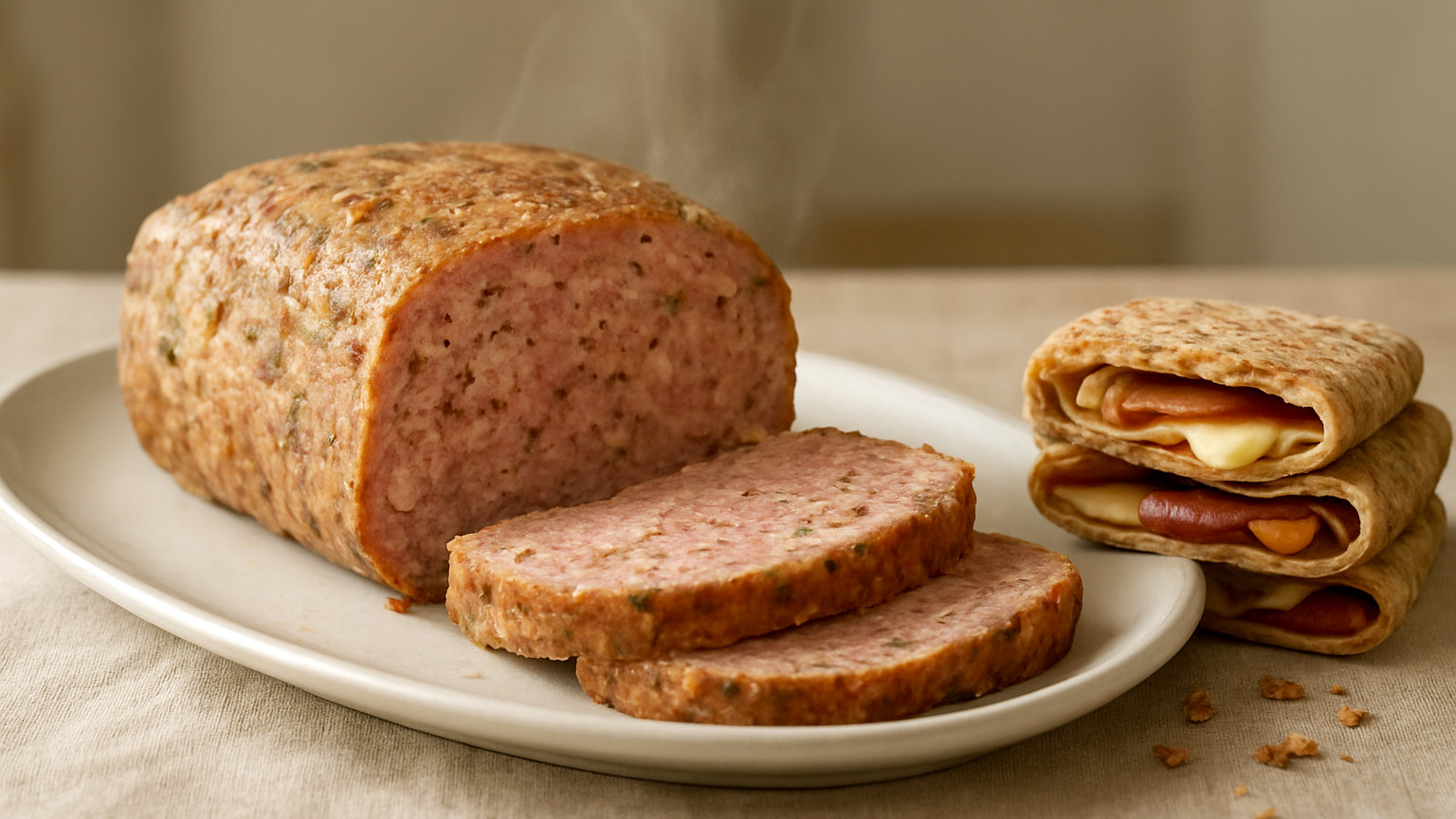
Haslet is a Lincolnshire pork loaf made from minced pork, soaked bread, onion and a great deal of sage, baked and then eaten cold in thick slices. It is closer to a coarse pate or a meatloaf than a sausage, and it is a fixture of Lincolnshire delicatessens and butchers. The name comes from an old French word for entrails, though modern haslet uses shoulder.
What do you need for one loaf?
- 750g pork shoulder, minced
- 150g pork belly or back fat, minced
- 150g stale white bread, crusts removed
- 150ml milk
- 1 large onion, very finely chopped
- 3 tablespoons chopped fresh sage
- 2 teaspoons salt and 1 teaspoon ground white pepper
- Caul fat to wrap, or streaky bacon
How do you make it?
- Soak the bread in the milk for 15 minutes, then squeeze out the excess.
- Combine the minced pork, fat, soaked bread, onion, sage and seasoning.
- Mix thoroughly with your hands for 2 minutes.
- Fry a small patty and taste it for seasoning.
- Line a 900g loaf tin with caul fat or overlapping bacon.
- Press the mixture in firmly and fold the lining over the top.
- Bake at 170C fan for 1 hour 15 minutes until it reaches 75C inside.
- Cool completely, then refrigerate overnight under a weight.
Press it under a weight overnight. That compacts the loaf so it slices cleanly instead of crumbling, and it is the difference between haslet and a loose meatloaf.
Why so much sage?
Sage is the defining flavour, as it is in Lincolnshire sausages. Three tablespoons for this quantity is right and will not taste excessive when cold.
Cold food needs more seasoning than hot.
How large should the loaf be?
A 900g tin, which gives around fifteen thick slices and is the usual size sold by butchers.
Why does bread go in?
It lightens the texture and absorbs juices, keeping the loaf moist. Without it, haslet is dense and dry.
Squeeze the milk out well before adding it.
What is caul fat for?
The lacy membrane bastes the loaf from outside as it melts and holds the shape. Streaky bacon does the same job and adds salt.
Order caul fat from a butcher in advance.
What pickle goes with it?
Piccalilli or a sharp brown pickle. Something acidic is needed against a rich pork loaf.
How is it eaten?
Cold, in thick slices, in a sandwich with mustard or pickle, or on a plate with salad.
It is never served hot.
Is it the same as a faggot?
No. Faggots use liver and are shaped into balls and baked in gravy. Haslet is a pork loaf eaten cold.
Both use caul fat, which is where the confusion comes from.
How is it different from a pork pie?
No pastry and no jelly, and the meat is finely minced with bread rather than coarsely chopped.
How do you know it is cooked?
A probe in the centre should read 75C, in line with Food Standards Agency guidance on pork.
Can other herbs go in?
Sage is the traditional and dominant one. Thyme or parsley can be added in small amounts without changing the character.
Why fry a test patty?
It is the only way to check the seasoning before an hour of baking, and this mixture needs more salt than seems right.
Can it be made without caul or bacon?
Yes, baked in a lined loaf tin, though it will be drier and paler without the fat lining basting it.
Cover it with foil for the first hour if going without.
Can it be frozen?
Yes, cooked and sliced, for three months.
Where does the name come from?
From an old French word for entrails, since haslet originally used offal. Modern versions use pork shoulder.
It is pronounced hass lit in Lincolnshire.
How thickly should it be sliced?
About 1cm, thick enough to hold together in a sandwich. It is not a delicate cold cut.
How long does it keep?
Four days refrigerated, wrapped. Cool it quickly and refrigerate within two hours.
Worth reading next: Coventry God Cakes. There is more in our Regional recipes.


