
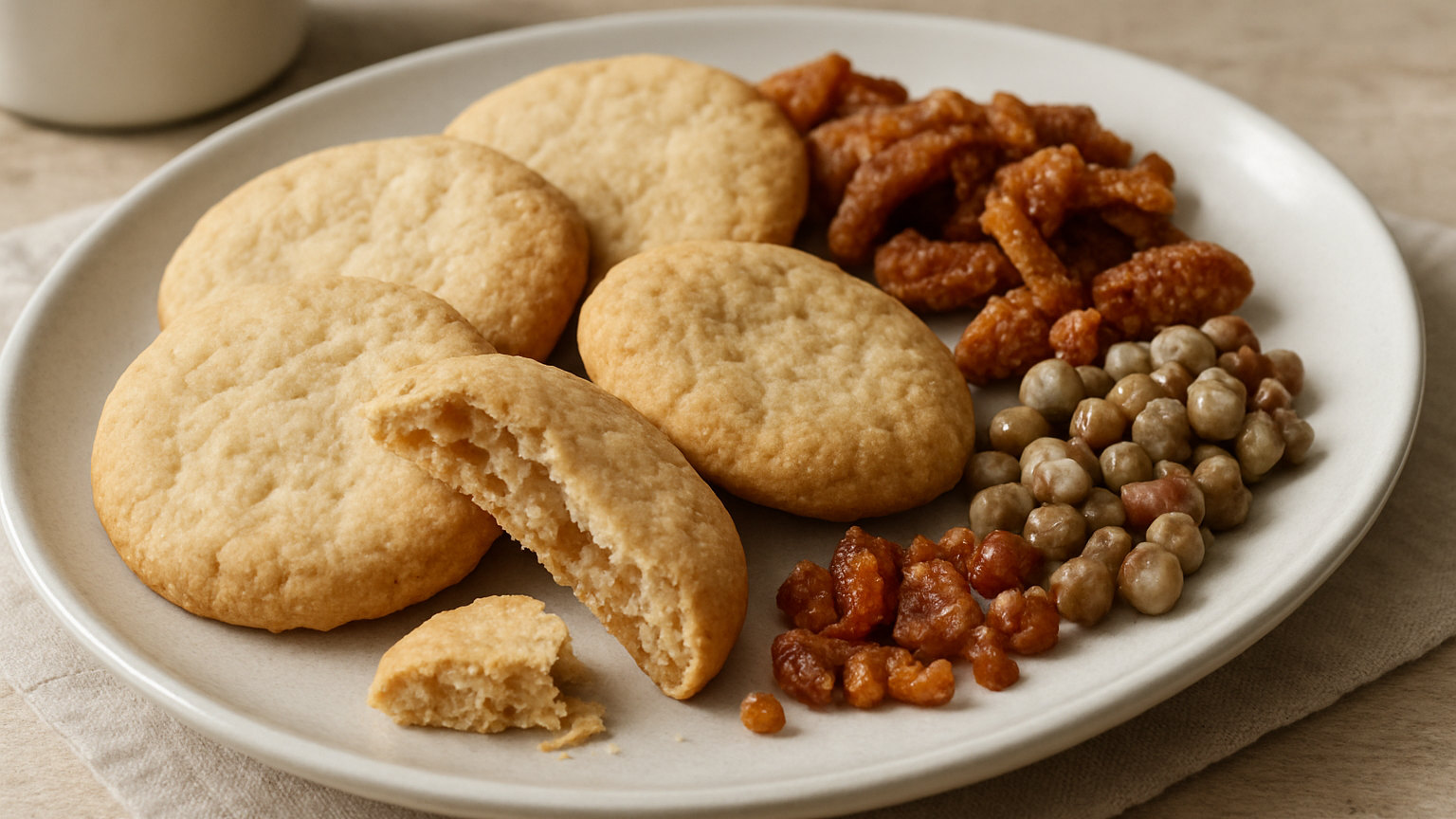
Grantham gingerbreads are unusual among ginger biscuits in being pale rather than dark, and hollow in the middle rather than dense. The story is that a Grantham baker reached for the wrong ingredient in 1740 and produced something better than what he intended. They are crisp, light and shatter when bitten.
What do you need for about 20 biscuits?
- 100g butter, softened
- 350g caster sugar
- 1 egg, beaten
- 250g self raising flour
- 2 teaspoons ground ginger
- A pinch of salt
How do you make them?
- Heat the oven to 150C fan, 170C conventional, gas mark 3.
- Beat the butter and sugar together for a full 5 minutes until very pale and light.
- Beat in the egg thoroughly.
- Sift in the flour, ginger and salt and mix to a stiff dough.
- Roll into balls about the size of a walnut.
- Space well apart on lined trays, since they spread.
- Bake for 25 to 30 minutes until pale gold and cracked.
- Cool on the tray until firm.
Beat the butter and sugar for a full five minutes. That aeration is what creates the hollow centre, since the trapped air expands in the oven and leaves a cavity as the biscuit sets around it.
Why are they white?
They contain no treacle, golden syrup or brown sugar, which is what darkens most gingerbread.
The low oven also keeps them pale rather than browning them.
Do they contain treacle?
None at all, which is unusual for a gingerbread and is the reason they stay pale.
Why are they hollow?
The heavily aerated mixture puffs up in the oven and the outside sets before the inside can fill the space.
Cracking one open should reveal a distinct cavity.
Should they be beaten by hand or machine?
A machine is easier for a full five minutes of beating. By hand it is hard work and entirely possible.
Why such a low oven?
They need a long slow bake to dry through without colouring. Twenty five to thirty minutes at 150C fan is right.
A hot oven browns them and leaves the centre soft.
Should they be uniform in size?
Yes, since they spread and bake at the same rate. About 25g of dough each gives twenty from this quantity.
Weigh them if you want them even.
What is the origin story?
A Grantham baker named William Egglestone is traditionally credited with creating them in 1740 by mistake, reaching for the wrong ingredient.
The story is traditional rather than documented.
Are they still made in Grantham?
Yes, by local bakers, and they remain closely associated with the town.
They are rarely found elsewhere in Britain.
How are they different from gingernuts?
Gingernuts are dark, dense and made with treacle. Grantham gingerbreads are pale, light and hollow.
They are considerably more delicate.
What size tray do you need?
Two large lined trays for twenty biscuits, since they spread to roughly twice their width and must not touch.
Bake them in batches rather than crowding.
Why so much sugar?
The high sugar ratio is what gives the crisp shattering texture and the cracked surface.
Reducing it gives a softer, more ordinary biscuit.
Should the dough be chilled?
No. Chilling works against the spread and the puff. Roll the balls and bake them straight away.
Do they spread much?
Considerably, to about twice their width, so leave plenty of room between them.
How should they be stored?
In an airtight tin once completely cold, since they absorb moisture from the air and go soft.
How do you know they are done?
Pale gold with a cracked, crazed surface and firm to a light touch. They crisp further as they cool on the tray.
Any real browning means they have gone too far.
Can you use ground ginger alone?
Yes, and it is what the traditional recipe uses. Two teaspoons for this quantity gives a clear ginger flavour without heat.
Fresh ground spice makes a noticeable difference.
How long do they keep?
Two weeks in a tin. They freeze as raw dough balls for three months.
If that was useful, The Birmingham Balti covers related ground, and there is plenty more in Regional recipes.


