
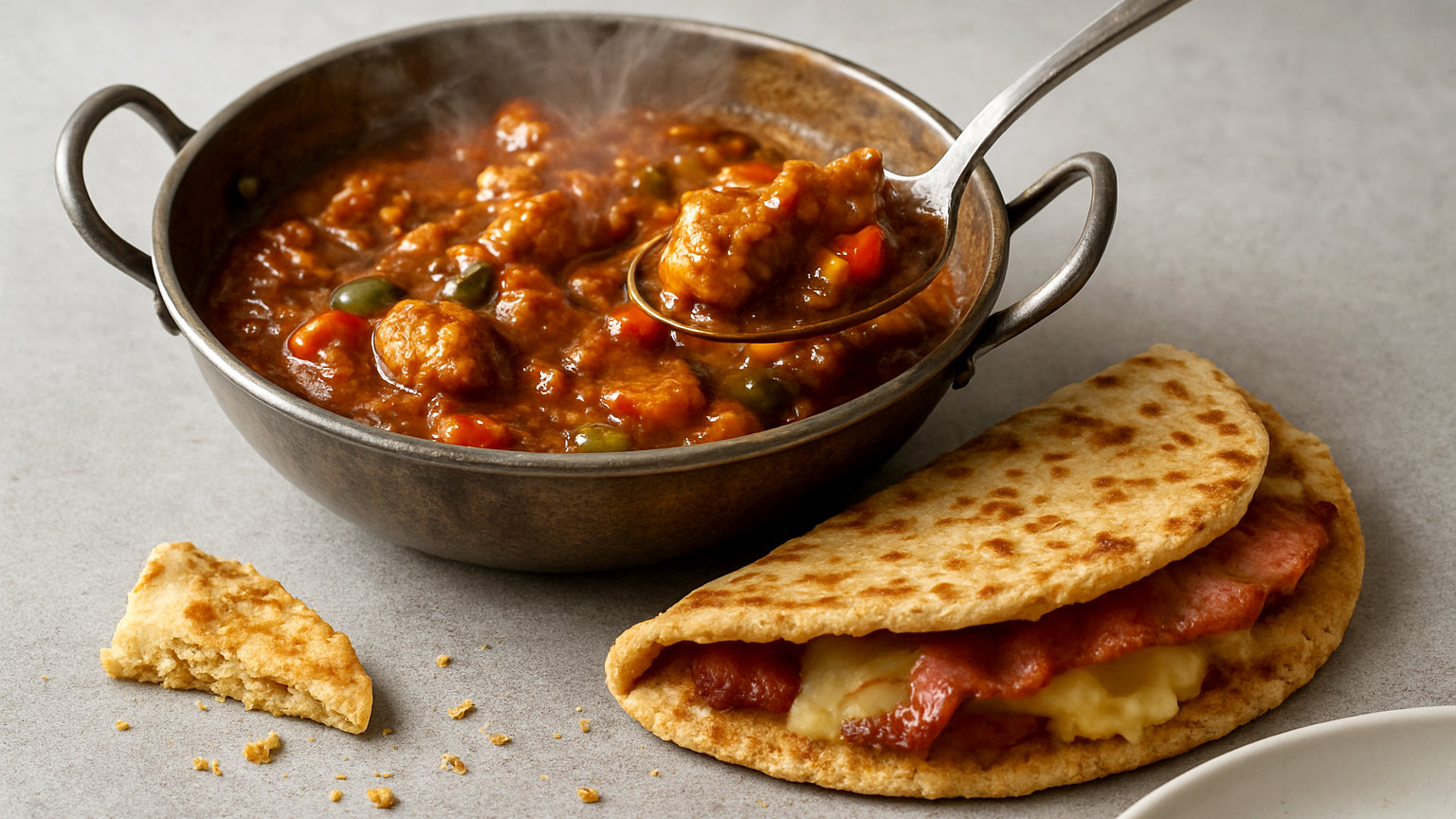
The balti is a genuinely British dish, invented in Birmingham in the 1970s by cooks from Pakistani Kashmir. It is defined by its cooking vessel and its speed rather than by a fixed recipe, and it is eaten with naan rather than rice or cutlery. It is one of the few dishes this country can claim to have created outright.
What is a balti?
A dish cooked and served in a balti bowl, a thin pressed steel pan with two handles and a rounded base.
The thin metal transmits heat very fast, so the cooking is quick and fierce.
Why does the bowl matter?
Thin pressed steel heats faster than a heavy pan and cools faster too. That allows a fierce short cook of five or six minutes rather than a long simmer.
The dish is then served in the same bowl, still sizzling.
How is it different from a curry?
Most restaurant curries are built on a pre made base gravy and simmered. A balti is cooked fast from a lighter base with the spices added during cooking.
The result is fresher and less heavy, with a thinner sauce.
Where was it invented?
Birmingham, in the 1970s, in the area of Sparkbrook, Balsall Heath and Moseley that became known as the Balti Triangle.
At its height the area had dozens of balti houses.
How hot is a balti?
Variable, and traditionally medium rather than fierce. Heat is adjusted with fresh green chilli during the cook rather than built into a base sauce.
Ask for it as you want it.
What does the word mean?
Balti means bucket in Urdu and Hindi, referring to the vessel. There is also a region called Baltistan, which some link to the name.
The Birmingham dish is not eaten in either place.
Are the bowls sold to the public?
Yes, cheaply, from Asian cookshops and online. They are thin, light and not suitable for long slow cooking.
How is it eaten?
With a large naan, torn and used to scoop, rather than with rice and cutlery. Table naans a foot across are traditional.
What goes in it?
Usually a marinated meat or vegetable, onion, tomato, garlic, ginger, green chilli and a spice mix, cooked fast with a little water.
Coriander goes in at the end.
Is it a sauce based dish?
Only lightly. The sauce clings to the meat rather than pooling, which is why it is scooped with naan rather than spooned over rice.
A swimming balti is not a balti.
Can you cook one at home?
Yes, in a wok or a thin steel pan over the highest heat you have. Domestic hobs are the limiting factor, since restaurant burners are far more powerful.
Have everything prepared before you start, since it takes minutes.
What meats are usual?
Chicken, lamb and prawns, along with vegetable and paneer versions. Meat is often part cooked before the fast final stage.
That pre cooking is what makes six minute cooking possible.
Is the Balti Triangle still there?
Considerably reduced from its peak, with far fewer restaurants than in the 1990s, though several long standing balti houses continue.
What is a family naan?
A very large naan, often a foot or more across, brought to the table for everyone to tear from.
It is the standard accompaniment in a balti house.
Was it nearly protected?
An application for protected status for the Birmingham balti was pursued in the 2010s. Efforts to secure recognition have continued since.
What is a balti house like?
Traditionally simple and inexpensive, often unlicensed with customers bringing their own drink, and focused entirely on the food.
That informality was part of the appeal.
What should you order alongside?
A family naan to share, raita, and perhaps a dry vegetable dish. Rice is available and misses the point.
Why does it matter?
It is a dish created by British Pakistani cooks for a British city, and it belongs to Birmingham in the way the pasty belongs to Cornwall.
Worth reading next: Staffordshire Oatcakes. There is more in our Regional recipes.


