
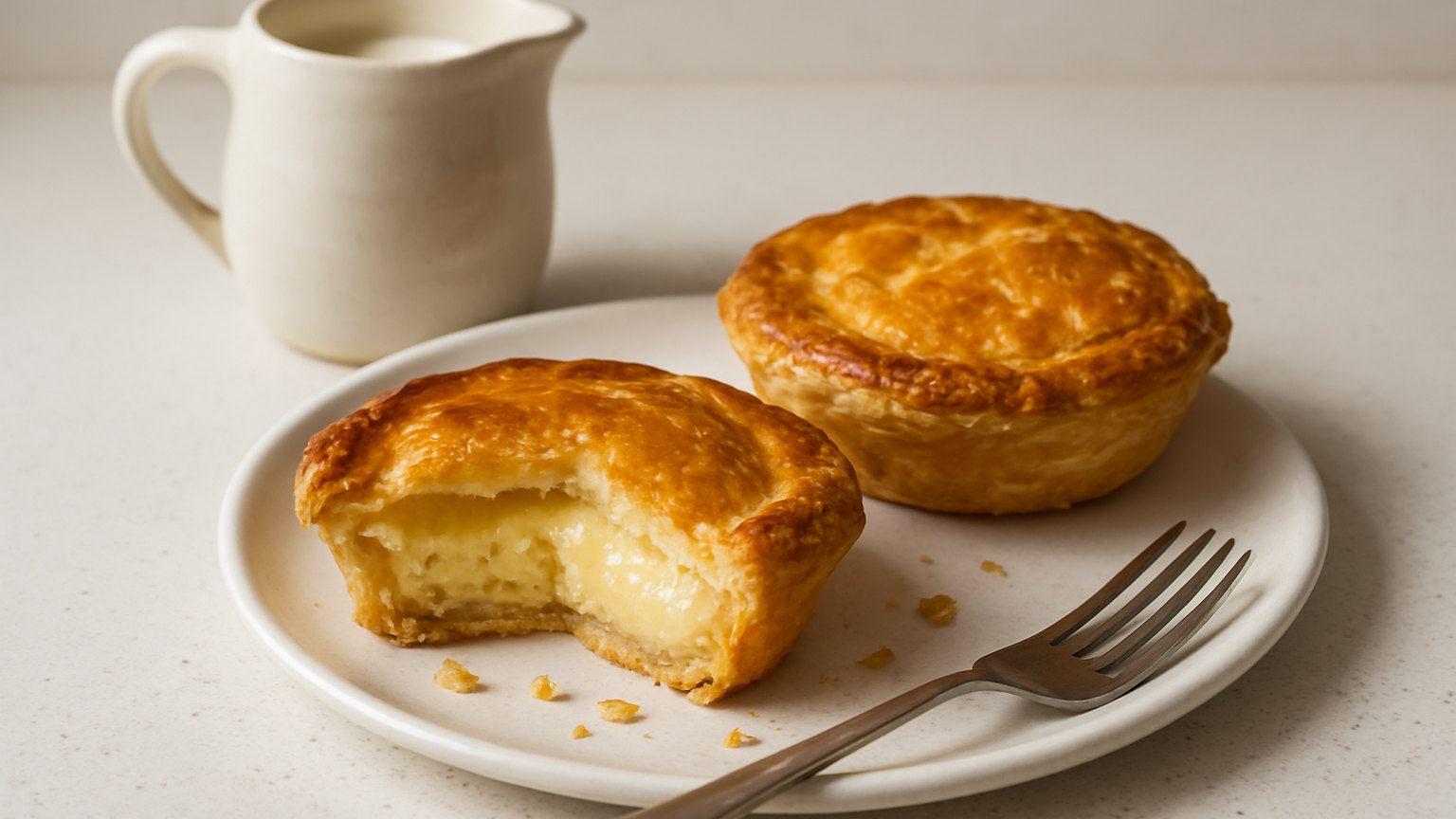
Maids of honour are small tarts of puff pastry filled with a light curd cheese mixture, associated with Richmond upon Thames and traditionally said to date from the court of Henry VIII. The story attaches the name to Anne Boleyn and her maids of honour, who were supposedly caught eating them. The tarts themselves are delicate and unusual.
What do you need for 12 tarts?
- 375g all butter puff pastry
- 250g curd cheese, or well drained cottage cheese
- 50g softened butter
- 50g caster sugar
- 2 egg yolks
- 50g ground almonds
- Zest of 1 lemon and 1 tablespoon lemon juice
- 1 tablespoon brandy, optional
- A grating of nutmeg
How do you make them?
- Heat the oven to 200C fan, 220C conventional, gas mark 7.
- Roll the pastry thinly and cut 12 rounds with an 8cm cutter.
- Press into a bun tin and chill for 20 minutes.
- Beat the curd cheese with the butter and sugar until smooth.
- Beat in the yolks, then fold in the ground almonds, zest, juice and brandy.
- Fill each case about two thirds full.
- Grate nutmeg over the tops.
- Bake for 20 minutes until risen and golden, then cool in the tin for 5 minutes.
Fill the cases only two thirds full. The filling puffs up considerably during baking and settles again as it cools, and overfilled tarts spill over and stick to the tin.
How big should they be?
Small, about 8cm across, which is a couple of mouthfuls. They are rich and a large one is heavy going.
What is curd cheese?
A fresh soft cheese made by curdling milk, drier and firmer than cream cheese and less sweet.
Cottage cheese pressed through a sieve or well drained ricotta both work as substitutes.
Can you make the curd yourself?
Heat a litre of whole milk to just below a simmer, add 3 tablespoons of lemon juice and stir until it separates, then strain through muslin for an hour.
It takes about ninety minutes in total, most of it draining.
Should currants go in?
Some historic versions include a scattering of currants in the filling. Modern Richmond style tarts generally leave them out.
Why do they sink?
They are meant to. The filling rises like a small souffle and settles into a slight dip as it cools, which is characteristic rather than a fault.
How old is the recipe?
The Tudor origin story is traditional rather than documented. Recipes appear in print from the eighteenth century and a Richmond bakery sold them commercially for over two centuries.
The exact recipe was famously kept secret.
Are they still sold?
The Kew shop traded for well over two hundred years, and versions are still made by bakeries in the area.
They are rarely found elsewhere in the country.
Why Richmond?
Richmond Palace was a royal residence, and the Original Maids of Honour shop at Kew traded on that connection from the early eighteenth century.
Why do they need blind baking?
They do not. The filling bakes in twenty minutes at a high temperature, which is long enough to cook thin puff pastry underneath it.
Chilling the lined tin first stops the pastry shrinking down the sides.
Can shortcrust be used?
It works and gives a firmer, less dramatic tart. Puff pastry is traditional and the rise is part of the appeal.
Can they be made ahead?
The filling can be made a day ahead and refrigerated. The pastry cases can be cut and chilled overnight in the tin.
Bake them on the day, since they are best fresh.
How should they be served?
Warm or at room temperature, dusted with icing sugar, with tea.
What flavourings are traditional?
Lemon zest, nutmeg and ground almonds. Brandy appears in some versions and currants in others.
Keep it subtle, since the curd itself is delicate.
How long do they keep?
Two days refrigerated, since they contain fresh cheese and egg. Best eaten on the day they are made, in line with Food Standards Agency guidance.
Next, try Gypsy Tart, or see the rest of our Regional recipes.


