
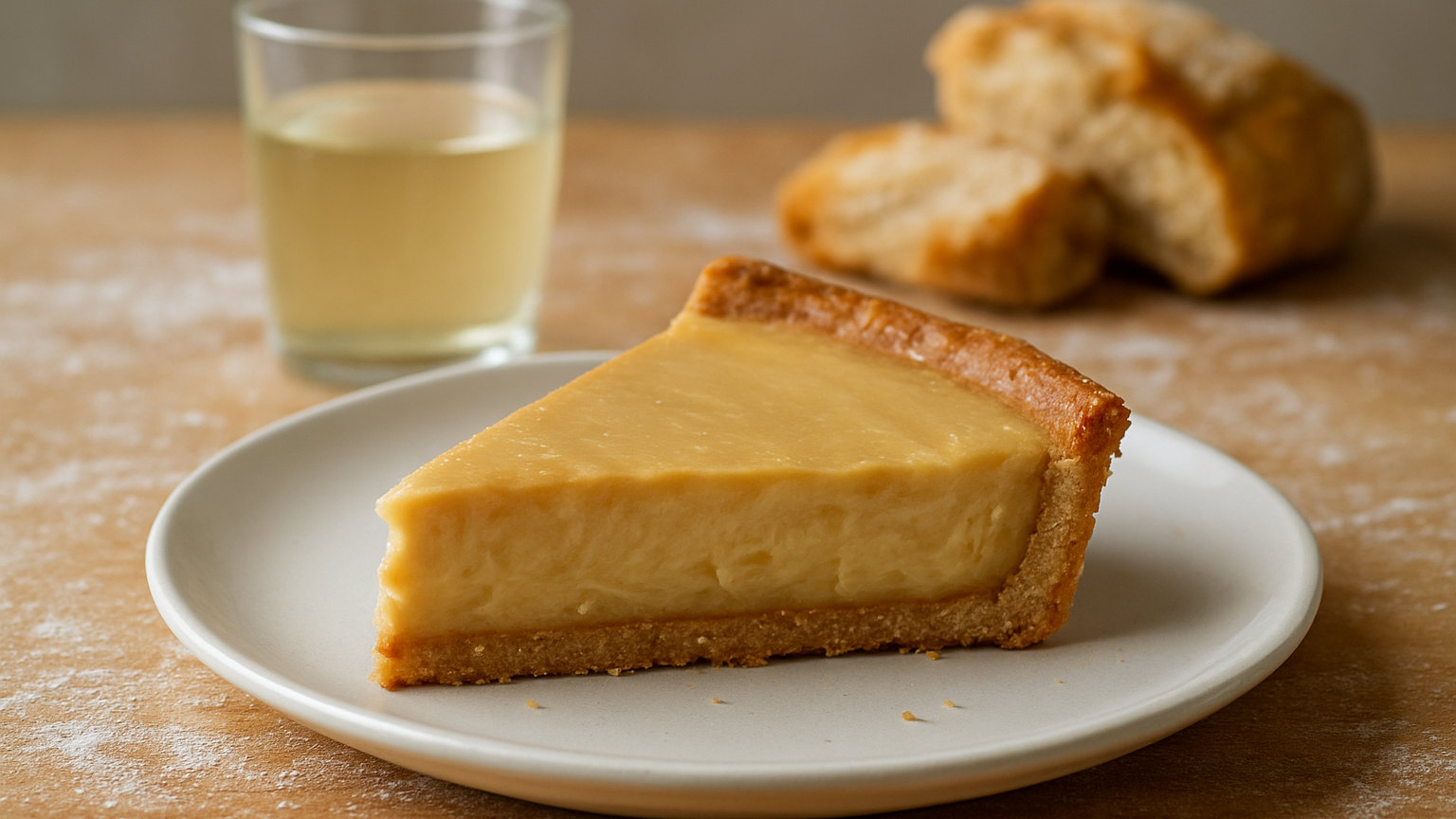
Gypsy tart is a Kent speciality and a fixture of school dinners across the county for decades. The filling is two ingredients, evaporated milk and muscovado sugar, whisked together for a long time until it turns pale, thick and mousse like. It bakes for only about ten minutes and stays deliberately soft.
What do you need for 8 people?
- 1 blind baked 23cm shortcrust case
- 410g tin of evaporated milk, thoroughly chilled
- 340g dark muscovado sugar
How do you make it?
- Chill the tin of evaporated milk in the fridge for at least 4 hours.
- Heat the oven to 200C fan, 220C conventional, gas mark 7.
- Sieve the muscovado sugar to remove any lumps.
- Pour the cold evaporated milk into a large bowl.
- Whisk on high speed for 10 to 15 minutes until doubled in volume and very pale.
- Add the sugar and whisk for a further 5 minutes.
- Pour into the pastry case.
- Bake for 10 minutes only, then cool completely.
Whisk for far longer than seems reasonable. Ten to fifteen minutes is the actual requirement, and a filling whisked for three minutes stays dark and liquid and never sets into the light, sticky texture that defines the tart.
Why must the milk be cold?
Cold evaporated milk whips far better and holds considerably more air, in the same way cold cream does.
Four hours in the fridge is the minimum and overnight is better.
Why muscovado sugar?
Its high molasses content gives the colour and the distinctive flavour. Light brown sugar produces a paler, blander tart.
Sieve it, since muscovado sets into hard lumps that will not whisk out.
Why such a short bake?
The filling is already aerated and does not need setting in the way a custard does. Ten minutes firms the surface and no more.
Overbaked, it collapses and turns sticky and dark.
Can it be made in individual tarts?
Yes, in a bun tin with 8cm pastry rounds, baking for about 8 minutes. They set faster and portion themselves.
Should it be completely set?
No. It stays soft and slightly tacky, somewhere between a mousse and a fudge. That is correct rather than underbaked.
It firms further as it cools.
How do you know when the filling is ready?
It should hold soft peaks and have roughly doubled in volume, with the colour lightened noticeably from the raw mixture.
If it still pours freely it needs several more minutes of whisking.
Why is it a Kent dish?
It originated on the Isle of Sheppey and spread through Kent schools, where generations of children ate it weekly.
It remains largely unknown outside the county, which surprises people from Kent considerably.
Does the pastry need to be sweet?
Plain shortcrust is usual, since the filling is extremely sweet. A sweet pastry makes the whole thing cloying.
Where does the name come from?
The usual story is that a local woman made it for hungry children from the few ingredients she had. The name is now often considered outdated.
Some Kent bakeries sell it as Kentish tart instead.
Why does the surface crack?
The oven was too hot or it stayed in too long. A few fine cracks are normal and a deeply fissured top means it has overbaked.
How should it be served?
Cold, in small slices, on its own. It is extremely sweet and needs nothing alongside.
What is evaporated milk?
Milk with about 60 per cent of the water removed by heating, which concentrates the sugars and gives it a slightly caramelised flavour.
It is not the same as condensed milk, which is sweetened and far thicker.
Why does it look so dark?
The muscovado sugar. Properly whisked the mixture lightens considerably from almost black to a pale coffee colour, which is the visual sign it is ready.
How long does it keep?
Three days in a tin at room temperature. It does not freeze well, since the filling separates.
See also Jellied Eels and the London Eel Trade, or browse more Regional recipes.


