
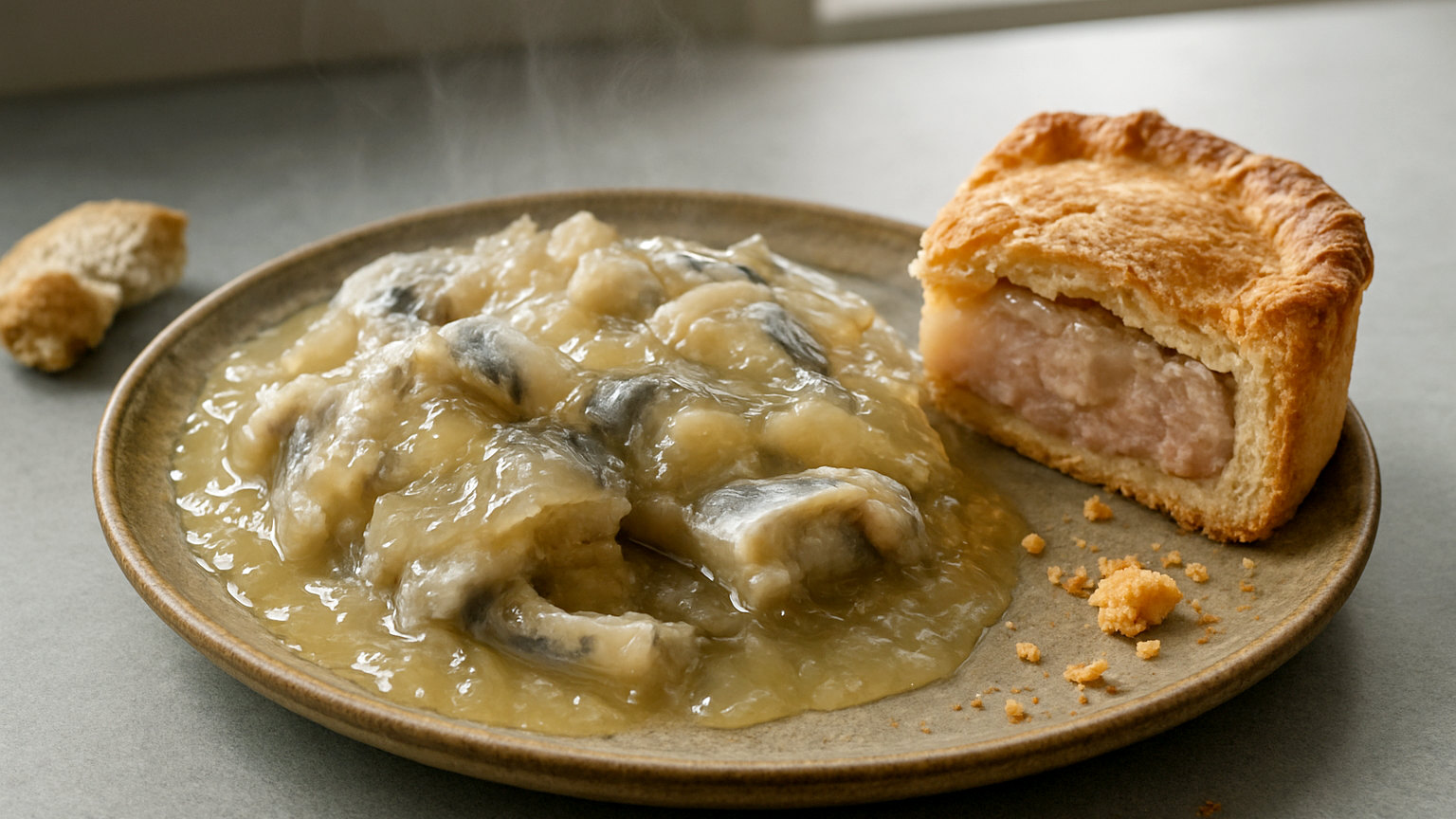
Jellied eels are chopped eel simmered in a seasoned stock and left to cool, at which point the liquid sets to a jelly without anything being added. For most of the nineteenth and twentieth centuries they were among the cheapest hot foods available in London. They are now a curiosity that divides people sharply, usually along generational lines.
Why does the jelly set?
Eels are exceptionally high in natural collagen. When the fish is simmered, that collagen dissolves into the cooking liquid and sets as it cools, in the same way a good meat stock does.
No gelatine is added. The jelly is simply what happens when the stock goes cold.
How were they made?
Fresh eels were cut into short lengths and simmered in water with vinegar, bay, peppercorns and sometimes lemon for about half an hour, then left in the liquid to cool and set.
They were eaten cold, from a bowl, with vinegar and white pepper.
Why were they so common in London?
Eels thrived in the Thames even when it was heavily polluted, since they tolerate poor water far better than most fish.
That made them abundant, local and cheap at a time when other protein was not.
How much did they cost?
A bowl was affordable to almost anyone in Victorian London, which is precisely why they were eaten in such quantity by working households.
Cost is now the main barrier rather than taste.
What is a pie and eel shop?
A distinct type of London establishment selling stewed and jellied eels alongside pie, mash and liquor, with tiled walls, wooden benches and marble tables.
A number opened in the Victorian period and a handful still trade.
What is the difference from stewed eels?
Stewed eels are served hot in their liquor rather than cold in set jelly. The same fish, cooked the same way, at a different temperature.
Are eels still available?
European eel stocks have collapsed and the species is now critically endangered, so eel is far more expensive and much less commonly eaten than it was.
Anyone buying eel should check the source carefully, as fisheries are tightly regulated.
How were they sold?
From stalls and barrows as well as shops, ladled into bowls or paper cups and eaten in the street.
They were street food long before the term existed.
Why did they fall out of fashion?
Rising prices, falling stocks, and changing tastes. Cold fish in jelly is a harder sell now than it was when it was the cheapest hot meal in the East End.
Are they nutritious?
Eel is very high in fat and protein and rich in omega 3, which is part of why it sustained working households so effectively.
The jelly itself is largely collagen.
What do they taste like?
Mild, slightly sweet and firm, with a savoury jelly that is heavily peppered. The texture is what people object to rather than the flavour.
Could you make them at home?
The method is simple enough, and sourcing eel responsibly is the difficulty rather than the cooking.
Smoked eel, which is more readily available from sustainable farmed sources, is the easier way to try the flavour.
What was eaten with them?
Chilli vinegar and white pepper, straight from the bowl, standing up or at a marble table.
Bread and butter sometimes, and very little else.
Were they eaten anywhere else?
Eels were eaten across England and particularly in the Fens and Norfolk, where they were smoked and stewed as well as jellied.
The jellied form is specifically associated with London.
What is elver?
A young eel, once caught in vast numbers in the Severn and eaten fried in Gloucestershire. Elver fishing is now heavily restricted.
They were historically so cheap they were fed to pigs, and are now among the most expensive seafood in Europe.
Are they worth trying?
As a piece of London food history, yes, and the surviving shops are worth visiting for their own sake.
Buy them from an established shop rather than attempting them at home, given the state of eel stocks.
If that was useful, Pie, Mash and Liquor covers related ground, and there is plenty more in Regional recipes.


