
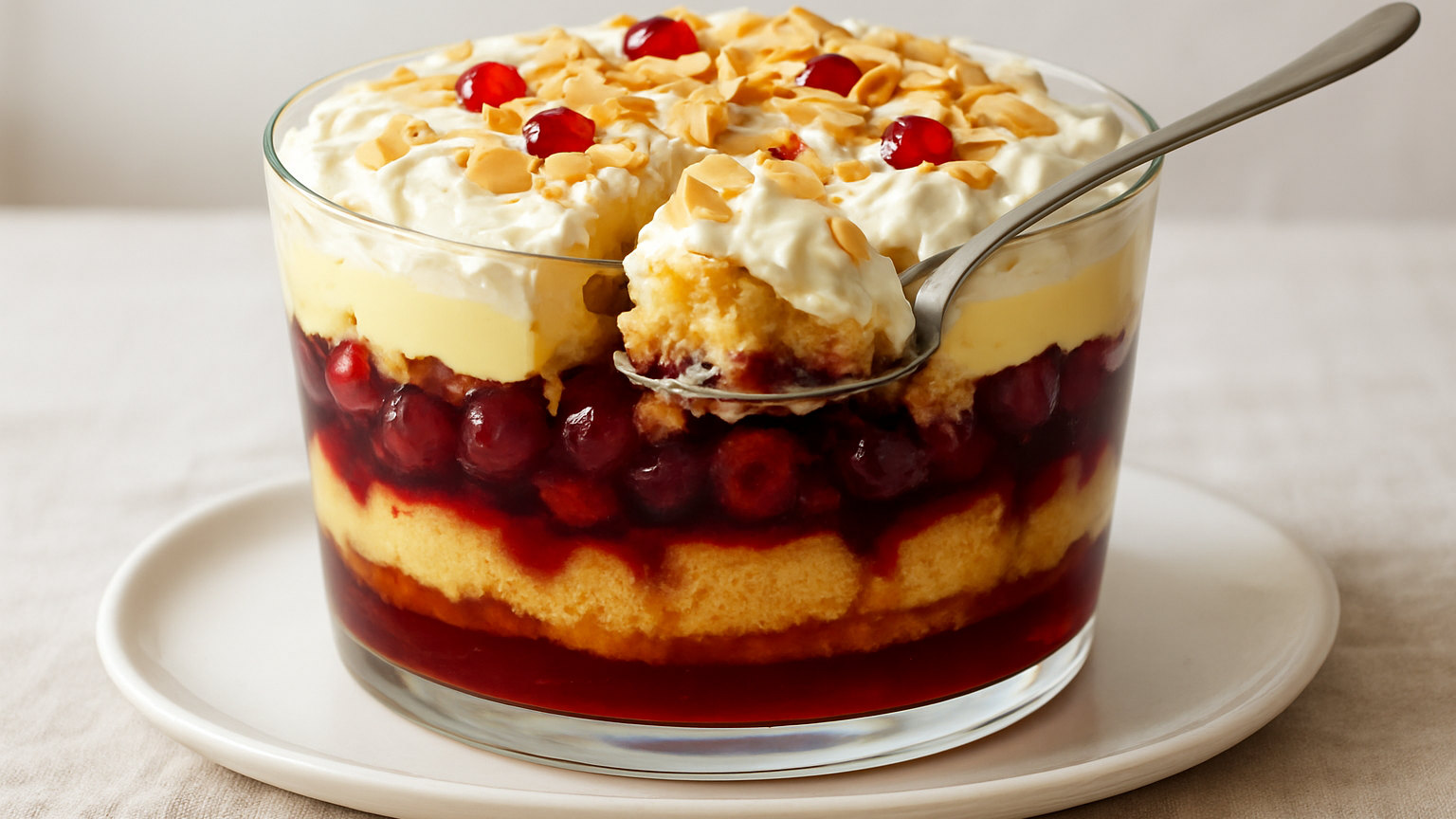
Few British puddings generate as much disagreement as trifle, and almost all of it concerns jelly. The argument is worth settling on the facts, which are that the traditional trifle contains no jelly at all, that jelly arrived later, and that a great many people now consider it essential. Both positions have a reasonable case.
What is the traditional trifle?
Sponge soaked in sherry, spread with jam, covered with fruit, then a thick egg custard, then whipped cream or syllabub on top.
That is the eighteenth and nineteenth century form and it contains no jelly.
Where did the jelly come from?
Jelly is a later addition, popularised in the twentieth century. Packet jelly was cheap, set reliably and made the pudding go further, and it became standard in many households after the war.
Purists object. Everyone who grew up with it disagrees, usually strongly.
What does each layer do?
- Sponge: absorbs the alcohol and gives the base structure
- Alcohol: moistens the sponge and cuts the sweetness
- Jam: adds sharpness and sticks the sponge together
- Fruit: acidity against the rich layers above
- Custard: the body of the pudding
- Cream: lightness and a soft top
Does the order matter?
Yes, and it is not arbitrary. Each layer must be able to support the one above, which is why custard goes below cream and never the reverse.
If jelly is used it sits above the fruit and below the custard.
Which sponge is correct?
Madeira cake, plain sponge or trifle sponges. Something firm enough to soak without disintegrating.
Swiss roll slices are common and give a spiral of jam through the base.
Should the custard be homemade?
A proper egg custard is noticeably better and it is what the dish was built around. Tinned custard is entirely respectable and widely used.
Whichever you use, it must be thick enough to hold cream on top of it.
What fruit is traditional?
Raspberries and strawberries in summer, tinned peaches or pears otherwise. Sharp fruit works better than sweet.
Bananas are common and they discolour, so add them late if at all.
What about the almonds?
Toasted flaked almonds scattered on top are traditional and add the only crunch in the dish, which is worth having.
Ratafia biscuits or crushed amaretti serve the same purpose.
How much alcohol should go in?
About 150ml for a trifle serving eight, which moistens the sponge without making it boozy. Older recipes used considerably more.
Remember the alcohol is not cooked off, so keep it modest if children are eating.
Is a trifle without alcohol still a trifle?
Yes, and it is what most children eat. The sponge still needs moistening, so use fruit juice or the syrup from tinned fruit.
What is a tipsy laird?
The Scottish version, made with whisky or Drambuie instead of sherry and often including raspberries.
It appears at Burns suppers and is otherwise the same construction.
How old is the trifle?
Trifle appears in English cookery from the sixteenth century, though the early versions were closer to a flavoured cream than the layered pudding we know.
The recognisable layered form with sponge, custard and cream dates from the eighteenth century.
What is the difference from a tiramisu?
The same idea from a different tradition. Soaked sponge, a rich creamy layer and a flavouring, though tiramisu uses coffee, mascarpone and cocoa.
Both depend on the sponge being moistened rather than drowned.
Should it be made in advance?
The lower layers benefit from a night in the fridge, which lets the flavours settle and the custard firm.
The cream should go on within a few hours of serving.
So should there be jelly?
It is not traditional and it is not wrong. If you use it, set it firmly and let it go completely solid before the custard goes on, or the layers will merge.
Household tradition is probably the deciding factor, and there is no point arguing with it.
If that was useful, Which Sponge Should You Use in a Trifle? covers related ground, and there is plenty more in Puddings recipes.

