
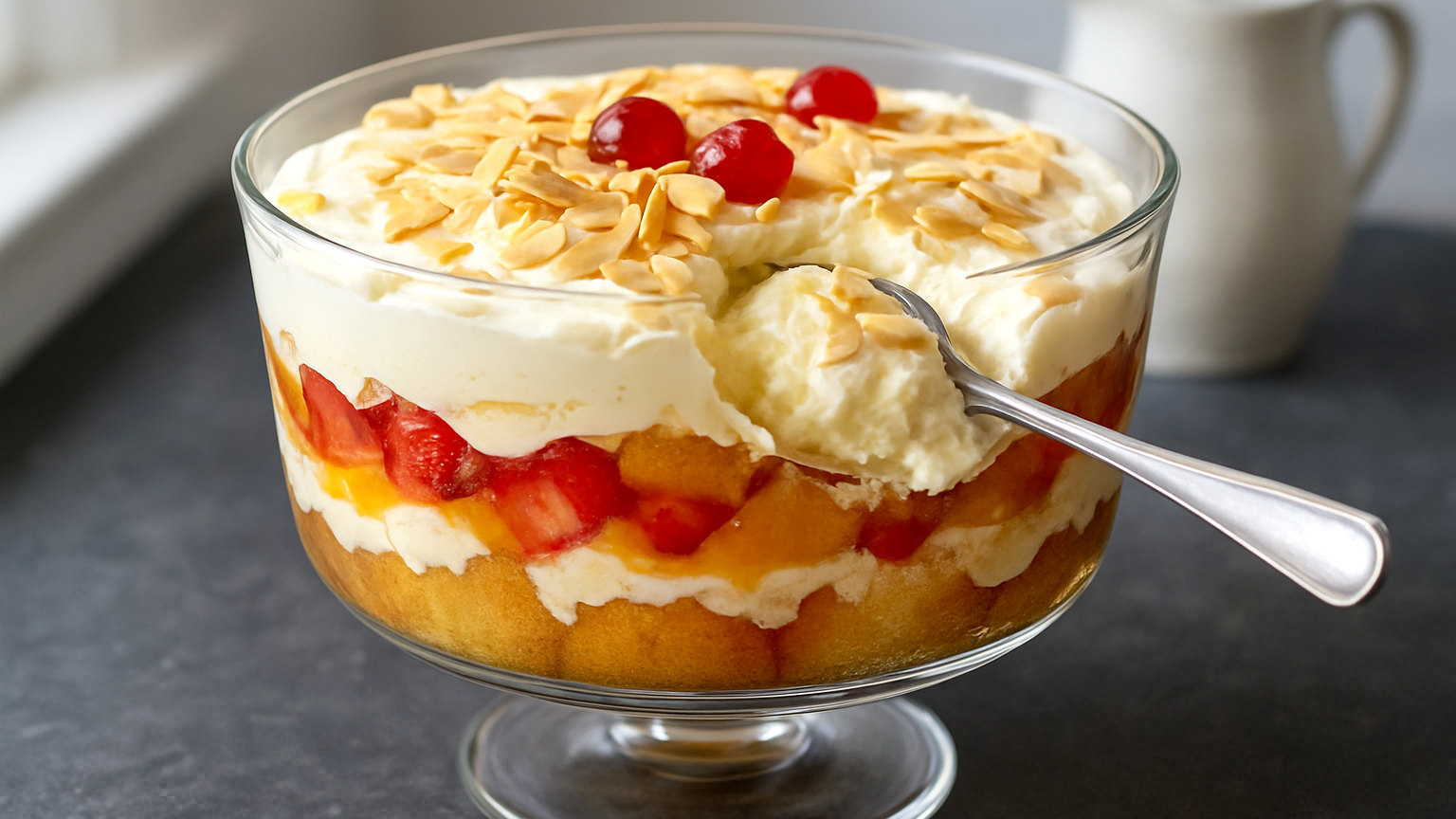
Syllabub is cream whipped with sweet wine, sugar and lemon, and it is one of the oldest puddings still made in Britain. Seventeenth century versions were drunk rather than eaten, and the modern one is a thick, aerated cream flavoured with alcohol. It takes ten minutes and the only difficulty is stopping at the right moment.
What do you need for 6 people?
- Zest and juice of 1 large lemon
- 100ml sweet white wine, sherry or Madeira
- 2 tablespoons brandy, optional
- 75g caster sugar
- 450ml double cream
- Grated nutmeg to finish
How do you make it?
- Combine the lemon zest and juice, wine, brandy and sugar in a bowl.
- Stir until the sugar has dissolved and leave to steep for at least 2 hours, or overnight.
- Strain out the zest if you want a smooth syllabub, or leave it in.
- Pour the cream into a large bowl.
- Add the flavoured liquid gradually while whisking slowly.
- Whisk until it just holds soft peaks and no further.
- Spoon into glasses and chill for an hour.
- Grate nutmeg over before serving.
Stop at soft peaks. Syllabub contains a great deal of liquid for the amount of cream, and it goes from thick to grainy and split in a matter of seconds once it passes that point.
Why steep the lemon first?
The zest infuses the wine and sugar, giving a much stronger citrus flavour than adding it at the end.
Overnight is better than two hours if you have the time.
Why add the liquid gradually?
Cream will not whip if it is flooded with liquid at the start. Adding it slowly lets the cream thicken as it goes.
Whisk by hand or on a low speed, since an electric whisk on full will split it.
Why does it separate?
Either overwhipping or too much acid and alcohol for the amount of cream. Both break the emulsion and liquid pools at the bottom.
A little separation after several hours is normal and was expected historically.
Does it need brandy as well?
No, and it is optional. It adds depth and a little more alcohol, which helps the syllabub hold, but the wine alone is enough.
What wine should you use?
Sweet white wine, cream sherry, Madeira or Marsala. Dry wines make it austere.
Everyday drinking wine is fine, since it is heavily sweetened anyway.
How much does it make?
Six small glasses, which is the right portion. It is extremely rich and a large serving defeats most people.
The mixture roughly doubles in volume as it whips.
Is there an everlasting version?
Everlasting syllabub is the thicker modern form, stabilised by the proportions so it holds for a day or two.
The older whipped syllabub separated deliberately into a foam over a liquid, and was served in glasses to show both.
Can it be spooned over fruit?
Very well, and it is one of the best uses. Spoon it over poached rhubarb, raspberries or roasted plums in a glass.
The sharpness of the fruit balances the richness.
What should you serve with it?
Shortbread, brandy snaps or ratafia biscuits. It is very rich, so portions should be small.
Can it be used in a trifle?
Traditionally yes, spooned over the custard in place of plain whipped cream. It is the older way of finishing a trifle.
How old is the recipe?
Syllabub appears in English cookery from the sixteenth century and was at its most popular in the seventeenth and eighteenth.
The earliest versions were made by milking a cow directly into a bowl of spiced wine, which produced a frothy drink rather than a set pudding.
Can you flavour it differently?
Orange in place of lemon, a little ginger, or elderflower cordial with white wine for a summer version.
Keep the balance of acid and alcohol roughly the same, since that is what makes it hold.
How long does it keep?
Two days refrigerated, though it is best within a few hours. Keep it chilled until serving, in line with Food Standards Agency guidance.
Worth reading next: Eton Mess. There is more in our Puddings recipes.

