
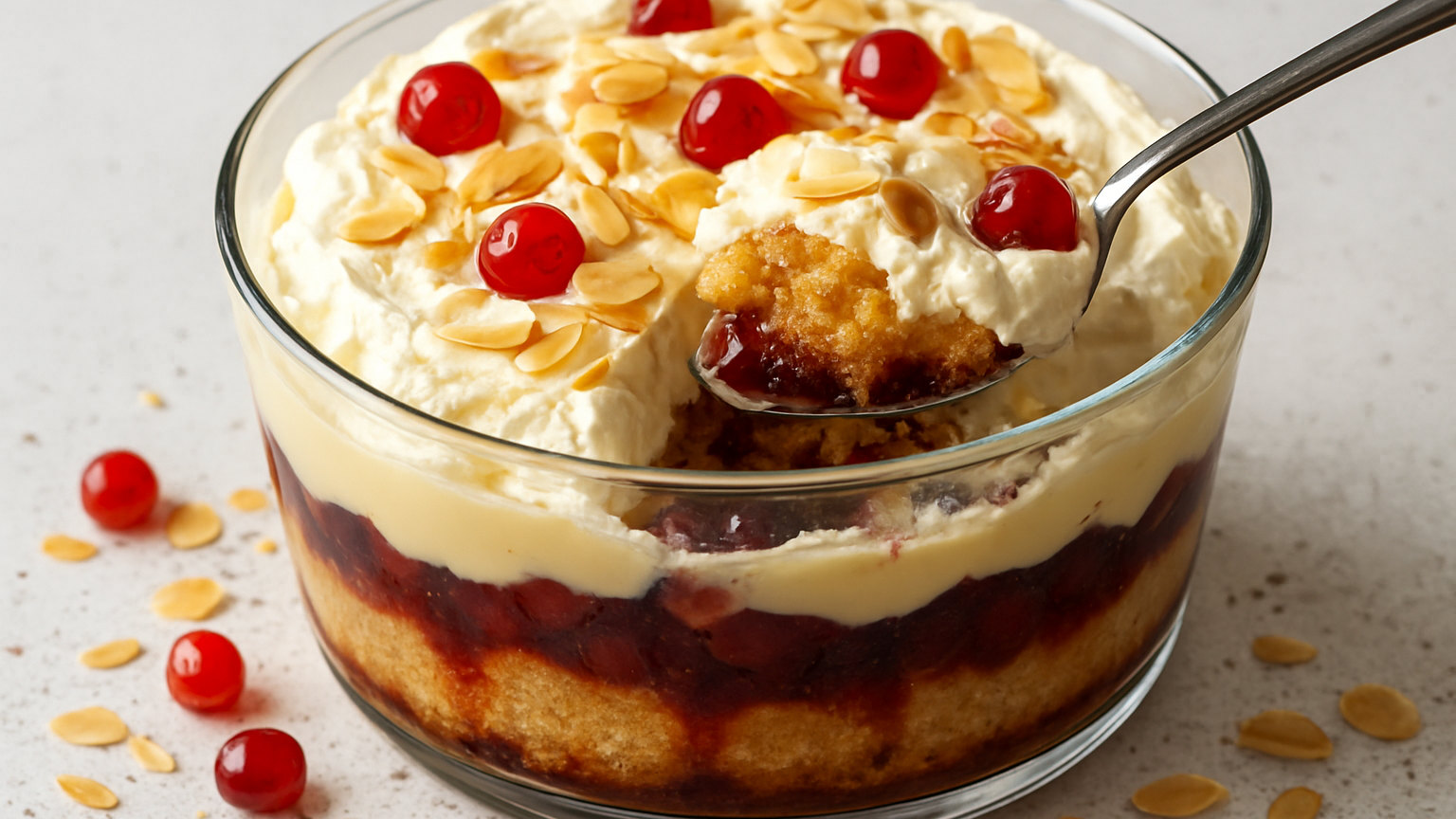
A fool is cooked fruit folded through whipped cream and it is one of the oldest and simplest British puddings. It works because the fruit is sharp and the cream is not, and the two are only just combined so you get ribbons of each rather than a uniform mixture. Gooseberry is the classic and rhubarb runs it close.
What do you need for 6 people?
- 600g gooseberries, rhubarb or blackcurrants
- 125g caster sugar, or to taste
- 2 tablespoons water
- 450ml double cream
- 150g thick custard or Greek yoghurt, optional
- 2 tablespoons elderflower cordial, optional
How do you make it?
- Cook the fruit with the sugar and water over a low heat for 12 to 15 minutes until collapsed.
- Taste and add more sugar if needed, remembering it will be diluted by cream.
- Cool completely, then chill.
- Drain off any excess liquid and keep it.
- Whip the cream to soft peaks, not stiff.
- Fold in the custard or yoghurt if using.
- Add two thirds of the fruit and fold three or four times only.
- Spoon into glasses and ripple the remaining fruit through the top.
Fold three or four times and stop. A fool should be streaked and marbled rather than an even pink, and every extra fold loses both the appearance and the contrast between sharp fruit and plain cream.
Which fruit works best?
Sharp fruit that cooks down to a puree. Gooseberries, rhubarb, blackcurrants, damsons and cooking apples all work.
Strawberries and raspberries are too sweet and too wet, and the fool ends up thin.
Why must the fruit be cold?
Warm fruit melts the cream on contact and the fool collapses into a thin liquid that will not hold.
Chill it properly, which takes at least two hours.
How much sugar does the fruit need?
More than seems right, since the cream dilutes it considerably. Gooseberries need about 175g per kilo and rhubarb about 150g.
Taste the cooked fruit on its own and it should be slightly too sweet.
Should the cream be stiff?
Soft peaks only. Over whipped cream is grainy and will not fold smoothly, and it can split entirely when the fruit goes in.
Why add custard or yoghurt?
Custard makes it richer and closer to a trifle. Yoghurt lightens it and adds sharpness, which suits very sweet fruit.
Neither is traditional and both are common.
Should it be served in one bowl or glasses?
Individual glasses show the ripple better and portion themselves. One large bowl is more generous and easier.
Either way, use glass rather than china so the marbling is visible.
What do you do with the drained juice?
Reduce it to a syrup and trickle it over the top, or keep it for a jelly or a drink.
Leaving it in makes the fool watery.
Can you use frozen fruit?
Yes, and gooseberries and rhubarb both freeze well, so a fool is possible year round. Cook it from frozen with no extra water.
Drain it more carefully, since frozen fruit releases more liquid.
What can you serve with it?
Shortbread, brandy snaps or langue de chat biscuits. Something crisp is a genuine improvement.
Why is it called a fool?
The name is recorded from the sixteenth century and probably comes from the French fouler, meaning to crush or press, though the origin is not settled.
It has nothing to do with foolishness, despite the obvious guess.
Can it be made lighter?
Replace half the cream with Greek yoghurt or thick custard, which cuts the richness and adds sharpness.
It will not hold quite as firmly, so serve it within a couple of hours.
How far ahead can it be made?
The fruit puree keeps three days. Assemble the fool up to four hours ahead and keep it refrigerated.
Longer than that and the fruit acid begins to break down the cream, in line with Food Standards Agency guidance on storing dairy.
Next, try Classic Sherry Trifle, or see the rest of our Puddings recipes.

