
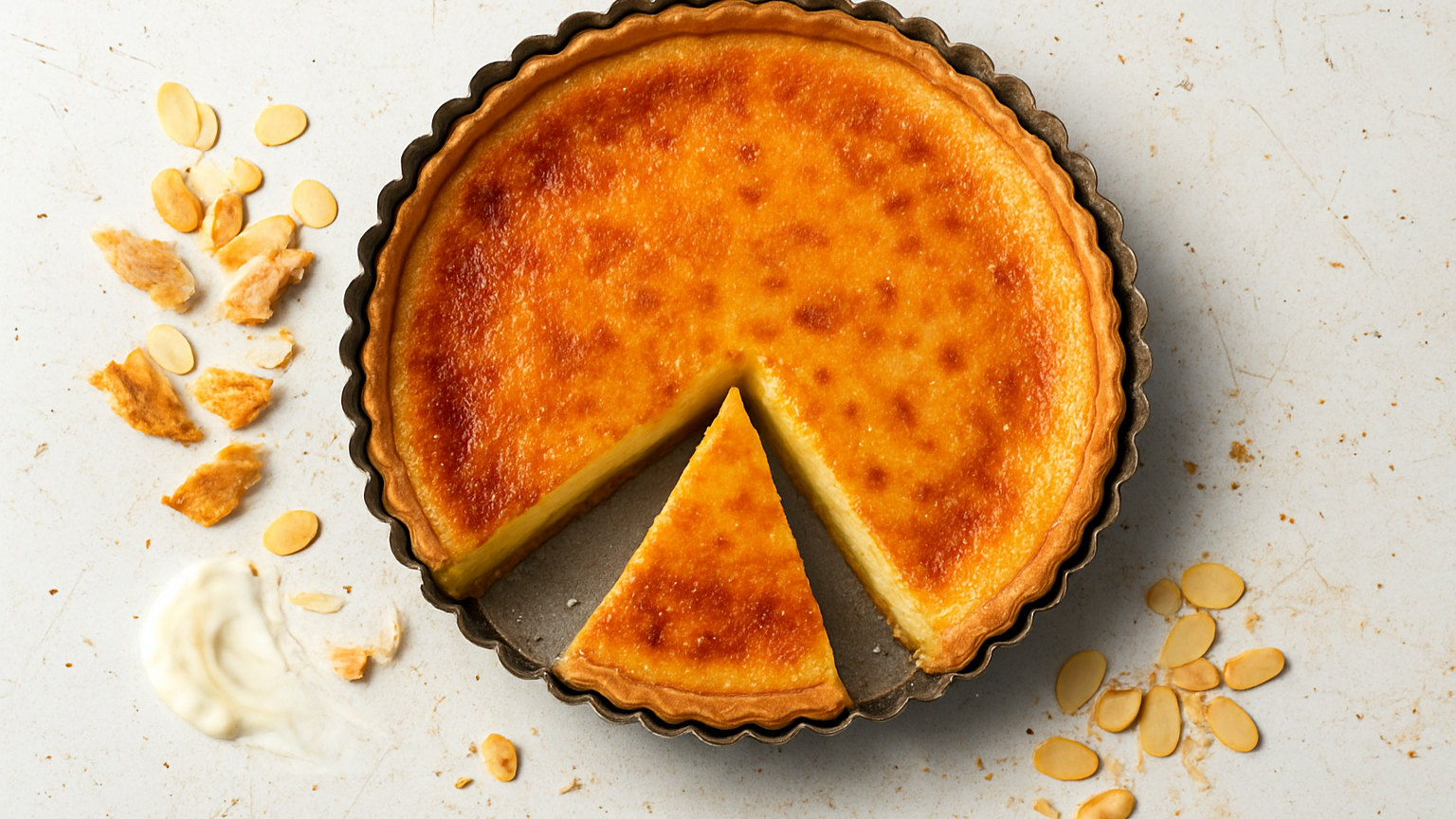
The tin makes a real difference to a tart, more than it does to a cake. Pastry needs direct, fast heat to crisp, and it needs to come out of the tin in one piece at the end. Those two requirements point clearly at one type of tin, and the ceramic dish that looks handsome on the table is usually the wrong choice.
What is the standard tin?
A 23cm loose bottomed metal tart tin with fluted sides, about 3cm deep. That is the size most recipes are written for.
If you buy one tin, buy that one.
Why loose bottomed?
It is the only reliable way to get a tart out intact. Sit the tin on a can and let the ring drop away, leaving the tart on the base.
A fixed tin means serving from the tin or attempting to slide a whole tart out sideways, which usually breaks it.
Why metal rather than ceramic?
Metal conducts heat quickly and directly into the pastry, so the base crisps. Ceramic and glass heat slowly and insulate, so the base stays pale and soft.
A ceramic dish also cannot have a loose bottom, so both problems arrive together.
Does the colour of the tin matter?
Yes. Dark metal absorbs heat and browns pastry faster than shiny aluminium, which reflects it.
If your bases are consistently pale, a darker tin is a cheap fix.
Does a non stick coating help?
A little, though it is not a substitute for greasing. Non stick coatings wear off over time and scratch easily if you cut in the tin.
Never cut a tart while it is still in the tin.
Why fluted sides?
They give the pastry more surface area to grip, which helps stop the sides slumping during blind baking, and they look better.
Straight sided tins work perfectly well and are easier to line.
What about a tart ring?
A bottomless metal ring set on a lined baking tray is what professional kitchens use. It gives the crispest base of all, since nothing sits between the pastry and the tray.
It is harder to line and harder to move, so it is worth trying only once you are comfortable with pastry.
What depth should it be?
About 3cm for most tarts. Deeper tins at 4cm suit custard and frangipane fillings, and shallow 2cm tins suit lemon tart.
Deeper tarts need longer at a lower temperature.
What sizes are worth having?
A 23cm tin covers almost everything. A 20cm tin is useful for four to six people, and a tray of 12 tartlet tins is worth having if you make mince pies.
Rectangular tins look striking and hold roughly the same quantity as a 23cm round.
Do you need more than one?
Two 23cm tins are worth having if you bake often, since one can be blind baking while the other is being lined.
They also let you freeze a lined case without losing your only tin for three months.
Should you grease the tin?
Lightly, even with a non stick tin. Sugar in sweet pastry caramelises and sticks readily.
Butter it and dust with flour for a case that will hold a very wet filling.
How do you get the tart out?
Let it cool for at least 15 minutes, sit the tin on an upturned can and ease the ring downwards. Leave the tart on the metal base to serve.
Sliding it off the base risks breaking it and gains nothing.
What about tartlet and individual tins?
Loose bottomed 10cm tins are the most useful small size and bake in about 20 minutes. A bun tin works for jam tarts and mince pies.
Individual tarts portion themselves and are easier to serve than slices.
How do you look after them?
Wash by hand and dry immediately, since loose bottomed tins rust where the base meets the ring.
A rusted tin still works but marks the pastry.
Do you need baking beans?
Something to weigh the paper down, yes. Ceramic beans, dried beans, rice or even coins all work.
Dried beans kept in a jar for the purpose last for years and cost nothing.
For something along the same lines, see Manchester Tart, or browse all our Puddings recipes.

