
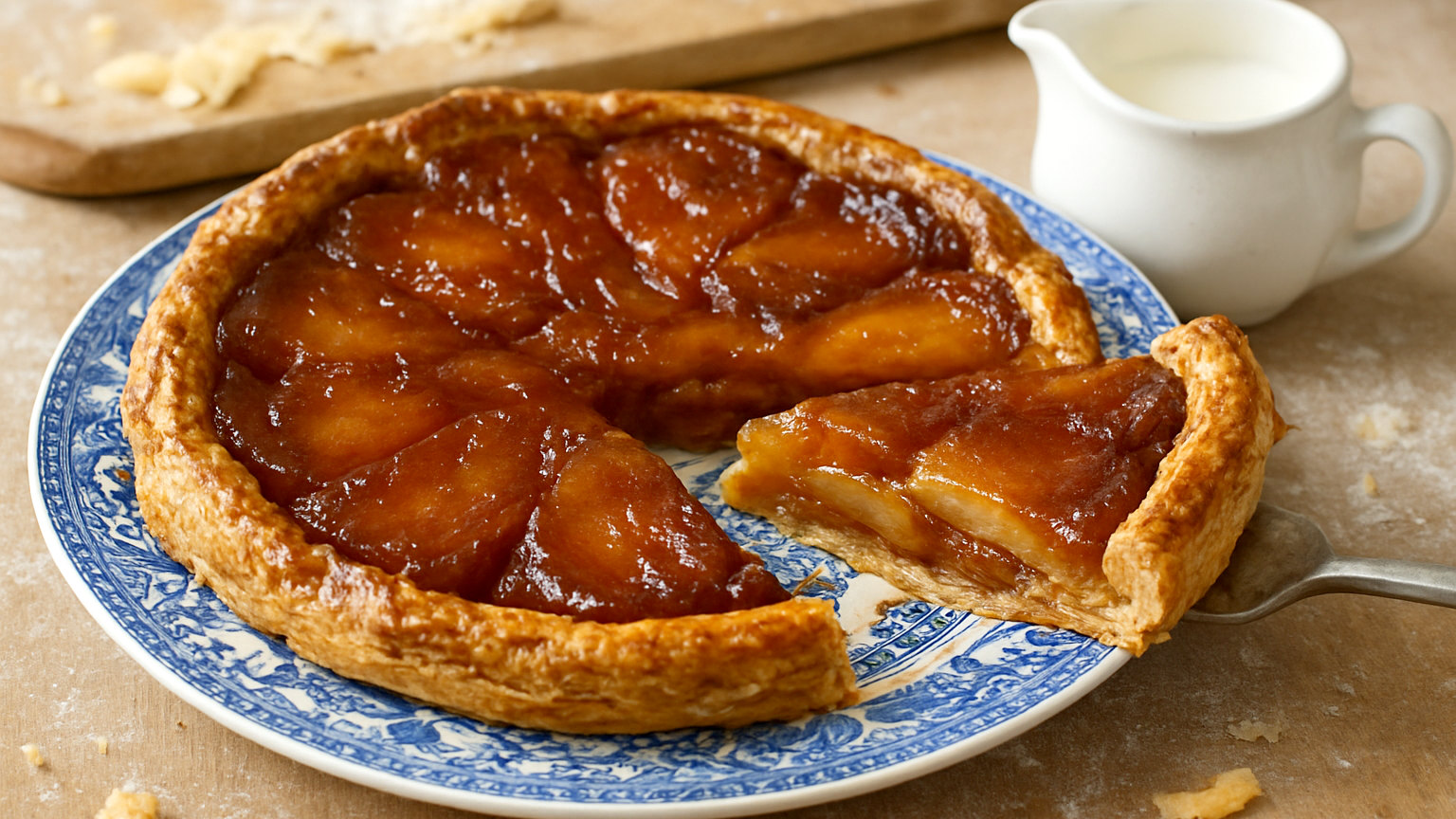
Tarte tatin is apples cooked in caramel in an ovenproof pan, covered with pastry, baked and then turned out so the fruit is on top. It is French rather than British and it has been made in British kitchens for long enough to have earned its place. The two things that decide whether it works are the colour of the caramel and the firmness of the apples.
What do you need for 8 people?
- 1.2kg firm eating apples, such as Braeburn or Cox
- 150g caster sugar
- 100g butter, diced
- 1 vanilla pod or a squeeze of lemon
- 320g all butter puff pastry
- A 24cm ovenproof frying pan
How do you make it?
- Peel, quarter and core the apples and set aside.
- Scatter the sugar evenly over the base of the cold pan and set over a medium heat.
- Let it melt without stirring until it turns a deep amber, about 8 minutes.
- Take off the heat and add the butter piece by piece, swirling rather than stirring.
- Pack the apple quarters in tightly, curved side down, in concentric circles.
- Return to a medium heat for 15 minutes until the apples soften slightly.
- Lay the pastry over, tucking the edges down inside the pan.
- Bake at 190C fan for 30 minutes, rest for 5, then turn out.
Take the caramel to a deep amber before the butter goes in. A pale caramel tastes only of sugar, and the slight bitterness of a dark one is what stops the finished tart being sickly.
Which apples should you use?
Firm eating apples that hold their shape. Braeburn, Cox, Granny Smith and Egremont Russet all work.
Bramleys are wrong here. They collapse into a puree and the tart has no structure at all.
Why pack them so tightly?
They shrink considerably during cooking, and a loosely packed pan leaves gaps that fill with caramel and make the tart hard to turn out neatly.
Push in extra pieces wherever there is room.
Why tuck the pastry inside?
It forms a rim that holds the fruit and caramel in when the tart is inverted, and it stops the edges spreading over the side of the pan.
Cut the pastry about 2cm wider than the pan to allow for it.
How do you turn it out?
Rest for five minutes only, then run a knife round the edge, put a large plate over the pan and invert the whole thing in one confident movement.
Wear oven gloves and do it over the sink. Any apples left behind can be lifted back into place.
What if the caramel seizes?
Sugar that has crystallised into lumps can usually be melted again over a low heat. Do not stir it, since stirring encourages more crystals to form.
Swirl the pan instead and let the heat do the work.
Why not rest it longer?
The caramel sets as it cools and glues the fruit to the pan. Five minutes is enough to stop it sloshing and not long enough to weld it down.
Can you use other fruit?
Pears, quince, plums and apricots all work. Quince needs poaching first, since it is very hard.
Firm fruit is essential whatever you choose.
Do you need a special pan?
Any ovenproof frying pan or a shallow cast iron dish works, provided the handle can go in the oven. A 24cm pan suits this quantity.
Check the handle before you start, since plastic and some rubber handles will not survive 190C.
Should the pastry be puff or shortcrust?
All butter puff is traditional and gives the lightest result. Shortcrust works and makes something closer to an upside down apple pie.
Ready rolled puff is entirely acceptable here.
Can it be made ahead?
It is best within an hour of baking. It can be reheated in the pan at 180C fan for 10 minutes and turned out again.
Serve warm with cream or vanilla ice cream.
Next, try Lemon Tart, or see the rest of our Puddings recipes.

