
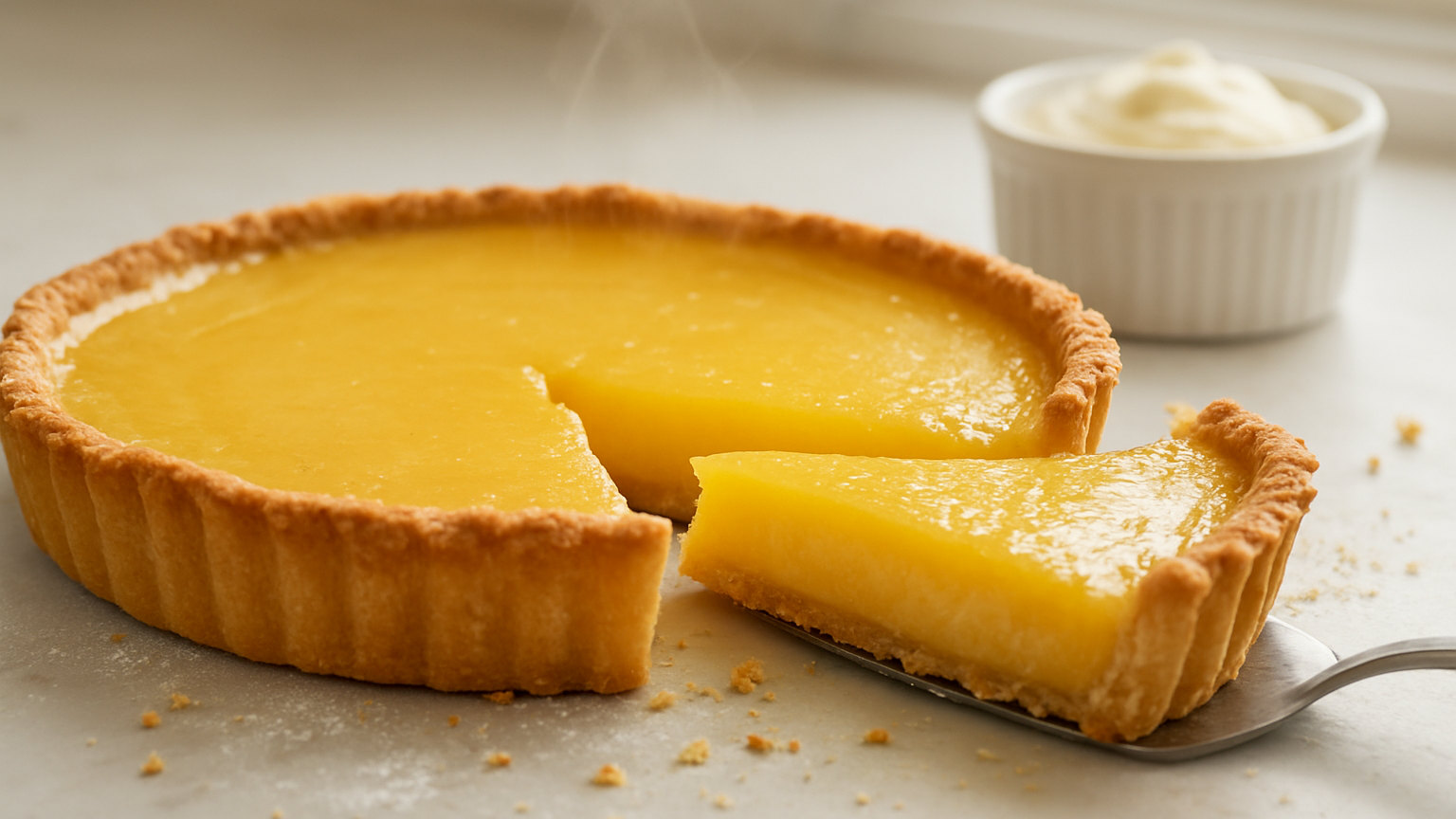
A lemon tart is one of the sharpest and most elegant puddings there is, and it is largely a matter of restraint. The filling is not cooked on the hob first, the oven is very low, and it comes out looking underdone. Everything that goes wrong with it comes from baking it too hard, which curdles the eggs and gives a grainy, weeping filling.
What do you need for 8 people?
- 1 blind baked and sealed 23cm sweet shortcrust case
- Zest of 4 lemons and 200ml juice, about 5 lemons
- 6 eggs plus 2 extra yolks
- 250g caster sugar
- 250ml double cream
- Icing sugar to finish
How do you make it?
- Heat the oven to 130C fan, 150C conventional, gas mark 2.
- Whisk the eggs, yolks and sugar together gently, without incorporating air.
- Stir in the lemon zest and juice, then the cream.
- Leave to stand for 30 minutes, then skim off any foam.
- Strain through a fine sieve into a jug.
- Sit the case on a shelf pulled halfway out and pour the filling in.
- Bake for 30 to 40 minutes until set at the edges with a slight tremble in the centre.
- Cool completely before slicing, then dust with icing sugar.
Do not whisk air into the mixture. Bubbles rise to the surface and bake into a pale foam that spoils the smooth finish, which is why the mixture is rested and skimmed before it goes in.
Why seal the pastry case?
The filling is very wet and bakes slowly, so an unsealed case goes soggy. Brush the blind baked case with beaten egg and return it to the oven for two minutes.
The egg forms a waterproof layer that holds up for the whole bake.
How do you know it is done?
Nudge the tin. The centre should move as a single unit with a slight tremble, not ripple like liquid.
It sets further as it cools, so err on the early side.
Why such a low oven?
Eggs curdle above about 85C. A low oven brings the filling up slowly and gives a much wider margin before it splits.
A hot oven gives set edges and a raw middle, then curdles the edges while you wait.
How much lemon is right?
200ml of juice for this quantity, which is genuinely sharp. The zest of four lemons carries most of the aroma.
Use unwaxed lemons since the zest is a large part of the flavour.
Can you use limes or oranges?
Limes work and give a sharper, more aromatic tart. Oranges are too sweet on their own and need lemon juice adding for acidity.
Seville oranges in January make an excellent version.
How do you cut it cleanly?
With a large sharp knife dipped in hot water and wiped dry between each slice.
The tart must be completely cold. A warm lemon tart will not slice.
How deep should the tin be?
At least 3cm, since this is a generous quantity of filling. A shallow tin will overflow and the tart will be thin.
A 23cm by 3.5cm loose bottomed tin is the standard size for this.
Can you caramelise the top?
Dust with icing sugar and use a blowtorch for a tarte au citron finish. A grill works but risks warming the filling.
Why rest the mixture?
Thirty minutes lets any air bubbles rise to the surface where they can be skimmed off, and it lets the sugar dissolve fully.
It makes a visible difference to the smoothness of the finished tart.
What should you serve with it?
Creme fraiche or a little pouring cream, and some raspberries if they are in season. Nothing sweet.
Can it be made ahead?
Make it a day ahead and keep it refrigerated, bringing it to room temperature before serving.
It does not freeze. Cool it quickly, refrigerate within two hours and use within two days, in line with Food Standards Agency guidance.
For something along the same lines, see Lemon Meringue Pie, or browse all our Puddings recipes.

