
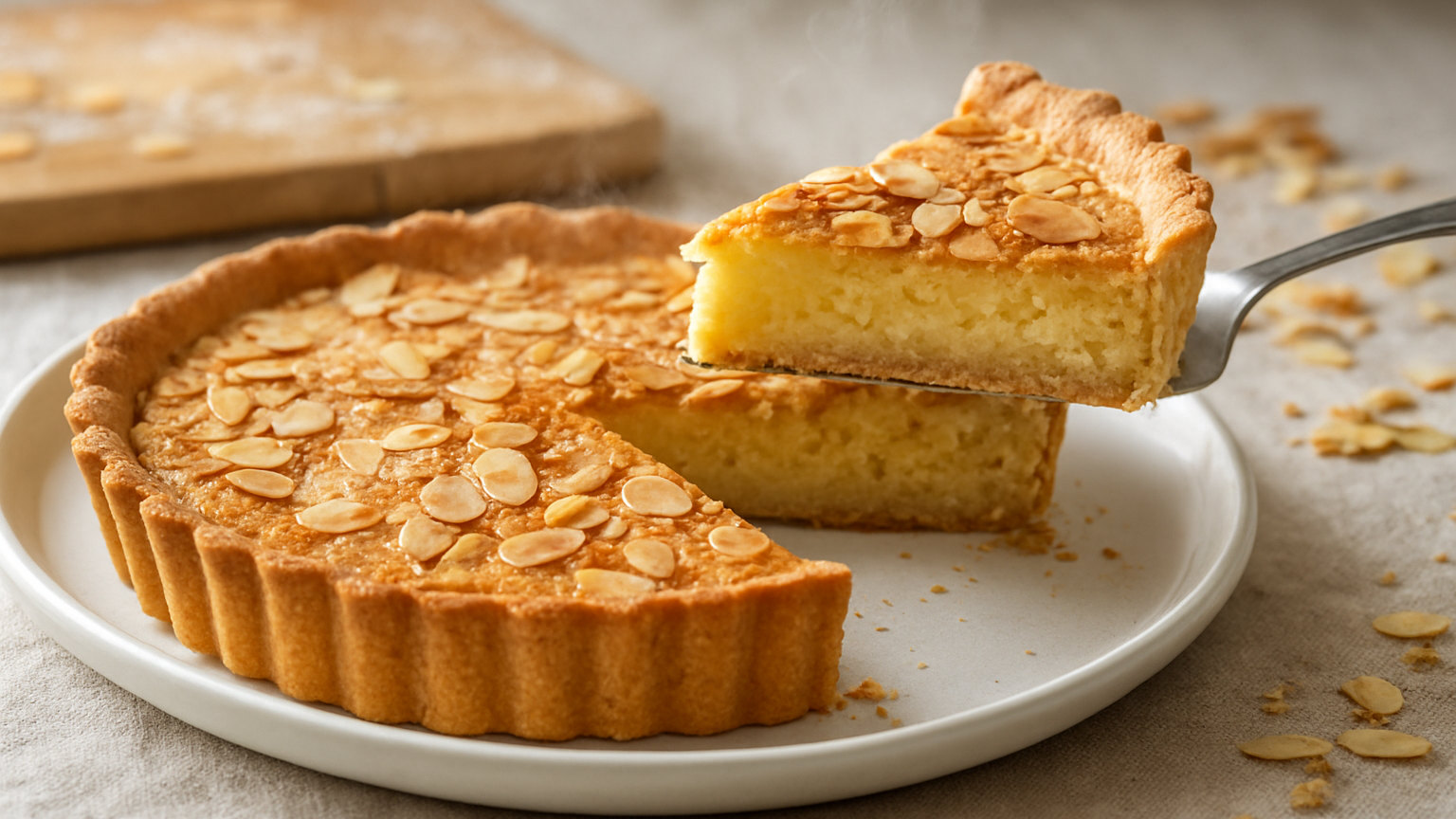
Sweet shortcrust is the foundation of almost every tart in this section and it differs from savoury pastry in three ways. It contains sugar, it is bound with egg yolk rather than water, and it is all butter. Those changes make it richer, shorter and considerably more fragile, which is why it needs handling with more care and chilling more often.
What do you need for a 23cm case?
- 250g plain flour
- 125g cold butter, diced
- 75g icing sugar
- 1 egg yolk
- 2 to 3 tablespoons cold water
- A pinch of salt
How do you make it?
- Rub the butter into the flour and salt until it resembles fine breadcrumbs.
- Stir in the icing sugar.
- Add the egg yolk and one tablespoon of water and bring together with a knife.
- Add more water a teaspoon at a time only if dry flour remains.
- Gather into a flat disc, wrap and chill for at least an hour.
- Roll out to 3mm and line the tin, pressing well into the corners.
- Chill the lined tin for a further 30 minutes before blind baking.
Chill it twice, once as a disc and once in the tin. The second chill is what stops the sides sliding down during blind baking, and it is the step most often skipped.
Why icing sugar rather than caster?
It is finer, so it disperses evenly without leaving gritty patches, and it dissolves into the butter rather than sitting in it.
Caster sugar works and gives a slightly crisper, more sandy pastry.
Why an egg yolk?
Fat and protein in place of some of the water, which makes the pastry richer and shorter and reduces gluten development.
It also gives colour and helps the case hold its shape.
Why is it harder to handle?
Sugar and extra fat make it soft and prone to tearing. It is more like a biscuit dough than a savoury pastry.
Work quickly, keep it cold, and roll it between two sheets of baking paper if it fights you.
How do you patch cracks?
Press scraps of raw pastry into any holes before blind baking, and patch cracks that appear afterwards with raw pastry, returning it to the oven for three minutes.
A cracked case will leak filling, so it is worth checking carefully.
What tin should you use?
A loose bottomed metal tart tin, which conducts heat well and lets you lift the tart out cleanly. Ceramic dishes bake the base more slowly.
A fluted edge is traditional and makes the sides stronger.
Should it be blind baked?
Almost always, since tart fillings are wet and often barely cooked. Line with paper and beans at 190C fan for 15 minutes, then 8 to 10 minutes without.
Brush with beaten egg and return for two minutes to seal it.
What is the difference from pate sucree?
Very little. Pate sucree is the French version, usually made by creaming the butter and sugar first rather than rubbing in, which gives a smoother, more biscuity texture.
Either works for the tarts in this section.
What is the difference from pate sucree?
Very little. Pate sucree is the French version, usually creamed rather than rubbed in and often slightly sweeter, and the two are interchangeable in practice.
Pate sablee contains more butter again and is closer to a shortbread.
Can it be made in a processor?
Yes, and it keeps the butter cooler than hands do. Pulse in short bursts and add the liquid with the motor off.
How thin should it be rolled?
About 3mm for most tarts and slightly thinner for a delicate custard tart. Thicker pastry does not bake through under a wet filling.
Roll from the centre outwards, turning a quarter turn between each roll.
Why does it shrink?
Too much water, too much handling or not enough chilling. All three tighten the gluten, which then contracts in the heat.
Leave the pastry overhanging the tin and trim it after baking rather than before.
Can it be made ahead or frozen?
It keeps three days in the fridge and freezes for three months as a disc or already lined into a tin.
A frozen lined tin can be blind baked straight from the freezer with an extra five minutes.
If that was useful, Jam Tarts and Using Up Pastry Trimmings covers related ground, and there is plenty more in Puddings recipes.

