
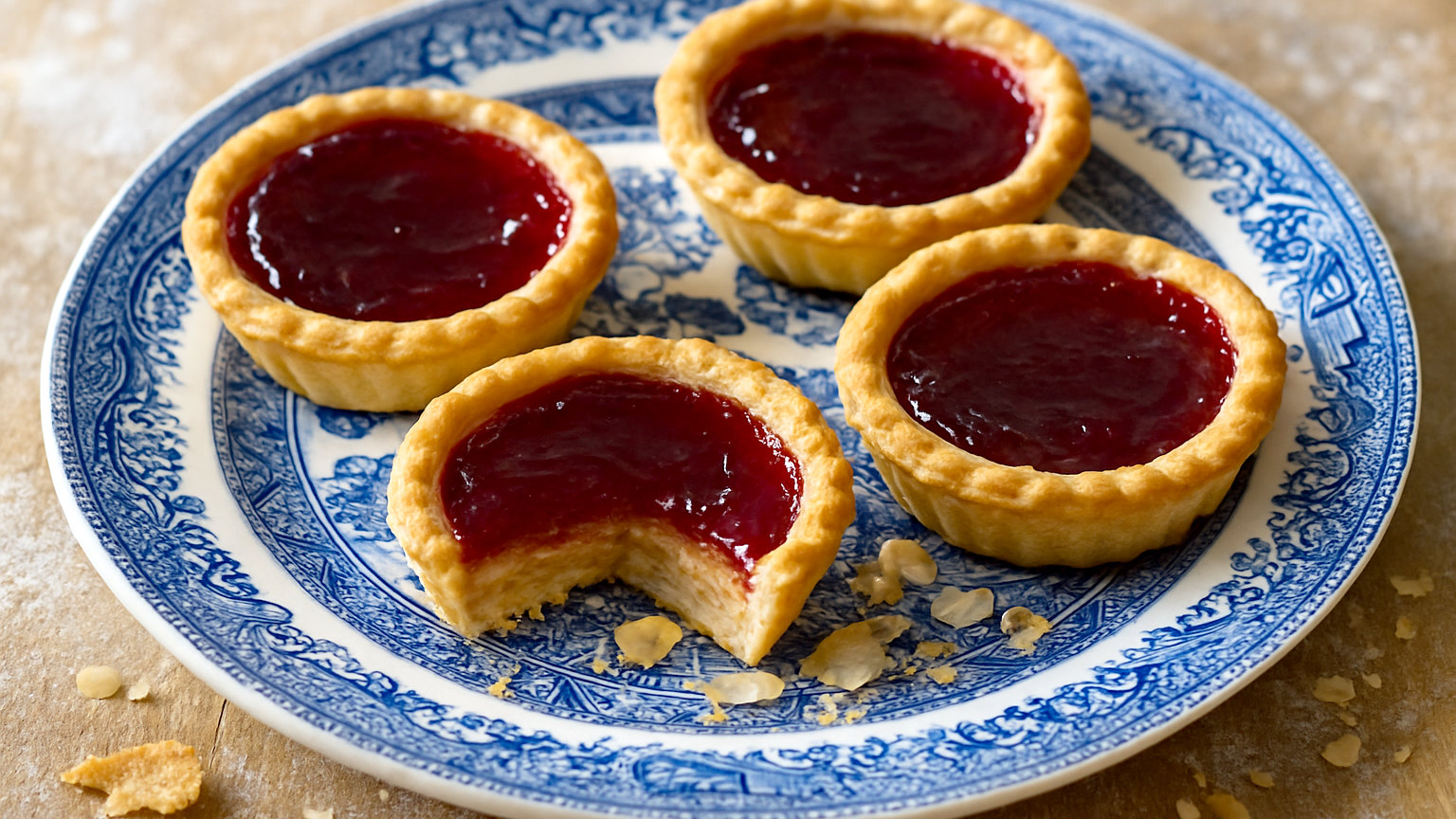
Jam tarts are the first thing a great many people ever baked, and they are a good use for the trimmings left after lining a tart tin. They take ten minutes to make and twelve to bake. The only rule that matters is how much jam goes in each one, and almost everyone puts in too much the first time.
What do you need for 12 tarts?
- Pastry trimmings, or 250g shortcrust
- About 6 teaspoons of jam, in two or three kinds
- A 12 hole bun tin
- A 7cm round cutter
How do you make them?
- Heat the oven to 190C fan, 210C conventional, gas mark 6.
- Gather the trimmings, stacking rather than kneading them, and chill for 20 minutes.
- Roll out to about 3mm and cut 12 rounds.
- Press each into a hole of the bun tin.
- Put half a teaspoon of jam in each, no more.
- Bake for 12 to 15 minutes until the pastry is golden.
- Leave in the tin for 5 minutes, then lift out with a palette knife.
Half a teaspoon of jam per tart is the maximum. Jam boils and rises as it heats, and an overfilled tart bubbles over, sets like glue on the tin and is very difficult to remove.
Why stack the trimmings?
Kneading scraps together develops the gluten and makes the pastry tough and shrunken. Stacking the pieces flat and rolling keeps the layers relaxed.
Chill them before rolling, since handled pastry is always warm.
How hot should they be when they come out?
The jam is far hotter than it looks and holds its heat for a long time. Warn children and leave them for at least ten minutes.
This is the most common minor accident in home baking.
Why do they overflow?
Jam liquefies and expands as it heats, so a teaspoonful becomes considerably more once it is bubbling. Half a teaspoon looks mean in the raw case and is right in the baked one.
A deeper bun tin gives a little more margin if you want fuller tarts.
Which jam works best?
A thick set jam. Runny jams and conserves spread out and boil over more readily.
Lemon curd works and needs a slightly lower oven, since it catches easily.
What else can you do with trimmings?
Cheese straws from savoury pastry, cinnamon twists brushed with butter and sugar, or small mince pies at Christmas.
Sweet trimmings baked plain and dusted with sugar make perfectly good biscuits.
Can you make them with sweet pastry?
Yes, and they are richer and more biscuity. Watch them closely, since sweet pastry browns considerably faster.
Reduce the oven to 180C fan and check at 10 minutes.
Should they have lids?
A lattice of thin strips looks good and takes a few minutes. A full lid turns it into a small pie and needs a steam hole.
Can they be made in advance?
The cases can be cut and pressed into the tin a day ahead and kept covered in the fridge, with the jam added just before baking.
Jam added early soaks into the raw pastry and makes the base soggy.
Are they good for baking with children?
Among the best. The cutting and filling are easy, the baking is quick, and the result is recognisable.
Give them a teaspoon rather than a tablespoon and the overfilling problem solves itself.
Why did the pastry shrink?
Trimmings have already been rolled once, so the gluten is developed and contracts readily. Chilling them for twenty minutes before rolling helps considerably.
Cut the rounds slightly larger than the holes to allow for it.
How many tarts from a set of trimmings?
The scraps from lining a 23cm tin usually give six to eight small tarts, which is a useful bonus rather than a batch in itself.
How long do they keep?
Three days in a tin, though they are best on the day. They freeze for a month and refresh at 150C fan for 5 minutes.
If that was useful, Strawberry Jam Tarts covers related ground, and there is plenty more in Puddings recipes.

