
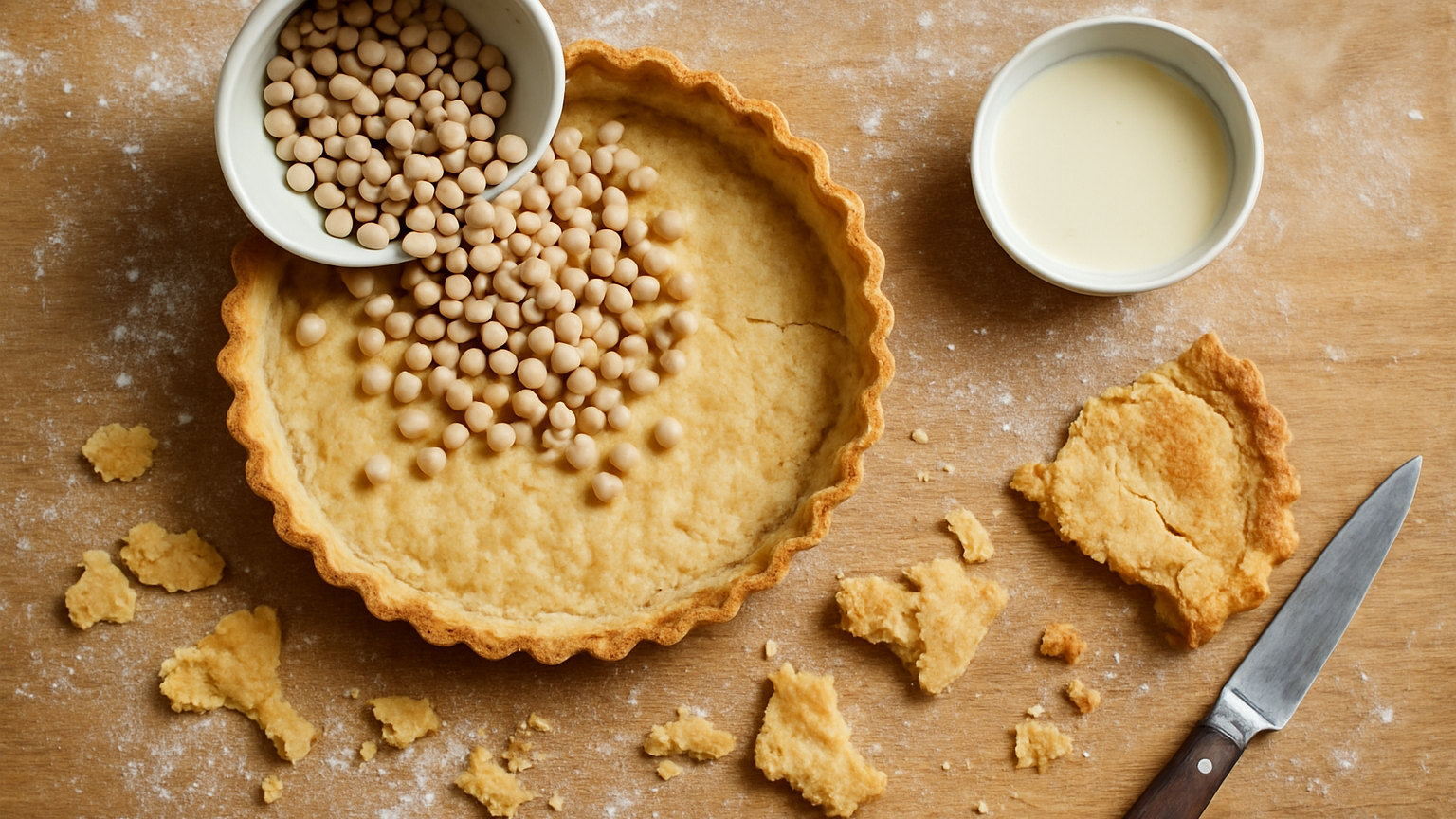
A tart case that shrinks down the sides of the tin, or cracks and leaks its filling, is frustrating because the fault happened long before the oven. Shrinking is gluten contracting under heat. Cracking is a pastry that was too dry or handled too much. Both are preventable and neither is a matter of luck.
Why does pastry shrink?
Gluten strands develop when flour meets water and are stretched during rolling. In the heat of the oven they contract, pulling the case down and inwards.
Resting is what solves it. Chilled pastry relaxes, so the gluten is no longer under tension when it goes into the oven, and it stays where you put it.
How long should it rest?
An hour as a disc after mixing, then a further thirty minutes once it is in the tin. Both matter and the second is the one usually skipped.
Overnight in the fridge is better still and splits the work.
Did you stretch it into the tin?
This is the most common cause. Pastry pulled to reach the edges is under tension and will spring back in the oven.
Roll it larger than you need, lay it in loosely and ease it into the corners rather than pulling.
Was there too much water?
Water is what develops gluten, so excess makes the pastry tough and prone to shrinking. Add it a teaspoon at a time and stop when it just comes together.
A pastry that feels wet at this stage will shrink.
Was it overworked?
Kneading and repeated re rolling both develop gluten. Bring the pastry together with a knife and handle it as little as possible.
Re rolled trimmings are always tougher, so use them for jam tarts rather than a second case.
Was the butter too warm?
Warm butter blends into the flour instead of staying in pieces, which gives a pastry that is greasy, hard to roll and prone to tearing.
Dice it straight from the fridge and stop rubbing while pieces are still visible.
Why does it crack?
Usually the pastry was too dry, so it had nothing holding it together. It can also mean the fat was rubbed in too far.
Sweet pastry cracks more readily than savoury because the sugar and extra fat make it short and fragile.
How do you patch a cracked case?
Press raw pastry into the crack, smooth it over and return the case to the oven for three minutes.
Do this before the filling goes in, since a crack will leak and weld the tart to the tin.
Does sweet pastry shrink more?
It cracks more but shrinks less, since the sugar and extra fat interfere with gluten development. Savoury shortcrust is the worse offender for shrinking.
Should you trim before or after baking?
After. Leave the pastry overhanging the rim, blind bake, then trim the excess off level with a small sharp knife.
Any shrinkage is then taken up by the overhang rather than showing on the finished tart.
Do baking beans matter?
They hold the sides up while the pastry sets. Fill the case properly, right into the corners, rather than putting a shallow layer in the base.
Rice and dried pulses work as well as ceramic beans and can be reused for years.
Should the pastry be docked?
Pricking the base with a fork lets steam escape so it does not lift the pastry into a dome. Do it before the beans go in.
Keep the holes to the base rather than the sides, since a hole in the side will leak filling.
What temperature should you blind bake at?
190C fan is hot enough to set the structure quickly before the fat melts and runs. A cooler oven gives a pale, greasy case.
Fifteen minutes with beans, then eight to ten without.
Does the tin make a difference?
A fluted metal tin grips the pastry better than a smooth ceramic dish, which helps it stay up the sides.
Do not grease the tin, since a slippery surface makes it easier for the pastry to slide down.
See also Baked Custard Tart, or browse more Puddings recipes.

