
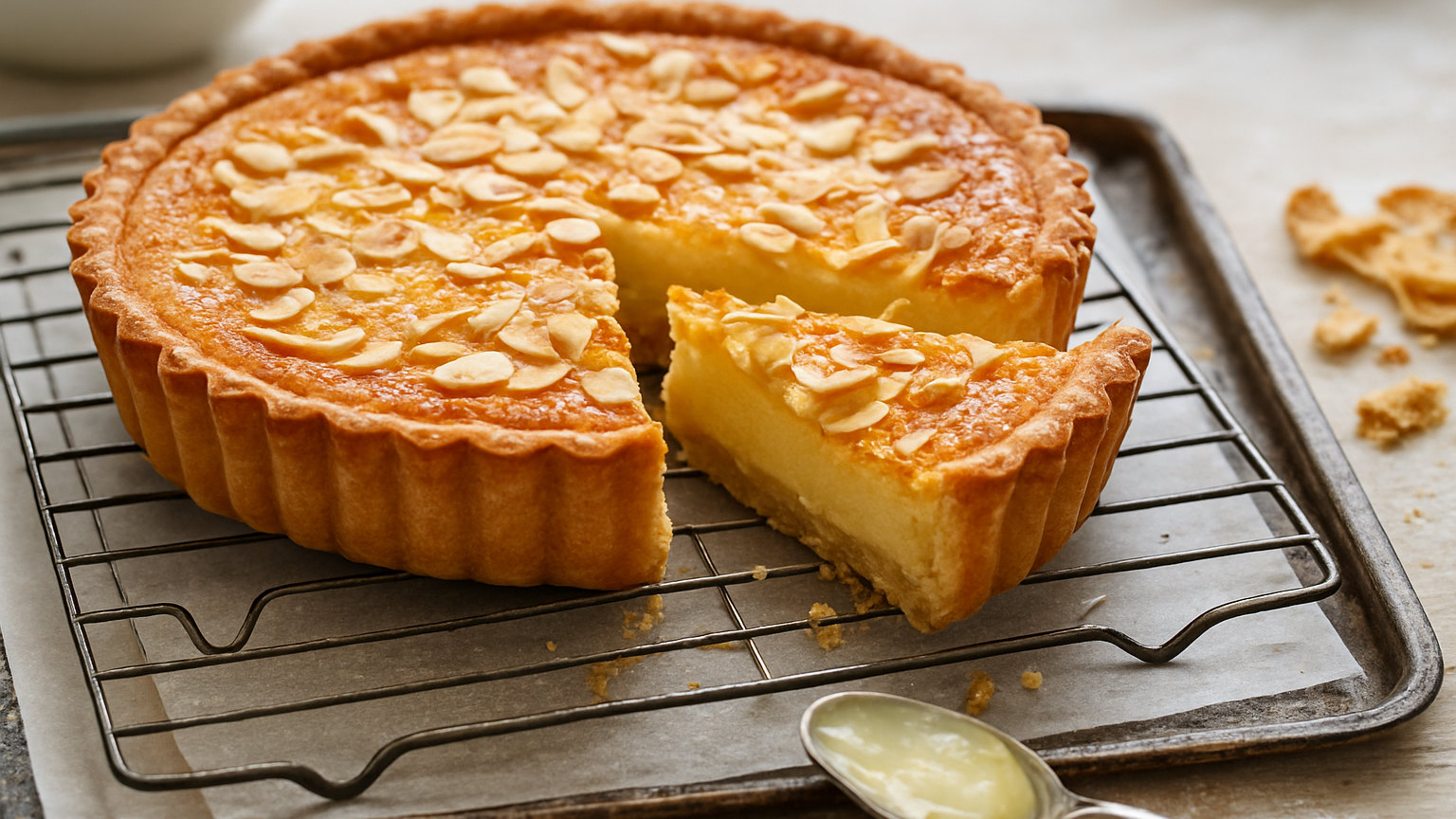
Pastry is one of the best things to keep in a freezer and tart fillings vary enormously. Some are completely unaffected, some suffer a little, and two of them are ruined outright. Knowing which is which means you can do most of the work weeks ahead and still serve something that tastes freshly made.
Can you freeze the pastry?
Yes, and it is the single most useful thing to freeze. Sweet shortcrust keeps three months as a disc, as a rolled sheet, or already lined into a tin.
A lined tin can be blind baked straight from frozen with an extra five minutes, which removes the chilling steps entirely.
Should you freeze cases raw or baked?
Raw lined tins are the more useful form, since the pastry has only been cooked once when it reaches the table.
Blind baked empty cases also freeze for a month and can be filled straight from the freezer, which is quicker still.
Which fillings freeze well?
Frangipane and anything based on it, so Bakewell and pear and almond tarts freeze for three months with no loss.
Treacle tart, chocolate tart and fruit tarts with a baked filling all freeze well too.
Which fillings do not?
Baked custard and meringue are the two to avoid. Custard separates on thawing and releases water, and meringue collapses into a sticky, weeping layer.
Lemon meringue pie should always be made fresh, though the pastry case and even the lemon filling can be frozen separately.
Can you freeze an unbaked filled tart?
Frangipane tarts can be assembled raw and frozen, then baked from frozen at 150C fan for about an hour.
Wet fillings such as custard should not be frozen raw in a case, since the pastry absorbs the liquid as it thaws.
What about a lemon tart?
A baked lemon tart freezes acceptably for a month, though the texture becomes very slightly grainy.
It is a reasonable option for leftovers rather than something to make deliberately.
Does freezing affect the pastry?
Very little, which is why it is worth doing. Raw pastry freezes and bakes as though it had never been frozen, and a baked case loses only a little crispness.
Refreshing it briefly in a low oven restores most of that.
How should a whole tart be wrapped?
Open freeze it on its metal base until solid, then wrap in two layers of cling film and a layer of foil.
Freezing it unwrapped first stops the wrapping sticking to the surface and damaging it.
How do you defrost one?
Overnight in the fridge, still wrapped, then bring to room temperature before serving. Unwrapping it cold causes condensation on the surface.
A baked tart can be refreshed at 150C fan for 10 to 15 minutes to crisp the pastry.
Should you freeze it in the tin?
Only if you have a spare, since it will be there for months. Freezing on the loose metal base and removing the ring is the better approach.
Never move a ceramic dish from freezer to hot oven, since the thermal shock can crack it.
Can you freeze slices?
Yes, and it is often more practical. Wrap each slice individually and take out one at a time.
Slices defrost in about an hour at room temperature.
How long does it all keep?
Three months for raw pastry and most baked tarts, one month for blind baked empty cases and lemon fillings.
Everything remains safe beyond that and the quality declines.
Does a frozen case need defrosting?
No, and it is better not to. A lined tin goes straight from freezer to oven, and the very cold pastry holds its shape better during blind baking.
Add about five minutes to the usual time.
What about fruit tarts with a fresh topping?
Freeze the case and the creme patissiere separately and assemble on the day. Fresh fruit and set custard both collapse if frozen.
Can you refreeze?
No. A tart made from frozen pastry, baked and served should not go back into the freezer.
Cool leftovers quickly, refrigerate within two hours and use within two to three days depending on the filling, in line with Food Standards Agency guidance.
Worth reading next: Which Tart Tin Should You Use?. There is more in our Puddings recipes.

