
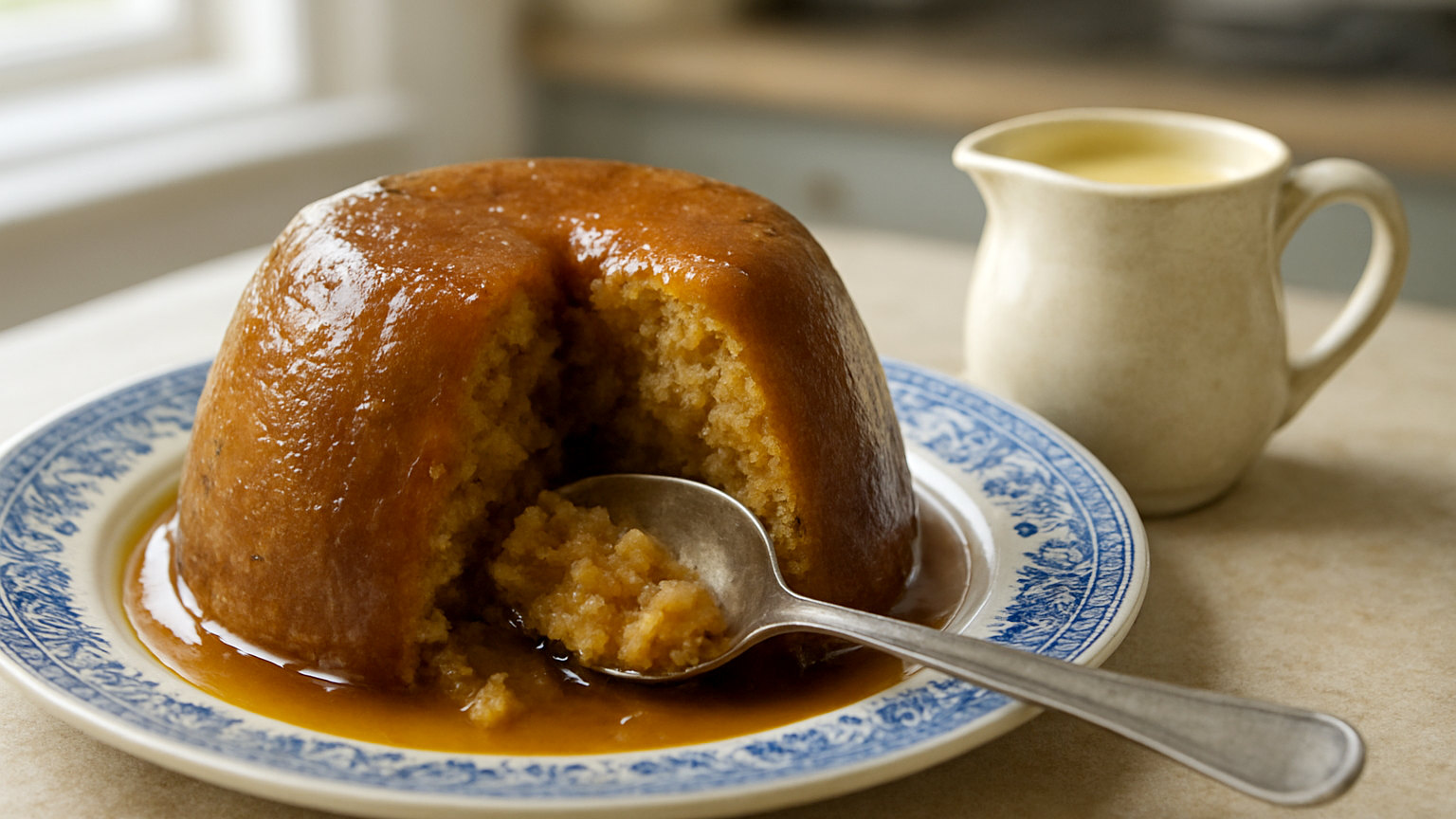
Steamed puddings are among the most useful things to make in advance, for a straightforward reason. Reheating them means steaming them again, which is exactly the process that cooked them in the first place. Nothing is compromised, unlike a pastry or a crisp topping, and a pudding that took two hours on Saturday needs thirty minutes on Sunday.
How far ahead can they be made?
Two days in the fridge for a sponge or suet pudding, kept in the basin with the cover on.
Christmas puddings are the extreme case and are traditionally made weeks or months ahead, since the alcohol and dried fruit preserve them.
How do you reheat them?
Re steam rather than microwave a whole pudding. Thirty to forty minutes over simmering water restores the texture completely, while a microwave heats it unevenly and toughens the edges.
Replace the cover with fresh pleated paper and foil before re steaming.
Can they be frozen?
Yes, cooked, for three months. Cool completely in the basin, then wrap the whole thing tightly.
Freezing them cooked is far more reliable than freezing raw batter, which can lose its raising power.
How do you reheat from frozen?
Defrost overnight in the fridge, then re steam for 40 minutes. Steaming straight from frozen takes about 90 minutes and works but is less even.
Make sure it is piping hot throughout before serving.
Can you freeze individual portions?
This is the most useful form. Cut the cooled pudding into portions, wrap each in cling film and freeze on a tray, then bag them.
Each reheats in the microwave in about 60 seconds from frozen, which turns a leftover into a weeknight pudding.
Does the sauce freeze too?
Toffee and butterscotch sauces freeze for a month, though they can separate slightly and need whisking on reheating.
Golden syrup and jam need no freezing at all and keep indefinitely.
Do suet puddings keep better than sponges?
Slightly, since the suet keeps them moist. Both reheat well, and a suet crust holds up to a second steaming better than a delicate sponge does.
Can you prepare the mixture in advance?
Not for long. Self raising flour and baking powder start working as soon as liquid is added, so the mixture should go into the basin within the hour.
The dry ingredients can be weighed out a day ahead, which saves a few minutes.
What about suet puddings with a filling?
A steak and kidney pudding can be made and steamed a day ahead and re steamed for an hour. The filling improves overnight.
Make sure the filling reaches 75C throughout when reheated, in line with Food Standards Agency guidance.
Can you make the sauce ahead too?
Toffee and butterscotch sauces keep a week in the fridge and reheat gently in a pan or the microwave. They thicken when cold and loosen again with heat.
Making the sauce a day ahead removes the last job from the meal itself.
What container should you use?
Plastic pudding basins with clip on lids are ideal for freezing, since you are not left without your ceramic basin for three months.
Never move a basin straight from freezer to a hot oven or boiling water, since the thermal shock can crack ceramic.
Do they keep at room temperature?
A sponge or suet pudding should go in the fridge once cool. Only a rich Christmas pudding, preserved with alcohol and dried fruit, keeps safely in a cool cupboard.
Everything else follows the normal two day rule.
How do you know a reheated pudding is ready?
A skewer pushed into the centre should come out hot to the touch after five seconds. The outside heats long before the middle does.
Give it another ten minutes if there is any doubt, since re steaming cannot overcook it.
Is it worth making two at once?
Almost always. The mixing takes the same time and two basins fit in most large pans, so the second pudding costs only the ingredients.
Cool leftovers quickly, refrigerate within two hours and reheat once only until piping hot.
For something along the same lines, see Why Is My Steamed Pudding Heavy or Soggy?, or browse all our Puddings recipes.

