
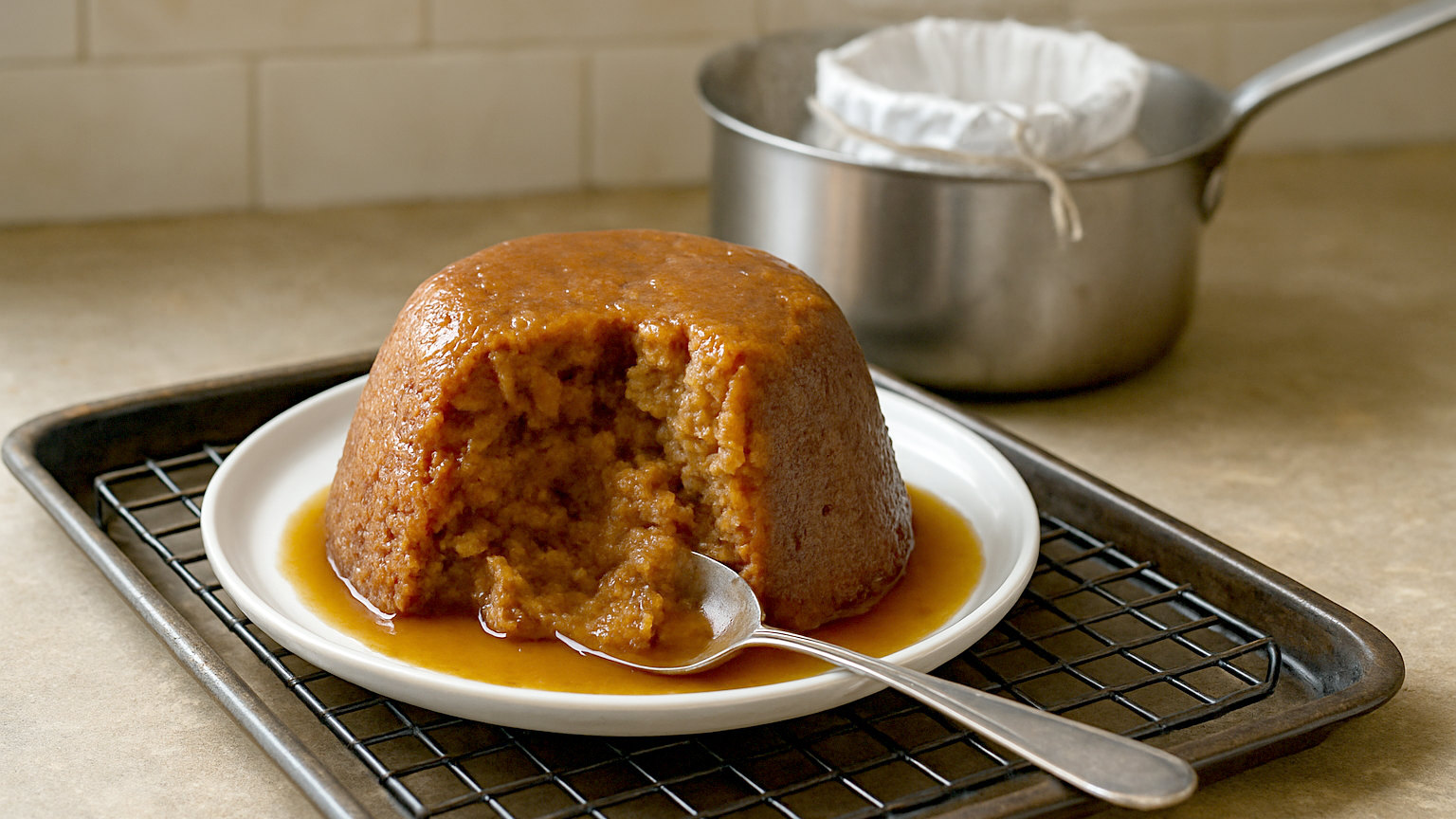
A steamed pudding that comes out dense, wet or sunken has usually been let down by the setup rather than the recipe. Steaming is a forgiving method and the failures cluster around five causes, all of them decided in the few minutes before the basin goes into the pan. Working through them identifies the problem quickly.
Did water get in?
This is the most common cause of a soggy pudding. Water condensing on the pan lid drips onto the cover, or the pan boiled too hard and splashed over the rim.
Tie the string tightly under the lip of the basin. A cover held on only by foil crimped around the edge will let water in over two hours, and the top of the pudding ends up wet.
Was the water level too high?
Halfway up the basin is right. Higher than that and a vigorous simmer can push water over the rim and under the cover.
Top up with boiling water and keep the level where it started.
Was the cover too tight?
The pudding rises during cooking. A flat cover with no pleat holds it down and gives a dense, compressed sponge.
Fold a 2cm pleat across the paper and foil before tying, which lets the cover lift as the pudding expands.
Was the basin overfilled?
Fill it no more than two thirds for a sponge. A basin filled to the brim has nowhere to rise and the mixture pushes against the cover.
Use a larger basin rather than pressing the mixture in.
Was the mixture too stiff?
A steamed sponge should be a soft dropping consistency, falling off a spoon within a couple of seconds when tapped.
A stiff mixture cannot rise properly in moist heat and bakes into something close to a dumpling.
Did the water go off the boil?
A steady simmer throughout is what cooks the pudding. If the pan cools substantially, the sponge stops rising and can sink.
Adding cold water to top up has the same effect, so always use boiling water from a kettle.
Was it steamed long enough?
Underbaked steamed puddings are wet in the middle and dense at the base. A skewer into the centre should come out clean.
Steaming is forgiving, so if in doubt re cover it and give it another twenty minutes.
Why did it sink in the middle?
Usually the cover was removed too early or the pan lost heat sharply. It can also mean too much raising agent.
Let it stand for five minutes with the cover on before turning it out.
Was there too much fruit or filling?
Heavy additions such as dried fruit sink and weigh the sponge down if there is too much of them or if they went in wet.
Keep dried fruit to about 175g per 250g of flour, and toss it in a little of the flour before folding it through.
Why did it stick to the basin?
Not enough butter, or the basin was buttered only partway up. Grease it generously right to the rim and add a disc of buttered paper in the base.
Run a knife around the edge before turning it out.
Was the raising agent stale?
Baking powder and self raising flour both lose potency after about six months in an open packet, and a pudding made with either will rise poorly.
Test baking powder by dropping half a teaspoon into hot water, where it should fizz immediately.
Was the basin the wrong material?
Ceramic and plastic basins both work well. A very thin metal basin heats faster and can overcook the outside before the middle has set.
Traditional ceramic basins are thick for exactly this reason.
Can a heavy pudding be rescued?
Not into a light one, but it is perfectly edible with plenty of custard and nobody usually complains.
Cool leftovers quickly, refrigerate within two hours and use within three days, in line with Food Standards Agency guidance.
Next, try What Do You Serve With a Steamed Pudding?, or see the rest of our Puddings recipes.

