
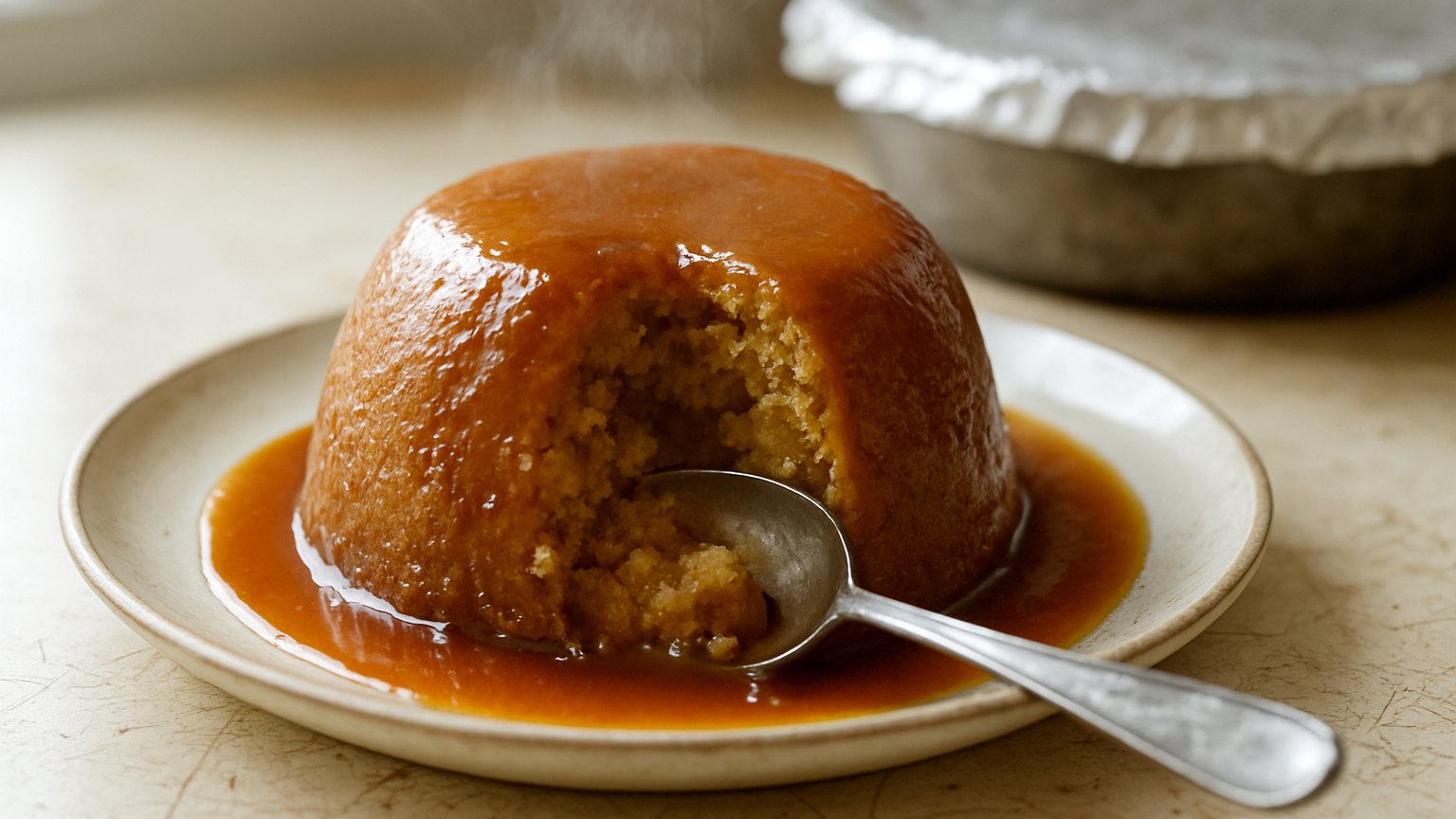
Steaming a pudding on the hob means two hours of watching a pan and topping it up. Both a slow cooker and a microwave offer an alternative, and they are useful in quite different ways. The slow cooker does the same job more reliably. The microwave does a different job very quickly and the result is not the same pudding.
Why does a slow cooker suit this?
It holds a steady temperature for hours and it cannot boil dry, which removes the single greatest risk of hob steaming.
You can leave it entirely alone. For a four hour pudding such as Sussex pond, or an eight hour Christmas pudding, that is a considerable advantage.
How do you set it up?
- Sit a trivet, an upturned saucer or a folded tea towel in the base.
- Put the covered basin on top.
- Pour in boiling water to come halfway up the basin.
- Put the lid on and cook on high.
What are the slow cooker timings?
- 600ml basin: 2 to 3 hours on high
- 1.2 litre basin: 3 to 4 hours on high
- Suet crust puddings: 5 to 6 hours on high
- Christmas pudding: 8 hours on high
Roughly double the hob time, since the temperature is lower and more gentle.
Does the basin need to fit?
Measure before you start. A standard 1.2 litre basin fits most oval slow cookers but not all round ones, and the lid must close properly.
The basin should not touch the sides.
What about a microwave?
It cooks a sponge pudding in about four minutes rather than two hours, which is remarkable and comes with a trade.
The texture is lighter and more open, closer to a very soft cake, and it stales quickly. It should be eaten within minutes.
How do you microwave one?
Use a microwave safe basin filled no more than two thirds. Cover loosely with cling film pierced several times, or a plate.
Cook a 600ml pudding on full power for 4 to 5 minutes, then rest for 5 minutes before turning out.
Why does it stale so fast?
Microwave cooking sets the starch differently and drives moisture out from the inside, so the sponge firms up rapidly as it cools.
It is excellent straight away and disappointing twenty minutes later.
Is the result the same?
From a slow cooker, effectively yes, and many people find it slightly more even. From a microwave, no, and it is best treated as a different pudding rather than a shortcut.
Can suet puddings be microwaved?
Poorly. Suet pastry needs long slow moist heat for the fat to render and the crust to become light, and four minutes does not achieve it.
Sponge puddings adapt far better than suet ones.
What about an oven bain marie?
Sitting the basin in a roasting tin of boiling water covered with foil at 160C fan works well and frees the hob. Use the same timings as the hob method.
It needs topping up less often than a pan does.
Which should you use?
A slow cooker for anything traditional, particularly long steams. A microwave for a sponge pudding on a weeknight when two hours is out of the question.
The hob remains perfectly good if you are in the kitchen anyway.
Does an electric pressure cooker work?
Very well, and it is the fastest of the traditional methods. A 1.2 litre sponge pudding takes about 35 minutes at high pressure with natural release.
Use the trivet supplied and the same amount of water as for a slow cooker.
Do the covers change?
Pleated paper and foil for a slow cooker or pressure cooker, exactly as for the hob. For a microwave, use pierced cling film or a loose plate rather than foil.
Never put foil in a microwave.
Can you reheat in either?
A microwave reheats a slice of steamed pudding in about 40 seconds, which is the easiest way to deal with leftovers.
It must be piping hot throughout and reheated once only, in line with Food Standards Agency guidance.
See also How to Steam a Pudding Properly, or browse more Puddings recipes.

