
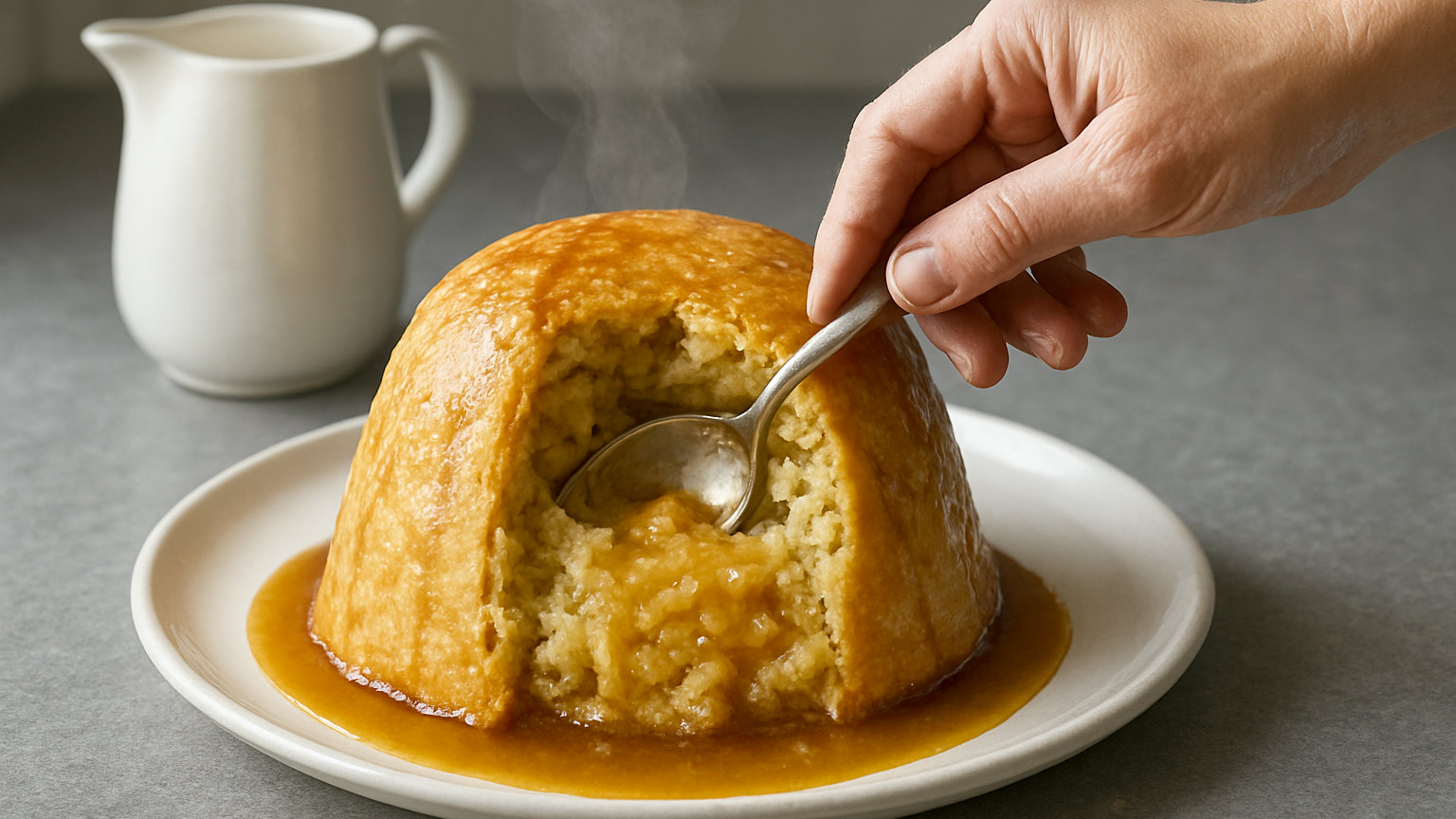
Steaming a pudding is a technique nobody is taught any more and it is entirely straightforward once seen. The pudding sits in a covered basin above simmering water, so it cooks in moist heat at around 100C rather than the dry heat of an oven. That is what makes a steamed sponge so light and why it cannot dry out.
What equipment do you need?
A pudding basin, a large pan with a lid, something to keep the basin off the base, string, baking paper and foil.
An upturned saucer or a metal trivet works. A folded tea towel in the base of the pan does the same job.
How do you cover the basin?
- Cut a circle of baking paper and one of foil, both about 6cm wider than the basin.
- Lay the paper on the foil and fold a 2cm pleat across the centre of both together.
- Sit them over the basin, paper side down, pleat running across the middle.
- Tie string tightly around the rim under the lip.
- Take a second length of string across the top and tie it to the first on both sides to make a handle.
The pleat is not decorative. The pudding rises during cooking and needs the cover to expand with it, and a flat cover either splits or holds the sponge down.
Why paper under the foil?
Foil in direct contact with an acidic filling such as jam or syrup can react over two hours. Paper prevents that and the foil provides the waterproof layer.
Either alone will work at a pinch, though the pair is better.
How much water should be in the pan?
Halfway up the side of the basin, and it must be boiling when it goes in. Adding cold water at the start extends the cooking time considerably.
Keep it at a steady simmer rather than a rolling boil, which splashes water onto the cover.
How often should you check it?
Every forty minutes, topping up with boiling water from a kettle. A pan that boils dry scorches and the pudding stops cooking.
Set a timer, since it is easy to forget over two hours.
What are the usual timings?
- Individual puddings in dariole moulds: 35 to 45 minutes
- 600ml basin: 1 hour 15 minutes
- 1.2 litre basin: 1 hour 45 minutes to 2 hours
- Suet puddings with a filling: 2 to 3 hours
- Christmas pudding: 6 to 8 hours
How do you know it is done?
A skewer into the centre should come out clean and the sponge should be risen and springy. For a suet crust pudding, the pastry should be firm and pale.
If it needs longer, re cover it and continue. Steaming is forgiving and an extra twenty minutes rarely hurts.
Can you use a steamer basket instead?
Yes, and a proper steamer or a metal colander over a pan both work. The basin should not touch the water.
An electric steamer works for smaller puddings if it is tall enough.
How do you get the basin out?
By the string handle, which is what it is for. Lift it carefully, since the basin is full of very hot pudding and the water beneath is boiling.
Let it stand for five minutes before turning it out.
How full should the basin be?
No more than two thirds for a sponge pudding, which needs room to rise. A suet crust pudding can be filled closer to the top since it expands less.
Overfilling is the commonest reason a cover is pushed off during steaming.
Does the basin need buttering?
Generously, and right up to the rim, or the pudding sticks and tears when turned out. A disc of buttered paper in the base is extra insurance.
Can you steam in the oven?
Yes. Sit the covered basin in a deep roasting tin, pour boiling water halfway up and cover the whole tin with foil. Cook at 160C fan for the same time.
It frees the hob and needs less topping up.
For something along the same lines, see Can You Steam a Pudding in a Slow Cooker or Microwave?, or browse all our Puddings recipes.

