
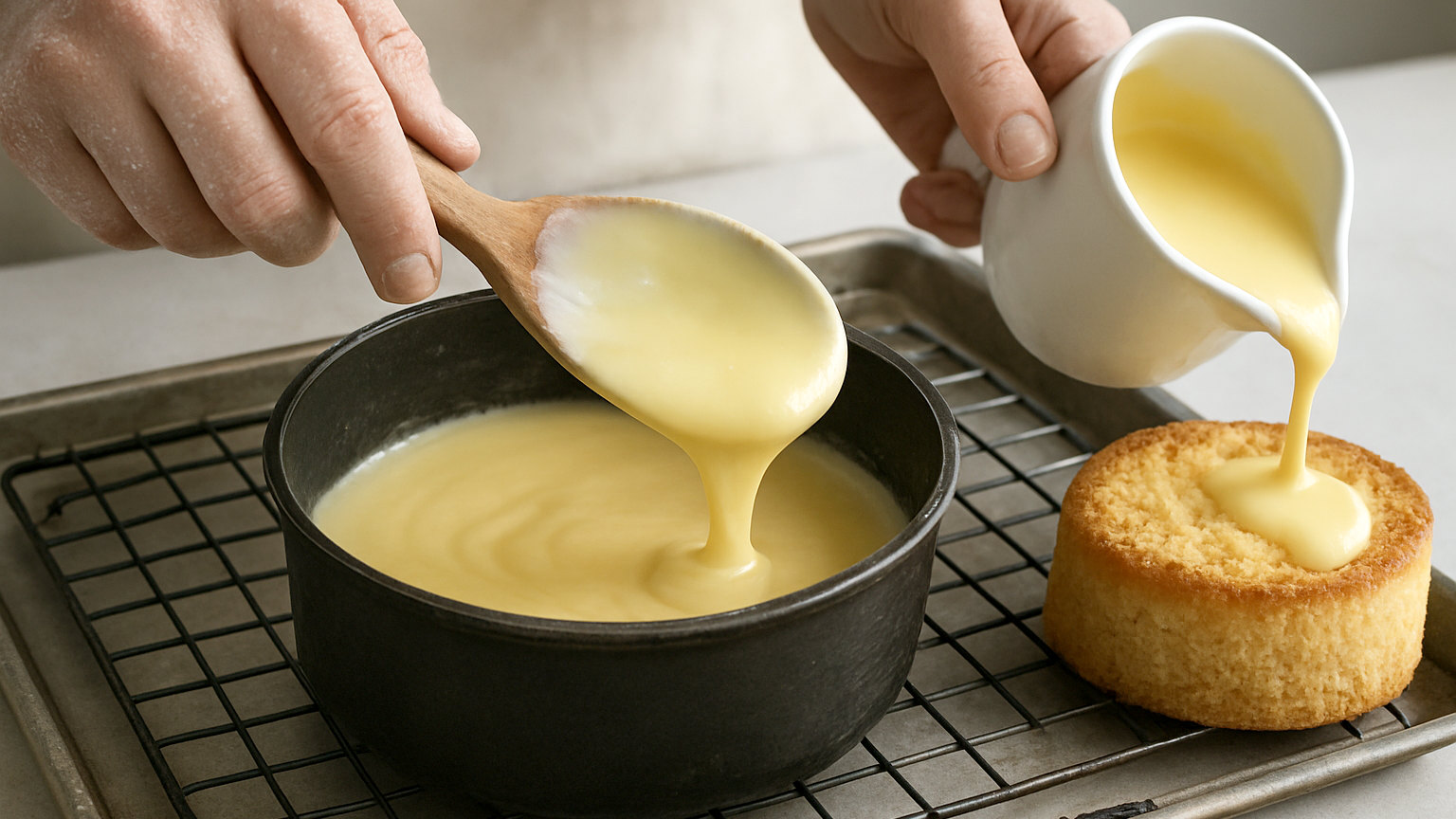
There are really three custards in British cooking and they are not interchangeable. A thin pouring custard, a thicker one that sets when cold, and pastry cream stiff enough to pipe. Using the wrong one is behind most custard disappointments, particularly trifles where the cream layer sinks straight through into the fruit.
What is pouring custard for?
Crumbles, steamed puddings, pies and tarts. Anything where it is a sauce poured over at the table.
It should coat a spoon and run off it readily. Around six yolks to 600ml of liquid, with no starch.
What does a trifle need?
Considerably thicker than pouring custard. It has to hold several centimetres of whipped cream above it without the two merging.
Add a teaspoon or two of cornflour to an egg custard, or use custard powder made up thick. It should hold a spoon upright briefly.
What is pastry cream for?
Tart fillings, eclairs, doughnuts and custard slices. It contains a high proportion of cornflour and sets firm enough to cut and pipe.
It is far too thick to pour and would be unpleasant as a sauce.
What about baked custards?
Creme brulee, creme caramel and custard tarts are set in the oven rather than on the hob, and the eggs do all the work.
They are made from a thin liquid that firms during baking, so they should pour easily into the dish.
How do you thicken a custard that is too thin?
Slake a teaspoon of cornflour in cold milk, whisk it in and bring back to a boil briefly.
Adding more egg yolk works but risks curdling and is harder to judge.
Can you use the same recipe for all three?
Broadly yes, by changing the starch. The same milk, yolks and sugar make a pouring custard with no cornflour, a trifle custard with two teaspoons, and pastry cream with 40g.
Only the no starch version has to be kept below a boil.
How do you thin one that is too thick?
Whisk in warm milk a tablespoon at a time over a low heat.
Cold milk added to hot custard can make it lumpy, so warm it first.
What about a custard for a tart?
A baked tart takes a thin liquid custard poured into a blind baked case, set entirely by the eggs in a low oven.
A fresh fruit tart takes pastry cream instead, spread cold into the case with fruit arranged on top.
Which is best for ice cream?
A rich pouring custard with a high yolk count and cream in place of some of the milk.
Starch is best avoided, since it gives a slightly gummy texture when frozen.
Does it matter hot or cold?
Every custard thickens considerably as it cools. Judge the consistency at the temperature it will be served.
A trifle custard should look almost too thick while warm.
How much do you need per person?
About 125ml of pouring custard, which is generous. For a trifle, allow roughly 100ml per person in the custard layer.
Make more pouring custard than you think, since people help themselves liberally.
Can shop bought custard be used?
Fresh chilled custard is good for pouring and usually too thin for a trifle. Tinned is thinner still.
Thicken either with cornflour if it needs to hold a layer.
How thick should each one be?
- Pouring: coats a spoon and runs off freely
- Trifle: holds a spoon upright for a moment
- Pastry cream: holds its shape completely and can be piped
- Baked: pours like single cream before it goes in the oven
Does the pudding it goes with matter?
Sharp puddings such as rhubarb crumble take a sweeter custard well. Very sweet ones such as treacle tart are better with a plainer, less sugary custard.
Adjust the sugar rather than the thickness for this.
Which should a beginner make first?
A cornflour custard, since it cannot curdle. Move to creme anglaise once the method is familiar.
Cool any custard quickly and refrigerate within two hours, in line with Food Standards Agency guidance.
For something along the same lines, see Making Custard Ahead and Freezing It, or browse all our Puddings recipes.

