
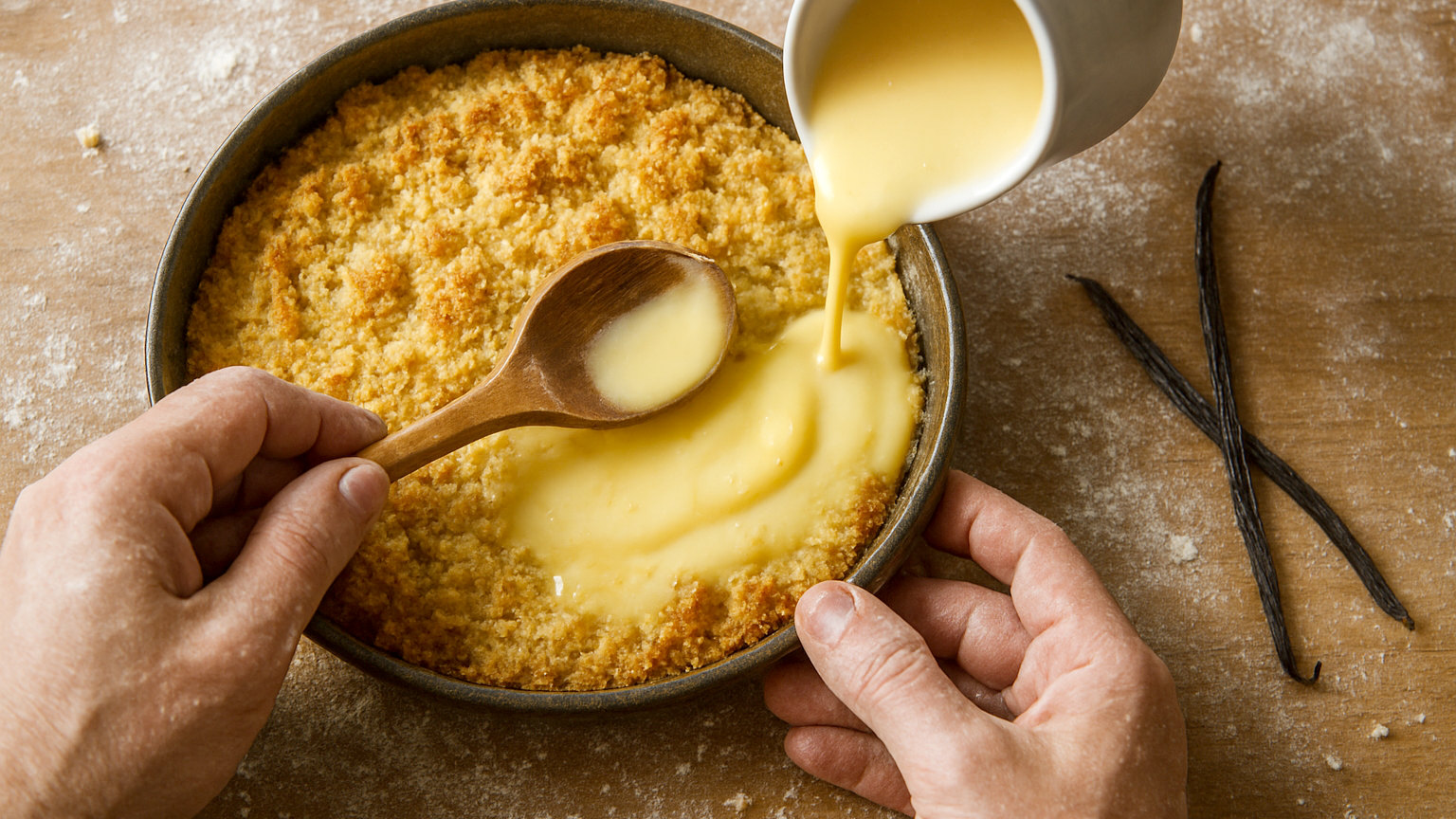
Queen of puddings is a Victorian dish of three layers baked in stages: a set custard thickened with breadcrumbs, a layer of warmed jam, and a meringue browned on top. It is rarely made now, which is a pity, because it uses up stale bread and spare egg whites and tastes considerably better than the description suggests.
What do you need for 6 people?
- 600ml whole milk
- 50g butter
- Zest of 1 lemon
- 125g fresh white breadcrumbs
- 4 egg yolks and 50g caster sugar for the base
- 4 tablespoons raspberry or strawberry jam
- 4 egg whites and 200g caster sugar for the meringue
How do you make it?
- Heat the oven to 160C fan, 180C conventional, gas mark 4.
- Warm the milk with the butter and lemon zest until the butter melts.
- Stir in the breadcrumbs and leave for 15 minutes to swell.
- Whisk the yolks and 50g sugar together, then stir into the breadcrumb mixture.
- Pour into a buttered 1.5 litre dish and bake for 25 to 30 minutes until just set.
- Warm the jam and spread it gently over the surface.
- Whisk the whites to soft peaks, add the 200g sugar gradually and whisk until stiff and glossy.
- Spoon over the jam, sealing to the edges, and bake for 15 minutes until pale gold.
Warm the jam before spreading it. Cold jam drags and tears the set custard beneath it, and a torn base lets the meringue sink into the custard.
Why breadcrumbs rather than flour?
They give body and a soft, slightly grainy texture quite unlike a smooth custard, and it is what makes the dish distinctive.
Use fresh white breadcrumbs from slightly stale bread, not dried packet crumbs.
Why bake it in stages?
The custard base must be set before the jam and meringue go on, or all three layers merge into one.
The meringue then needs only fifteen minutes to cook through and colour.
How do you know the base is set?
Firm to a light touch with no liquid movement underneath. A slight wobble is fine.
Let it cool for ten minutes before the jam goes on.
Why does the meringue weep?
Undissolved sugar, or the base was cold when the meringue went on. Both leave syrup pooling underneath.
Add the sugar gradually and spread the meringue while the base is still warm.
Why seal the meringue to the edges?
Meringue shrinks as it bakes, and if it does not touch the dish all the way round it pulls away and weeps into the gap.
How much sugar for the meringue?
About 50g per egg white. Less and it will not hold its structure through baking.
Add it a tablespoon at a time and whisk until the mixture feels smooth rather than gritty.
Can the base be made ahead?
Bake it a few hours ahead and keep it at room temperature, then add jam and meringue shortly before serving.
The meringue does not keep, so that stage has to be close to the meal.
Which jam is traditional?
Raspberry, and its sharpness balances the sweet meringue well. Strawberry, blackcurrant and apricot all work.
Why is it called that?
The name is Victorian and appears from the middle of the nineteenth century. Similar breadcrumb puddings are considerably older.
It has no confirmed royal connection despite the name.
Can you use the leftover yolks or whites?
The recipe uses four of each, which is unusually convenient. Nothing is left over.
That balance is part of why it was a thrifty Victorian dish.
Can it be made in individual dishes?
Yes, in six ramekins. The base needs about 18 minutes and the meringue about 10.
They look considerably smarter than one large dish.
How should it be served?
Warm rather than hot, about twenty minutes after it leaves the oven, with pouring cream.
It is best on the day. Refrigerate leftovers within two hours and use within two days.
Worth reading next: Why Does My Custard Curdle?. There is more in our Puddings recipes.

