
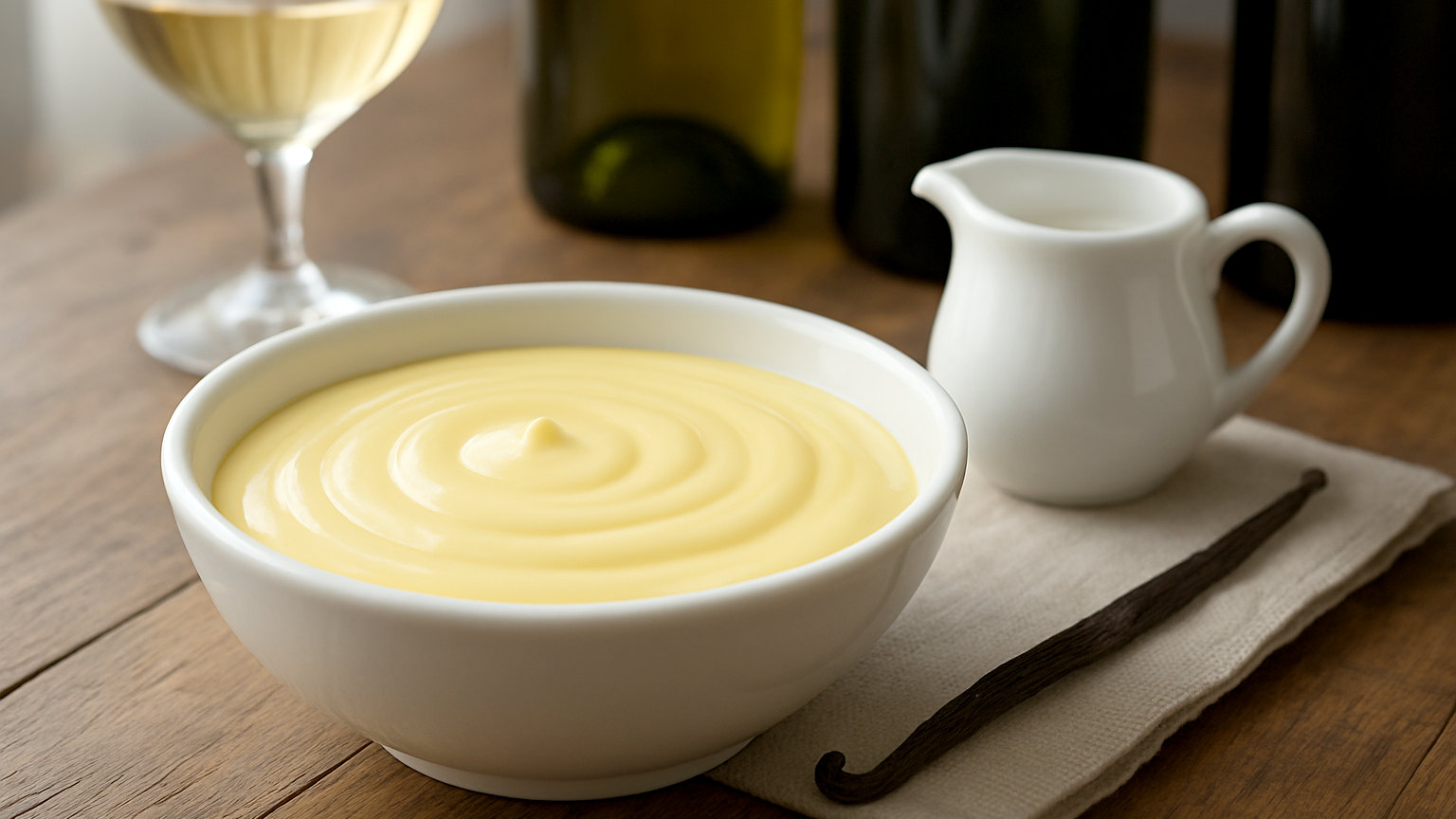
Proper custard is egg yolks and sugar cooked gently in milk and cream until it thickens. There is nothing else in it, which is why the temperature matters so much. Egg proteins set at around 85C, and a few degrees past that they tighten into scrambled egg. Everything about the method is designed to keep you below that line.
What do you need for 600ml?
- 400ml whole milk
- 200ml double cream
- 1 vanilla pod, split, or 2 teaspoons vanilla extract
- 6 egg yolks
- 75g caster sugar
How do you make it?
- Heat the milk, cream and split vanilla pod to just below a simmer.
- Take off the heat and leave to infuse for 20 minutes.
- Whisk the yolks and sugar together until pale.
- Pour the warm milk over the yolks in a slow stream, whisking constantly.
- Return to the pan over a low heat.
- Stir continuously with a wooden spoon, reaching into the corners.
- After 8 to 10 minutes it will thicken enough to coat the back of the spoon.
- Strain through a fine sieve immediately and stop the cooking.
Keep it below 85C and never let it simmer. If you have a thermometer, take it off at 82C. Without one, the moment it thickens is the moment to remove it, and hesitating is what ruins it.
What is the coating test?
Dip a wooden spoon in and draw a finger across the back of it. If the line holds clean without the custard running back across it, it is ready.
Before that point the custard runs together immediately.
Why temper the eggs?
Pouring hot milk slowly onto the yolks while whisking raises their temperature gradually. Tipping the yolks into hot milk scrambles them on contact.
Pour in a thin stream and keep whisking throughout.
How many yolks per litre?
Between eight and ten yolks per litre of liquid for a pouring custard. Fewer gives a thinner sauce and more gives something close to a set custard.
Six yolks to 600ml, as here, is a rich pouring consistency.
Why strain it?
It catches the vanilla pod, any strands of chalaza from the eggs, and any small pieces that have begun to set.
It also stops the cooking by moving the custard off the hot pan.
Can you use a bain marie?
A bowl over simmering water makes overheating almost impossible, at the cost of taking about twice as long.
It is the sensible method if you are nervous, and direct heat is quicker once you are confident.
Can it be made in a microwave?
It can, in short bursts of twenty seconds with a whisk between each. It needs constant attention and offers no real advantage over a pan.
Should it contain cornflour?
Not in a true creme anglaise. A teaspoon of cornflour makes it far more forgiving and slightly less silky, which is a reasonable trade for a trifle.
With cornflour in it the custard can be brought to a boil safely.
What should you serve it with?
Crumbles, steamed puddings, pies and tarts. It is the default British pudding sauce and it suits anything sharp or stodgy.
Allow about 125ml per person, which is generous.
How do you stop a skin forming?
Press cling film directly onto the surface while it cools. A skin is harmless and forms because proteins dry at the surface.
What can you do with the whites?
Meringues, an Eton mess, macaroons or an omelette. Egg whites freeze for three months and are worth keeping.
Freeze them individually in an ice cube tray so you can take out the number you need.
Can you flavour it differently?
Infuse the milk with orange or lemon zest, a bay leaf, a cinnamon stick, coffee beans or cardamom pods.
Strain them out with the vanilla pod before the custard goes back on the heat.
How long does it keep?
Three days refrigerated. Reheat gently without boiling, or serve it cold.
Cool it quickly and refrigerate within two hours, in line with Food Standards Agency guidance.
Next, try Custard Powder: What It Is and How to Use It, or see the rest of our Puddings recipes.

