
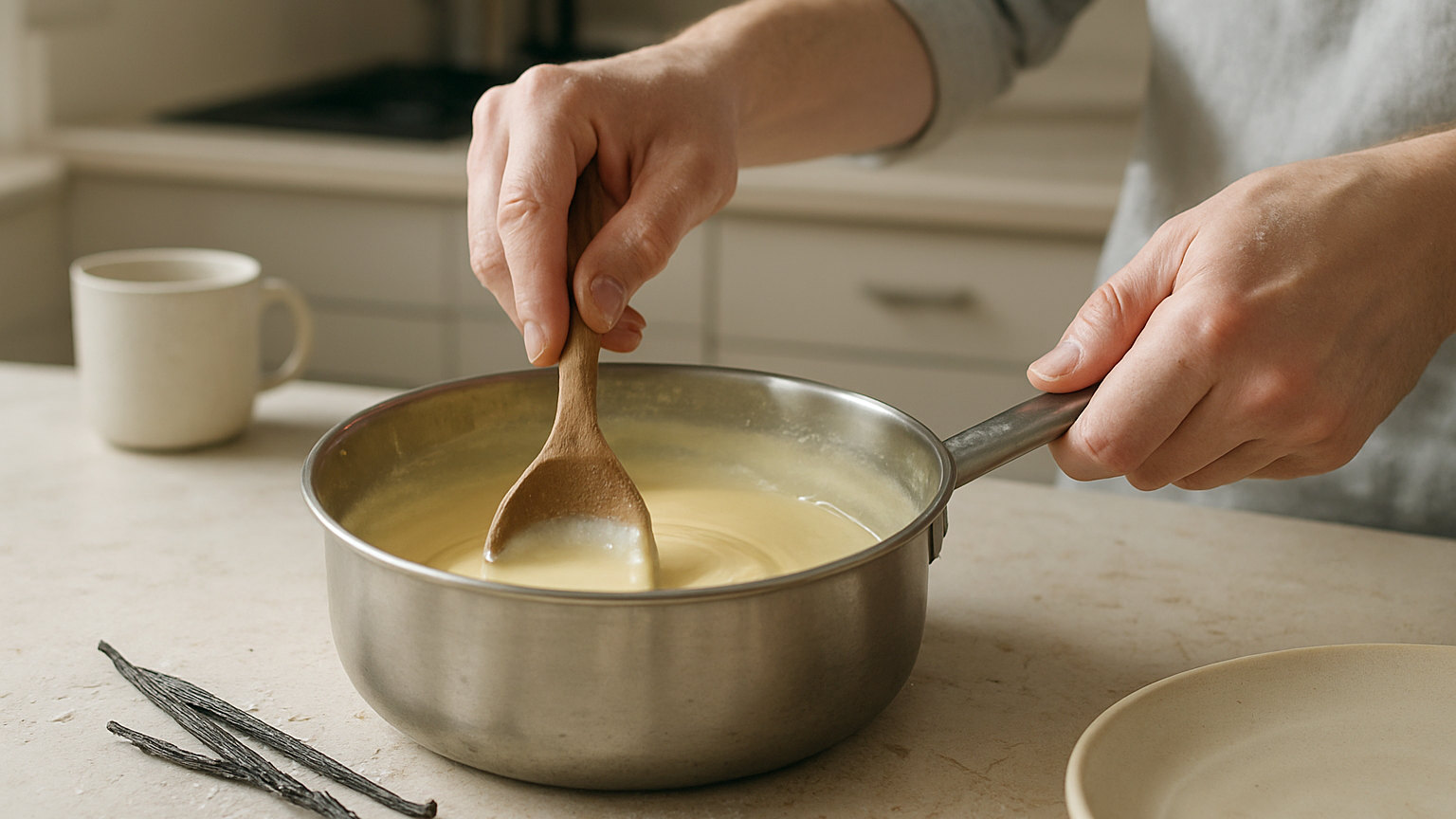
Creme brulee is a baked cream custard with a sheet of hard caramel over it, and the contrast between the two is the entire dish. That means both have to be right: the custard barely set and cold, the caramel thin and glassy. The most common fault is caramelising the sugar while the custard is still warm, which melts it into a soft mess.
What do you need for 6 ramekins?
- 600ml double cream
- 1 vanilla pod, split
- 6 egg yolks
- 75g caster sugar
- 6 tablespoons caster or demerara sugar for the tops
How do you make it?
- Heat the oven to 140C fan, 160C conventional, gas mark 3.
- Heat the cream with the vanilla to just below a simmer and infuse for 20 minutes.
- Whisk the yolks and sugar without incorporating air.
- Pour the warm cream over, whisking gently, then strain.
- Skim any foam off the surface.
- Divide between ramekins in a deep roasting tin.
- Pour hot water into the tin to come halfway up the ramekins.
- Bake for 30 to 40 minutes until set at the edges with a distinct wobble in the centre.
Chill for at least four hours before caramelising. The sugar has to be melted with fierce heat, and only a fridge cold custard can survive it without softening underneath.
Why bake it in water?
The water cannot exceed 100C, so it moderates the heat around the ramekins and the custard cooks gently and evenly.
Without it the edges overcook and curdle before the middle has set.
How do you know it is done?
Firm at the edges and still wobbling in the centre like a loose jelly when the tin is nudged.
It sets further as it chills, so a custard that looks fully firm in the oven is overcooked.
How do you caramelise the sugar?
Sprinkle a thin, even layer over the cold custard and work a blowtorch across it until it melts and darkens.
Keep the flame moving. A grill can work if it is fierce and the ramekins are close to it, though it warms the custard more.
Why skim the foam?
Bubbles on the surface bake into a pitted top, and the caramel then sits unevenly on it rather than forming a smooth sheet.
How thick should the sugar be?
A thin even layer, about a tablespoon per ramekin. Too thick and it will not melt through, leaving gritty sugar under the caramel.
Tip the ramekin and tap off any excess before torching.
Caster or demerara?
Caster melts more evenly and gives a thinner, glassier sheet. Demerara gives a thicker, more toffee like crust.
Both are used and caster is more common in restaurants.
How long before serving should it be torched?
Within about half an hour. The caramel absorbs moisture from the custard and softens, so it will not stay glassy for long.
What size ramekins should you use?
Shallow wide ramekins of about 150ml, which give the best ratio of caramel to custard. Deep narrow ones bake unevenly.
Traditional creme brulee dishes are wider and shallower than standard ramekins for this reason.
Why is it cream rather than milk?
The high fat content gives the dense, silky texture that distinguishes it from a lighter baked custard.
Replacing some with milk gives a lighter set that is closer to a creme caramel.
Can you flavour it?
Orange zest, coffee beans, cardamom or a bay leaf infused in the cream all work. Strain them out before baking.
Keep it subtle, since vanilla and caramel are the point of the dish.
Do you need a blowtorch?
It is far the best tool and a small one is inexpensive. A very hot grill works at a pinch, with the ramekins sitting in a tray of iced water to protect the custard.
Grilling gives a less even caramel and warms the custard more.
How long does it keep?
The custards keep three days refrigerated and covered, uncaramelised.
Torch them just before serving, in line with Food Standards Agency guidance on storing egg dishes.
If that was useful, Creme Caramel covers related ground, and there is plenty more in Puddings recipes.

