
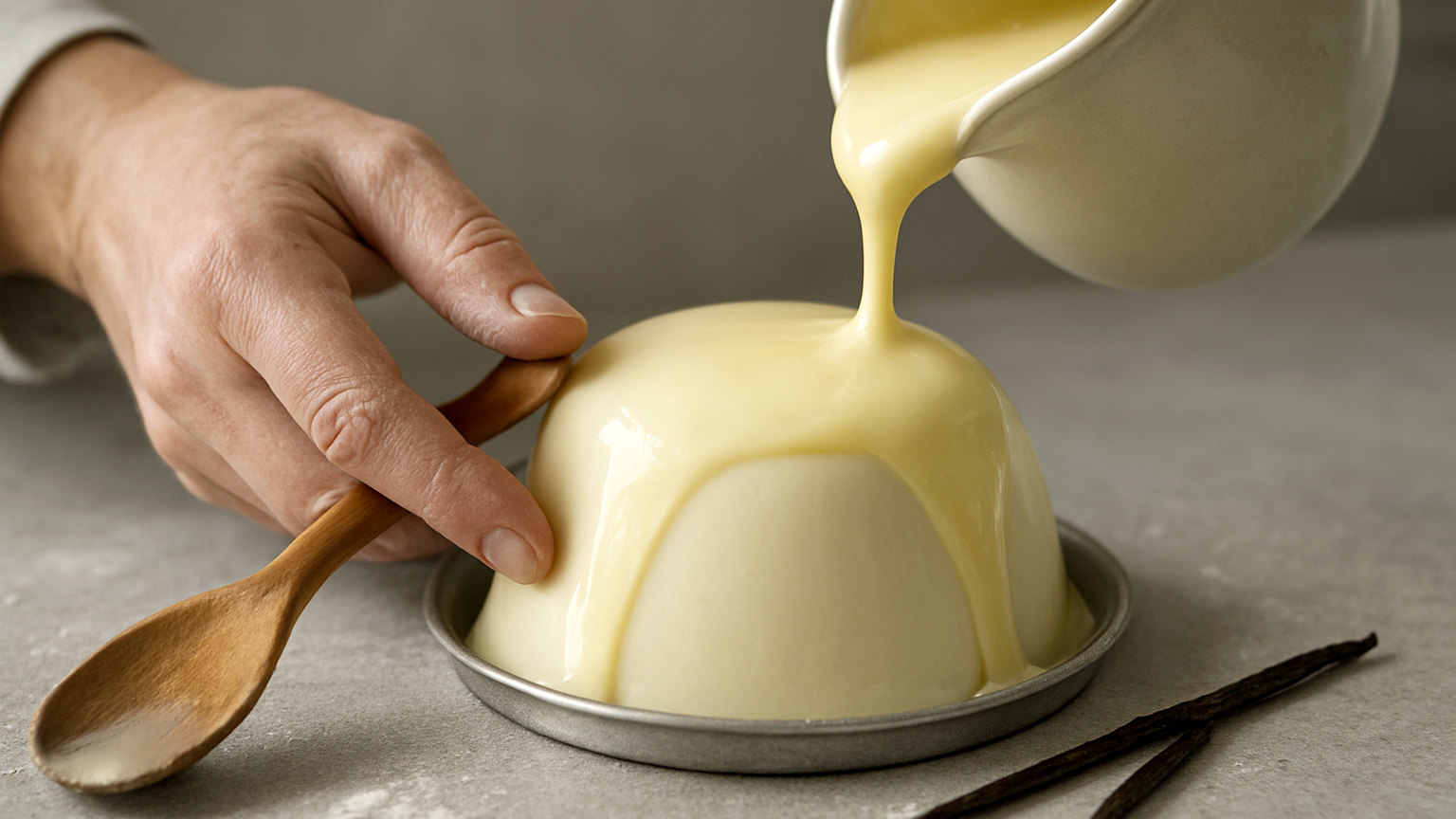
Blancmange is a set milk pudding turned out of a mould, and the modern British version is thickened with cornflour. It has an unfortunate reputation from decades of packet mixes, which is unfair to a pudding that is genuinely good when made with whole milk, a real vanilla pod and a little cream.
What do you need for 6 people?
- 600ml whole milk
- 150ml double cream
- 1 vanilla pod, split, or a strip of lemon zest
- 50g cornflour
- 75g caster sugar
- 50g ground almonds, optional
- A pinch of salt
How do you make it?
- Heat the milk, cream, vanilla and ground almonds to just below a simmer.
- Take off the heat and infuse for 30 minutes, then strain.
- Mix the cornflour, sugar and salt to a smooth paste with 4 tablespoons of the cold infused milk.
- Bring the rest of the milk back to just below a simmer.
- Pour a little onto the paste, whisk, then return everything to the pan.
- Bring to the boil, whisking, and cook for 2 minutes until very thick.
- Pour into a wetted 1 litre mould.
- Cool, then refrigerate for at least 4 hours until firmly set.
Wet the mould with cold water before pouring. The film of water stops the pudding gripping the sides and is the difference between a clean turn out and one that comes away in pieces.
How much cornflour does it need?
About 50g per 750ml of liquid for a pudding firm enough to stand unsupported.
Less gives a soft set that will not hold its shape out of the mould.
Why the ground almonds?
Medieval blancmange was made with almond milk, and the almonds are a nod to that. They add richness and a faint marzipan note.
Strain them out with the vanilla, since they would make the texture gritty.
Can it be made in individual moulds?
Yes, in six dariole moulds or ramekins, which set in about two hours and turn out more reliably than one large pudding.
They also portion themselves.
How do you turn it out?
Run a finger around the top edge to break the seal, put a plate over the mould and invert it firmly.
If it resists, dip the base in warm water for ten seconds.
Why did it collapse?
Not enough cornflour, or it was not boiled for long enough to reach full thickening power.
Two minutes at a proper boil is essential.
How long does it take to set?
Four hours in the fridge for a 1 litre mould, and overnight is safer if it has to be turned out for guests.
Small individual moulds set in about two hours.
Is it the same as panna cotta?
No. Panna cotta is set with gelatine and is softer and wobblier. Blancmange is set with starch and is firmer and more opaque.
Why does it have a bad reputation?
Decades of packet mixes made with water and artificial flavouring, usually served in school canteens.
Made with whole milk, cream and a real vanilla pod it is a different pudding entirely.
How old is it?
Medieval, and originally a savoury dish of shredded chicken with almond milk and rice. It became sweet over the centuries.
The name simply means white food.
Can it be flavoured or coloured?
Infuse the milk with lemon zest, bay or almond. The pink blancmange of childhood was flavoured and coloured artificially.
A little fruit puree stirred in before setting colours it naturally, though it softens the set.
What moulds work?
A traditional fluted jelly mould, a pudding basin or a loaf tin. Anything with a smooth interior and no sharp undercuts.
Metal moulds release more easily than ceramic.
What should you serve with it?
Poached rhubarb, raspberries, or a compote of summer fruit. It is plain and needs something sharp.
How long does it keep?
Three days refrigerated in the mould, covered. Turn it out on the day of serving.
It does not freeze, in line with the behaviour of all starch set puddings.
See also Queen of Puddings, or browse more Puddings recipes.

