
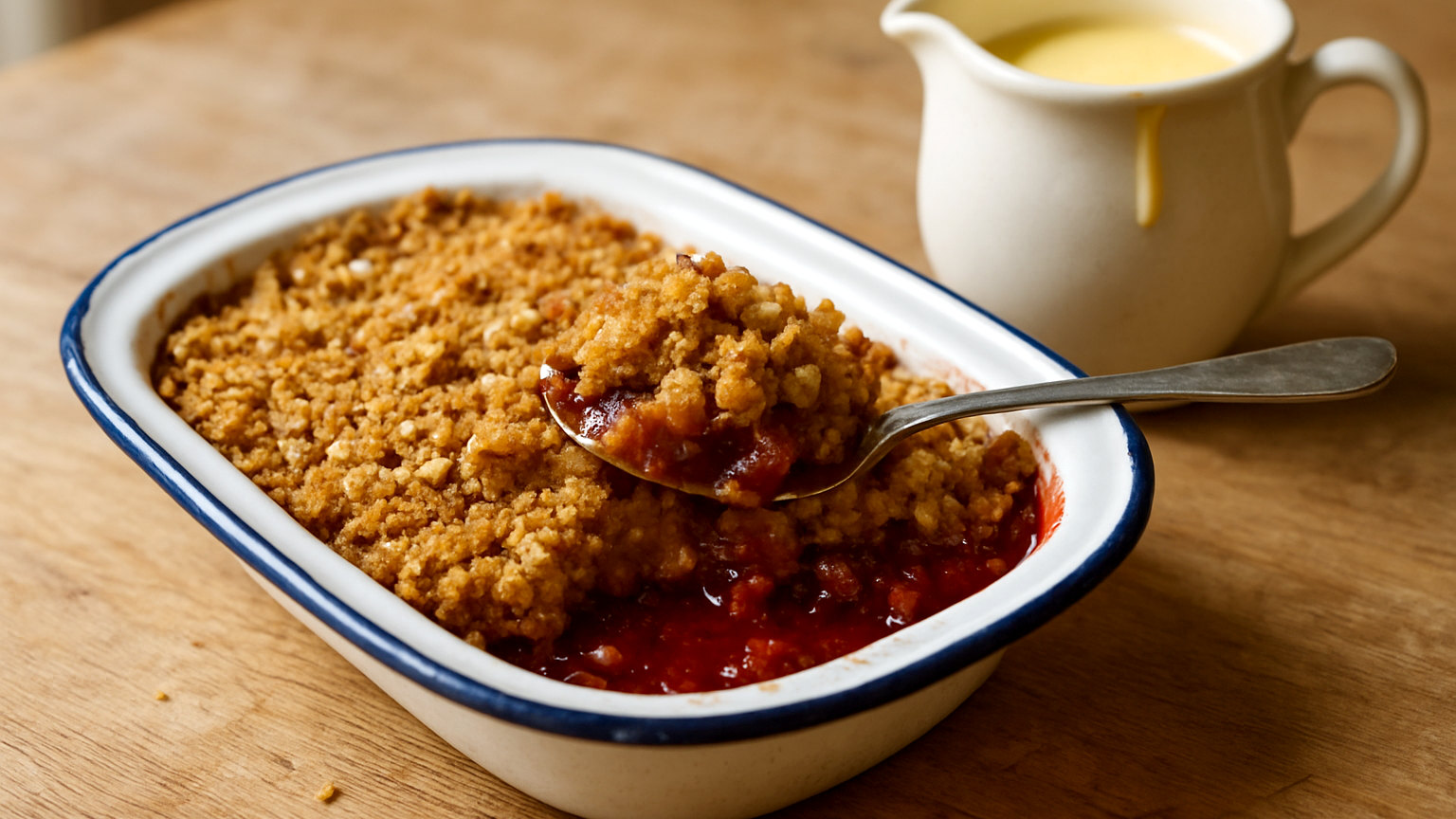
The basic crumble topping is flour, butter and sugar in a fixed proportion, and almost everything interesting happens when you replace part of the flour with something else. The ratio itself barely changes, which means the variations below are all substitutions rather than new recipes. Each one alters the texture in a predictable way.
What is the base topping?
- 200g plain flour
- 100g cold butter, diced
- 75g sugar
That covers a dish serving six. Rub the butter into the flour until it resembles coarse breadcrumbs, then stir in the sugar.
What do oats do?
They give a crunchier, more open texture and absorb some of the moisture rising from the fruit, which helps with sogginess.
Replace about a quarter of the flour with rolled oats. More than that and the topping becomes heavy and slightly chewy rather than crumbly. Use rolled oats rather than instant, which turn to paste.
Which nuts work best?
Flaked almonds with stone fruit, hazelnuts with apple and pear, walnuts with plum or fig, and pecans with anything.
Add 50g of chopped or flaked nuts to the finished topping. Toasting them first deepens the flavour considerably.
What about ground almonds?
Replacing 50g of the flour with ground almonds gives a richer, shorter topping that browns more readily and absorbs liquid well.
It suits wet fruit such as plums and rhubarb particularly.
Does the sugar matter?
Considerably. Caster sugar dissolves and disappears. Demerara stays granular and gives a crunchy, slightly caramelised finish.
Light brown sugar adds a toffee note. Demerara is the best all round choice for a crumble.
Which spices suit which fruit?
Cinnamon with apple, ginger with rhubarb and pear, mixed spice with autumn fruit, and cardamom with plum.
Half a teaspoon in the topping is enough, and any more competes with the fruit.
Can you make it gluten free?
Yes, and it works better than most gluten free baking. Use a gluten free plain flour blend, or replace the flour entirely with ground almonds and gluten free oats.
The topping has no structural job to do, so there is nothing that gluten was needed for.
What about a vegan version?
A firm vegan block rubbed in exactly like butter works well. Coconut oil also works and adds a faint sweetness.
Both need to be properly cold, which matters more than with butter since they soften faster.
What about breadcrumbs?
Replacing a quarter of the flour with fresh breadcrumbs gives a lighter, crisper topping and is a good use of stale bread.
It is close to what a brown betty does, and it browns faster so watch it.
Can you add cheese?
Grated mature cheddar in an apple crumble topping is a genuine northern English tradition and sounds stranger than it tastes.
Use about 50g and reduce the sugar slightly.
Should the butter be cold?
Always. Cold butter stays in distinct pieces and melts in the oven to leave a crumbly texture, while soft butter blends into the flour and bakes into a solid layer.
Dice it straight from the fridge and work quickly.
Can the topping be made ahead?
It keeps a week in the fridge and freezes for three months in a bag, ready to scatter straight from frozen onto fruit.
Making a large batch is worth doing, since it turns any fruit into a pudding in five minutes.
Can you use a food processor?
Yes, and it keeps the butter cooler than warm hands do. Pulse in short bursts and stop while there are still visible pieces of butter.
Run it too long and you get a paste rather than crumbs, which bakes into a solid sheet.
How much topping do you need?
Enough for a layer about 2cm deep. For a dish serving six that is 200g of flour, 100g of butter and 75g of sugar.
A thin layer soaks through and disappears into the fruit.
Should it ever be pressed down?
No. Scatter it loosely so steam can escape through the gaps, which is what keeps it crisp.
A pressed topping bakes into a solid lid and traps moisture underneath it.
If that was useful, Why Is My Crumble Topping Soggy? covers related ground, and there is plenty more in Puddings recipes.

