
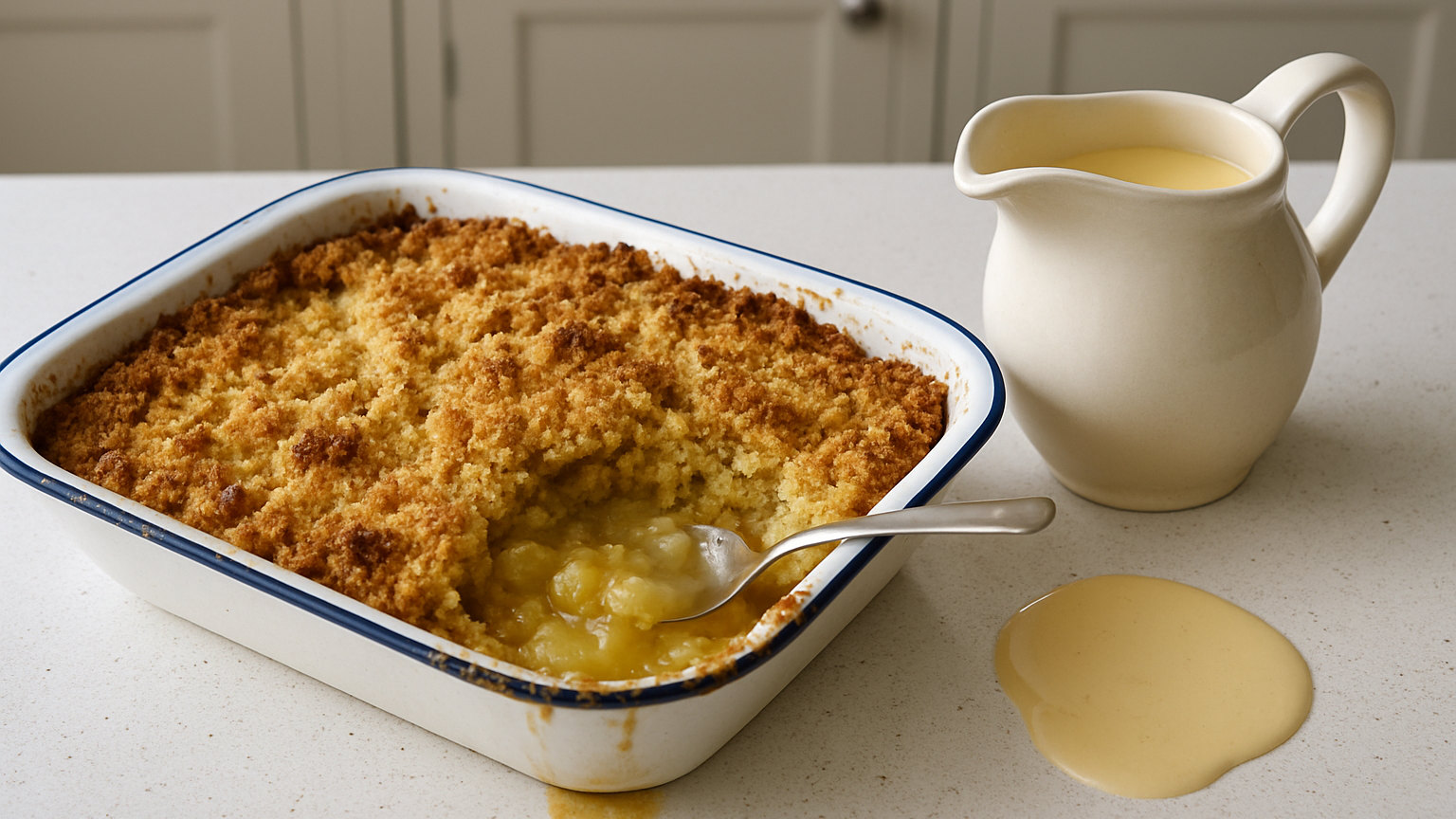
The choice between a cooking apple and an eating apple decides what kind of crumble you get, and neither answer is wrong. Bramleys break down into a soft, sharp puree. Eating apples stay in distinct pieces and are sweeter. Knowing which one does what means you can pick deliberately rather than using whatever is in the bowl and hoping.
What makes a cooking apple different?
Cooking apples such as Bramley have a higher acid content and a lower proportion of intact cell structure, so they collapse when heated.
A Bramley turns to puree in about fifteen minutes. That is what makes apple sauce work and what gives a traditional crumble its soft, almost saucy base.
Why do eating apples hold their shape?
They are less acidic and firmer, so the cell walls survive the cooking. You end up with recognisable pieces of apple rather than a puree.
Braeburn, Cox, Gala and Granny Smith all behave this way.
Which should you use?
Bramleys for a traditional soft crumble with a sharp, jammy base. Eating apples for something with more texture where you can see the fruit.
A mixture of both is arguably the best answer, giving a soft base with pieces suspended in it.
What is the best mixture?
Roughly two thirds Bramley to one third eating apple. The Bramleys create the base and the firmer apples give something to bite.
Cut the eating apples slightly larger than the Bramleys so they survive the bake.
How much sugar does each need?
Bramleys need considerably more, around 120g per kilo of prepared fruit. Eating apples often need as little as 50g, and sometimes none at all.
Taste a slice raw before deciding, since sweetness varies between batches as well as varieties.
When are British apples in season?
Early varieties such as Discovery from August, the main season from September to November, and Bramleys store well through to March.
Apples sold outside that window are either from cold storage or imported, and both are perfectly good for cooking.
Can you use windfalls or bruised apples?
Yes, and they are the best use for them. Cut out any bruised or damaged flesh and the rest is perfectly good.
A garden tree in September produces far more than anyone can eat fresh, and crumble is the traditional answer.
How do you store cooking apples?
Somewhere cool and dark, not touching each other, and they will keep for months. Bramleys in particular store extremely well.
Check them regularly, since one going soft will affect those around it.
How should they be cut?
Bramleys into chunks of about 3cm, since they will collapse anyway. Eating apples into slightly larger pieces or thick slices.
Peel both. Apple skin does not soften in the oven and is unpleasant in a crumble.
Do they need cooking first?
Bramleys do not, since they soften faster than the topping browns. Firm eating apples benefit from ten minutes in a pan with butter and sugar first.
That also drives off some liquid, which helps the topping stay crisp.
How do you stop them going brown?
Toss the cut fruit with lemon juice, which slows the discolouration. For a crumble it is largely cosmetic, since the fruit will darken in the oven anyway.
Do you need to add liquid?
No. Apples release plenty of their own, and adding water or juice is the fastest way to a soggy topping.
If the apples look very dry, a tablespoon of water is the absolute maximum.
How much fruit do you need?
About 900g of prepared apple for six people, which is roughly 1.2kg before peeling and coring. Peeling loses around a quarter of the weight.
The fruit should fill the dish to about 5cm deep, leaving room for it to bubble.
Which other varieties are worth trying?
Howgate Wonder and Grenadier are traditional cooking apples similar to Bramley. Egremont Russet holds its shape and has a nutty flavour that suits a crumble well.
Windfall apples from a garden tree are excellent, provided you cut out any bruised parts.
See also Rhubarb Crumble, or browse more Puddings recipes.

