
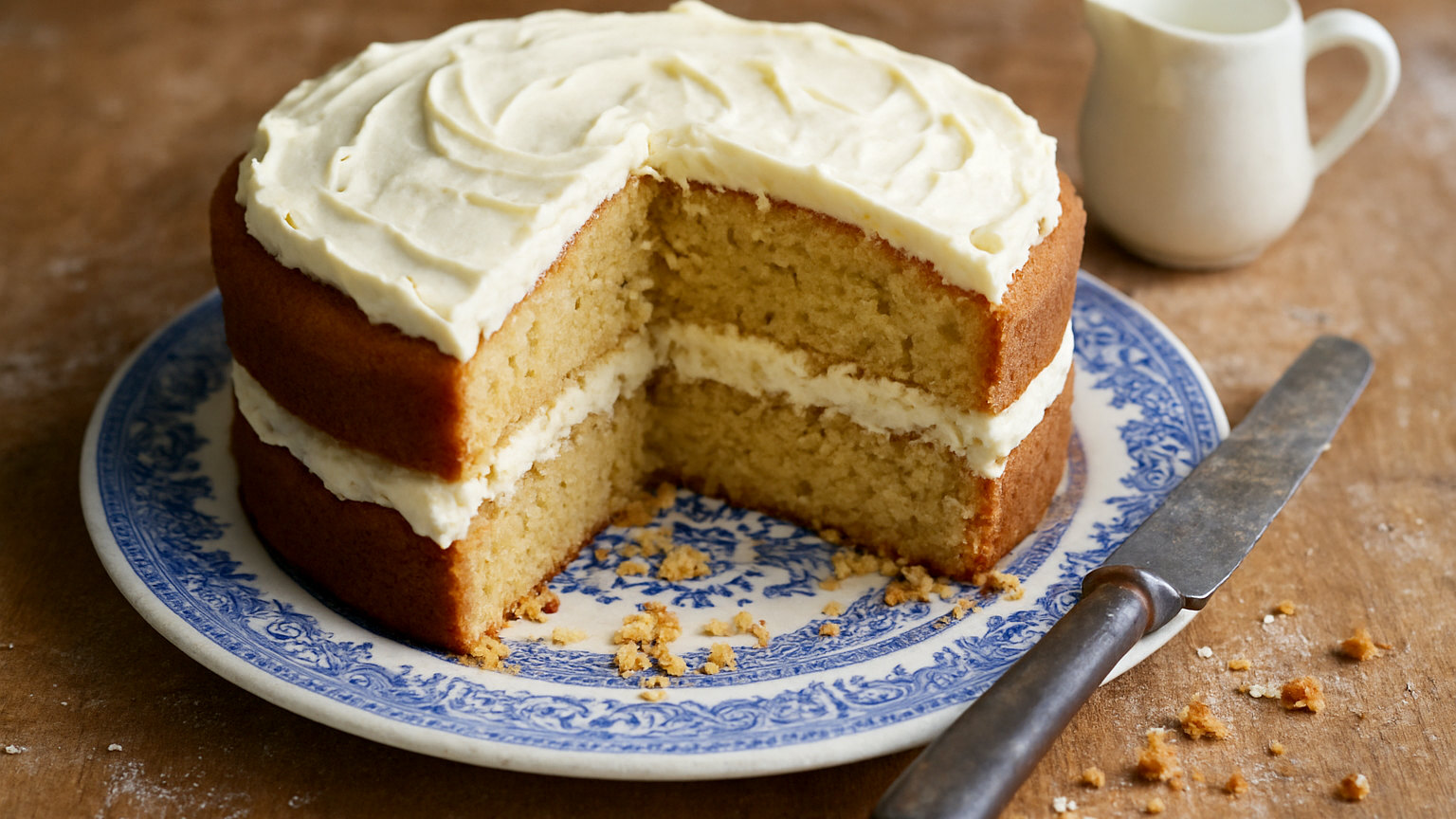
A cake sinks when the gas raising it escapes before the structure is firm enough to hold the shape. Everything that causes a sunken middle comes back to that single mechanism, which makes it easier to diagnose than it looks. There are five likely causes and each leaves slightly different evidence.
Was the oven door opened too early?
The most common cause. Cold air rushing in drops the temperature sharply and the partly set structure collapses.
Leave it alone for at least the first two thirds of the baking time. For a 25 minute sponge that means no opening before 18 minutes, and for a fruit cake it means the first two hours.
Was there too much raising agent?
More is not better. Excess baking powder or bicarbonate of soda makes the cake rise very fast and very high, then collapse when the bubbles burst before the crumb has set.
A cake that rose dramatically and then sank usually has this problem. Use one teaspoon of baking powder per 100g of plain flour and no more.
Was it underbaked?
A cake taken out before the centre has set will sink as it cools, since there is nothing holding the middle up.
The skewer test is the check: it should come out clean, or with a few dry crumbs for a chocolate cake.
Was the oven at the right temperature?
Domestic ovens are frequently 10 to 20 degrees out. An oven running cool means the cake takes longer to set and is more likely to collapse.
An oven thermometer costs very little and is the only way to know.
Was the mixture too loose?
Too much liquid weakens the structure. The batter should be a soft dropping consistency for a creamed cake, not pourable.
Add milk a tablespoon at a time rather than in one go.
Was the tin the wrong size?
Too much mixture in too small a tin means a deep cake that cannot cook through in the given time, so the middle stays raw and sinks.
Fill tins about two thirds full.
Were the eggs cold?
Cold eggs curdle a creamed mixture, and a curdled batter holds less air and is more likely to collapse.
Take them out of the fridge half an hour before you start, or sit them in warm water for five minutes.
Was the raising agent stale?
Baking powder loses potency after about six months once opened, and a cake made with tired powder rises weakly and sinks.
Drop half a teaspoon into hot water. It should fizz strongly and immediately.
Did it sink after coming out?
That points to underbaking rather than anything earlier. A properly baked cake settles very slightly and holds its shape.
Was it moved while baking?
Sliding a tin along a shelf or knocking the oven can collapse a cake that has risen but not set. Move it as little as possible and never in the first two thirds of the time.
If two tins have to swap shelves, do it quickly and once only, after the halfway point.
Why did it sink around the edges only?
Usually the tin was overgreased, so the mixture slid down the sides as it rose rather than gripping them.
Grease lightly and line the base only.
Does the shelf position matter?
The middle shelf is right for most cakes. Too high and the top sets before the cake has risen, too low and the base overcooks.
In a fan oven the position matters less, since the air circulates.
Does opening the door ever matter less?
Once the cake is firm to a light touch it is set and a quick look will not hurt it.
Be quick, and never slam the door.
Can a sunken cake be rescued?
Not into a level one, but it is usually perfectly edible. Cut out the middle and serve it as a ring, fill the dip with cream and fruit, or break it up for a trifle.
A sunken sponge also makes very good cake crumbs for a base.
For something along the same lines, see Rich Fruit Cake, or browse all our Puddings recipes.

