
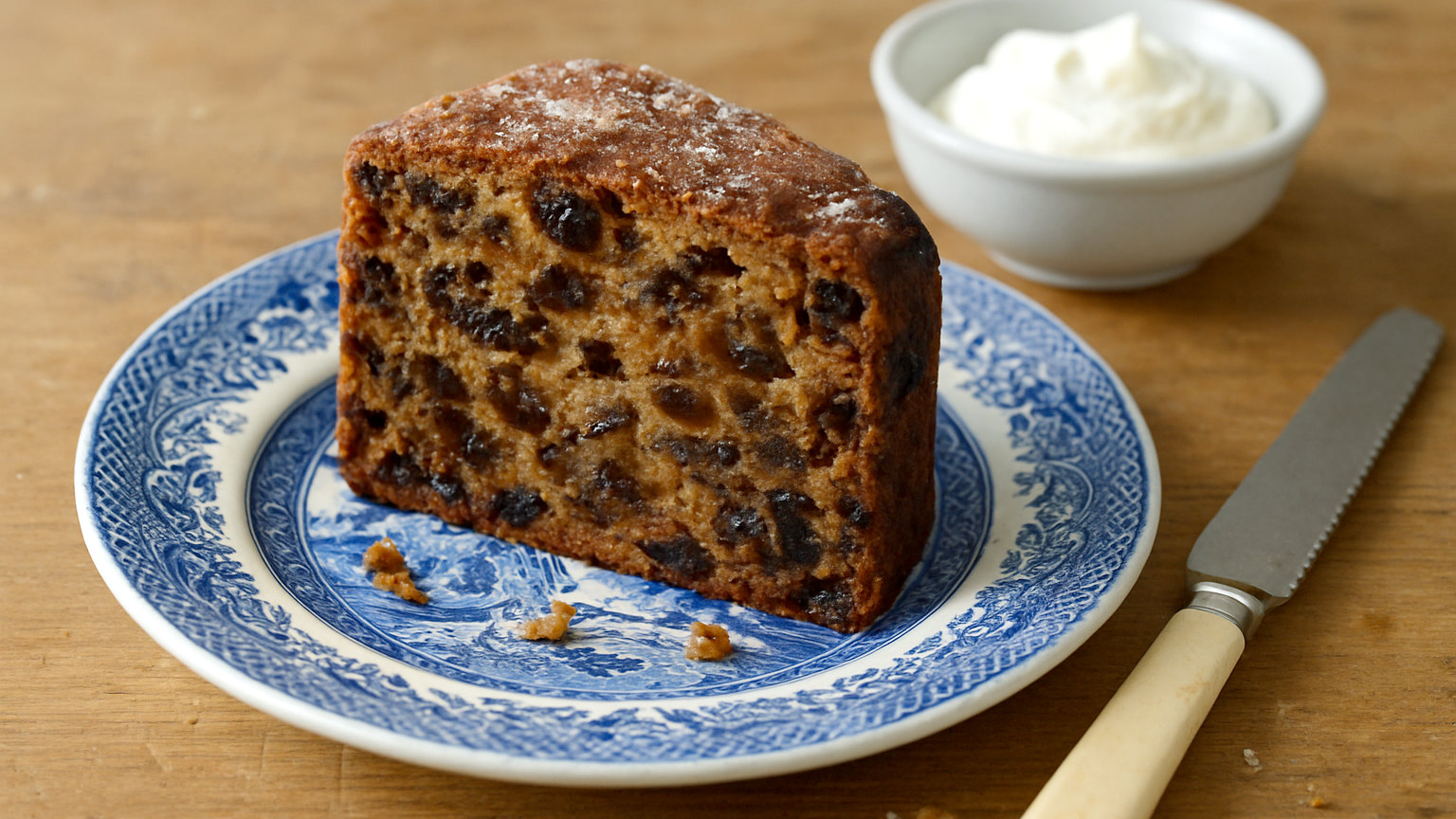
A rich fruit cake is the longest keeping thing in British baking and one of the few cakes that genuinely improves for months. It is mostly dried fruit held together with a small amount of spiced batter, baked very slowly so the outside does not burn before the middle is set. The soaking and the feeding are what make it worth doing.
What do you need for a 20cm cake?
- 900g mixed dried fruit: sultanas, raisins, currants and chopped prunes
- 100g glace cherries, halved, and 100g mixed peel
- 150ml brandy, plus more for feeding
- Zest and juice of 1 orange and 1 lemon
- 225g softened butter and 225g dark brown soft sugar
- 4 eggs
- 275g plain flour
- 2 teaspoons mixed spice and 1 teaspoon cinnamon
- 100g ground almonds and 1 tablespoon black treacle
How do you make it?
- Combine all the dried fruit, peel, brandy, zest and juice and leave overnight, or up to three days.
- Heat the oven to 130C fan, 150C conventional, gas mark 2.
- Line a 20cm deep tin with a double layer of baking paper, standing 5cm above the rim.
- Beat the butter and sugar until light, then add the eggs one at a time with a spoonful of flour.
- Fold in the flour, spices, ground almonds and treacle.
- Stir in the soaked fruit and any remaining liquid.
- Spoon into the tin, level the top and make a slight dip in the centre.
- Bake for 3 to 3 and a half hours until a skewer comes out clean.
Wrap the outside of the tin in brown paper or newspaper too. Three hours in the oven will burn the outside of a cake this dense, and the insulation is what allows the centre to cook through gently.
Why soak the fruit?
Dry fruit draws moisture out of the batter around it during a long bake, giving a dry cake with hard pieces in it.
Soaked fruit is already plump and contributes moisture instead. Overnight is the minimum and three days is better.
Why such a low oven?
The cake is very dense and takes three hours for the heat to reach the middle. At a normal baking temperature the outside would be black long before then.
Cover the top loosely with foil if it is browning too fast at the two hour mark.
Why the dip in the centre?
The cake rises slightly in the middle, and starting with a shallow dip means it finishes level, which matters if it is going to be iced.
How do you feed it?
Once cool, prick the surface with a skewer and spoon over a tablespoon of brandy. Repeat every week or two.
Wrap it in baking paper and foil between feedings and keep it in a tin somewhere cool.
How long should it mature?
A month is good, three months is better. The flavours deepen and the texture becomes denser and more even.
It can be made up to a year ahead if fed regularly.
Can you make it without alcohol?
Yes. Soak the fruit in orange juice or cold tea and feed it with the same. It will not keep as long, so make it a fortnight ahead rather than months.
How do you know it is done?
A skewer into the centre should come out clean with no wet batter. It will still look slightly soft, which is correct for a fruit cake.
Should it be marzipanned and iced?
For a Christmas or wedding cake, yes, and the marzipan goes on about a week before the icing so it can dry.
Brush the cake with warmed apricot jam first so the marzipan sticks.
How should it be stored?
Wrapped in paper and foil in a tin, in a cool cupboard rather than the fridge. Do not wrap it in foil alone, since the acid in the fruit reacts with it.
It keeps for months and freezes for a year.
For something along the same lines, see Fruit Cake Slices, or browse all our Puddings recipes.

