
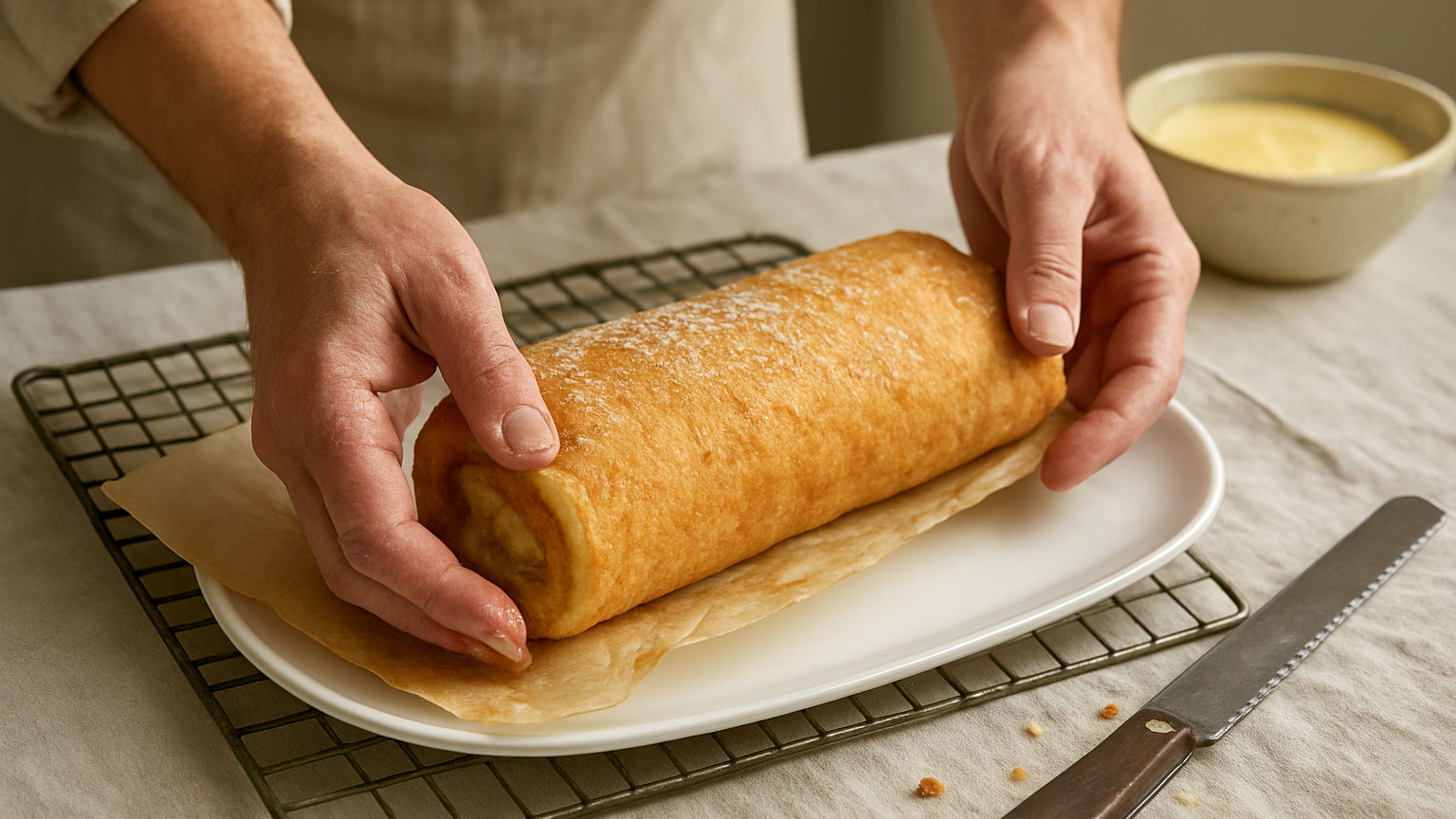
A Swiss roll is a fatless whisked sponge, which means all its lift comes from air beaten into eggs rather than from butter or raising agents. That makes it light and flexible, and it is the flexibility that matters, because the cake has to be rolled while it is still hot. Left to cool flat, it sets in that shape and cracks the moment you try to bend it.
What do you need for one roll?
- 4 eggs, at room temperature
- 115g caster sugar, plus more for dusting
- 115g self raising flour
- 1 teaspoon vanilla extract
- 6 tablespoons raspberry jam, warmed
- 300ml double cream, whipped, optional
How do you make it?
- Heat the oven to 200C fan and line a 33cm by 23cm Swiss roll tin.
- Whisk the eggs and sugar for 6 to 8 minutes until pale, thick and tripled in volume.
- Test for the ribbon stage: a trail of mixture should sit on the surface for a few seconds.
- Sift over the flour and fold in gently with a large metal spoon.
- Pour into the tin and spread to the corners.
- Bake for 10 to 12 minutes until golden and springy.
- Turn out onto a sheet of sugared baking paper and peel off the lining.
- Score a line 2cm from one short edge and roll up immediately with the paper inside.
Roll it while it is too hot to hold comfortably. A warm sponge is flexible and sets in the rolled shape. Waiting until it is cool guarantees a cracked roll.
What is the ribbon stage?
The point where the whisked eggs and sugar are thick enough that a drizzle from the beaters sits visibly on the surface for three or four seconds before sinking.
Getting there takes six to eight minutes with an electric whisk and is the only leavening the cake has.
Why score the edge?
A shallow cut 2cm in helps the first turn of the roll fold tightly rather than cracking across the middle.
Do not cut all the way through.
Why roll it with paper inside?
The paper stops the sponge sticking to itself and holds the shape while it cools. Unroll it, fill, and roll again.
Why did it crack?
It cooled before rolling, or it was overbaked. A sponge baked for fifteen minutes instead of eleven is dry and will not bend.
Small cracks are normal and a dusting of icing sugar hides them.
Should it be jam or cream?
Jam alone is traditional and is what allows the roll to be made hot and filled immediately. Cream means waiting until it is completely cold.
Both together is the more indulgent version, and the roll needs to be cool.
What size tin do you need?
A Swiss roll tin of about 33cm by 23cm. A larger tin gives a thin sponge that dries out and a smaller one gives a thick roll that cracks.
Line it with paper that stands slightly above the sides.
How do you stop the filling squeezing out?
Spread it thinly and leave a 2cm border at the far edge, since rolling pushes everything forward.
Why is there no butter in it?
Fat weighs down the air bubbles in a whisked sponge and would make it less flexible. Fatless sponges are lighter and roll without breaking.
They also stale faster, so it should be eaten within a day or two.
Why sugar the paper?
It stops the hot sponge sticking to it and leaves a light sugar coating on the outside of the roll, which is the traditional finish.
Use caster sugar and be generous.
Can it be made into a chocolate roll?
Replace 25g of the flour with cocoa powder and fill with whipped cream. That is the basis of a chocolate log at Christmas.
How long does it keep?
Two days in a tin if filled with jam. With cream, refrigerate and use within two days, in line with Food Standards Agency guidance.
Next, try Coffee and Walnut Cake, or see the rest of our Puddings recipes.

