
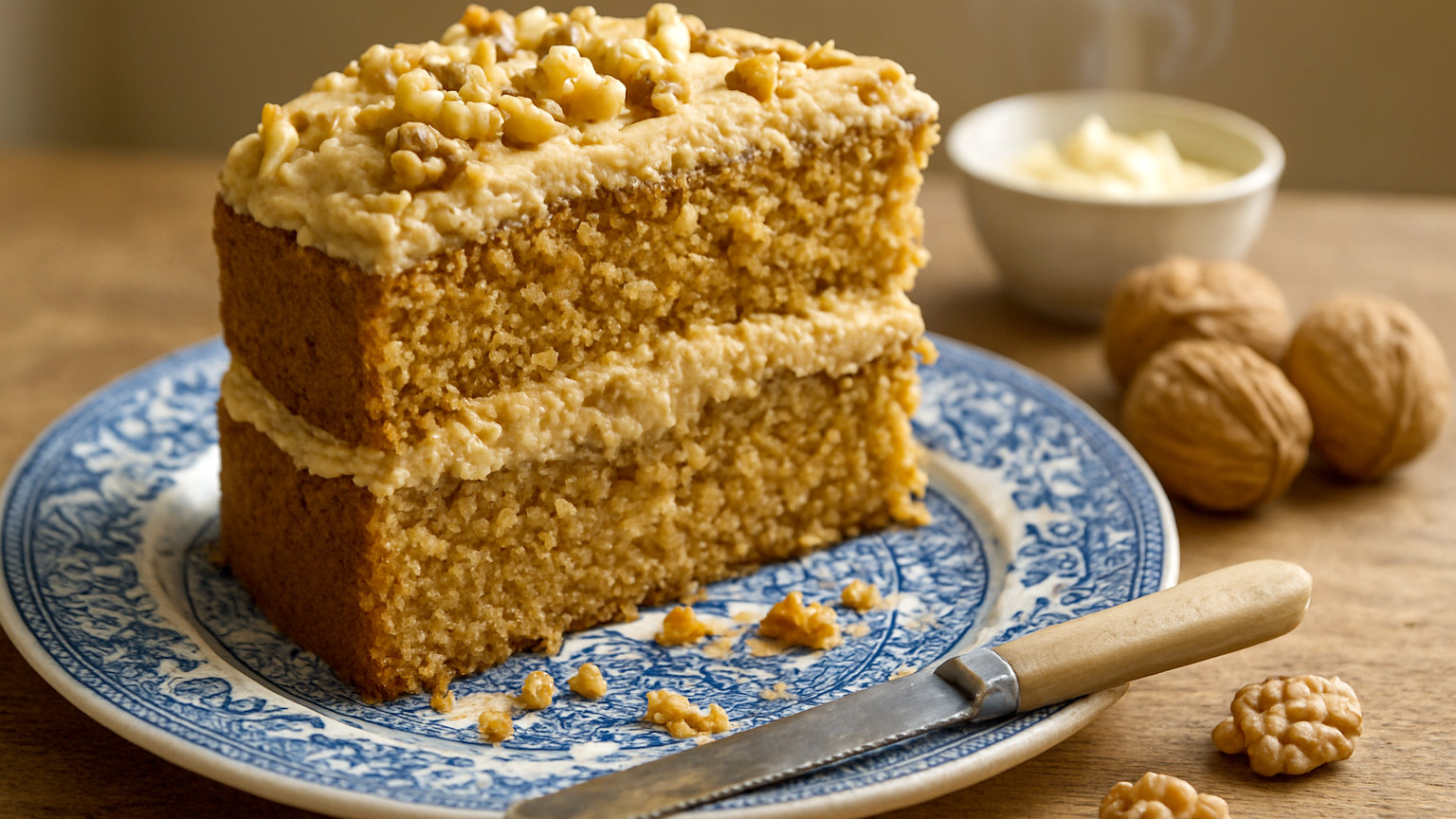
Coffee and walnut is the classic British tea cake and it fails in one predictable way. The coffee is too weak. Ordinary instant coffee stirred into the mixture in the quantities most recipes give produces a cake that tastes vaguely of something, and getting a proper coffee flavour means using far more of it, dissolved in as little liquid as possible.
What do you need for a 20cm cake?
- 225g softened butter and 225g light brown soft sugar
- 4 eggs
- 225g self raising flour
- 1 teaspoon baking powder
- 100g walnuts, toasted and chopped
- 3 tablespoons instant espresso powder dissolved in 3 tablespoons boiling water
- For the buttercream: 200g softened butter, 400g icing sugar, 2 tablespoons of the same coffee
- Walnut halves to decorate
How do you make it?
- Heat the oven to 160C fan and line two 20cm sandwich tins.
- Toast the walnuts for 6 minutes, cool and chop.
- Dissolve the espresso powder in the boiling water and leave to cool.
- Beat the butter and sugar until pale and light.
- Add the eggs one at a time, with a spoonful of flour if it curdles.
- Fold in the flour, baking powder, walnuts and most of the coffee.
- Divide between the tins and bake for 25 to 30 minutes.
- Beat the buttercream, adding the remaining coffee, and fill and top the cake.
Use three tablespoons of espresso powder, not one. It sounds like a great deal and it is what produces a cake that actually tastes of coffee rather than of brown sponge.
What kind of coffee works best?
Instant espresso powder, which is more concentrated than ordinary instant granules and dissolves completely.
Strong brewed coffee reduced in a pan also works. Avoid adding a lot of liquid coffee, which loosens the batter too much.
Why toast the walnuts?
Six minutes in the oven drives off moisture and brings out the oils, which makes them taste considerably more of walnut.
Untoasted walnuts can taste slightly bitter and papery.
Why light brown sugar?
Its slight toffee note suits coffee better than the clean sweetness of caster sugar, and it keeps the cake moist.
Caster sugar works and gives a lighter coloured, less rounded cake.
How do you make good buttercream?
Beat the softened butter alone for two minutes first, until pale, then add the icing sugar in two additions and beat for another three.
The long beating is what makes it light rather than dense and greasy.
Why is the buttercream too sweet?
Most recipes use a two to one ratio of icing sugar to butter, which is very sweet. Reduce it to one and a half to one, and a pinch of salt helps considerably.
Is it the same as a coffee sponge?
Coffee and walnut is the traditional pairing and the walnuts are part of the identity of the cake. Without them it is a coffee sponge, which is a plainer thing.
Both are creaming method cakes and the sponge itself is identical.
Should the walnuts be in the sponge or on top?
Both. Chopped in the sponge for texture and halves on top for appearance, which is the traditional finish.
Can you leave the nuts out?
Yes, and it becomes a plain coffee cake, which is perfectly good. Do not replace them with anything.
Why did the buttercream split?
Cold liquid added to soft butter. Have the coffee at room temperature and add it a teaspoon at a time with the whisk running.
If it does split, beat in another spoonful of icing sugar.
Can it be made as a traybake?
Yes, in a 20cm square tin for about 35 minutes, iced on top only. It is the easier form for a school fair or an office.
Can it be made ahead or frozen?
The sponges keep two days in a tin and freeze for three months. Buttercream keeps a week in the fridge and needs re beating.
Once assembled it keeps three days at cool room temperature.
Next, try Lemon Drizzle Cake, or see the rest of our Puddings recipes.

