
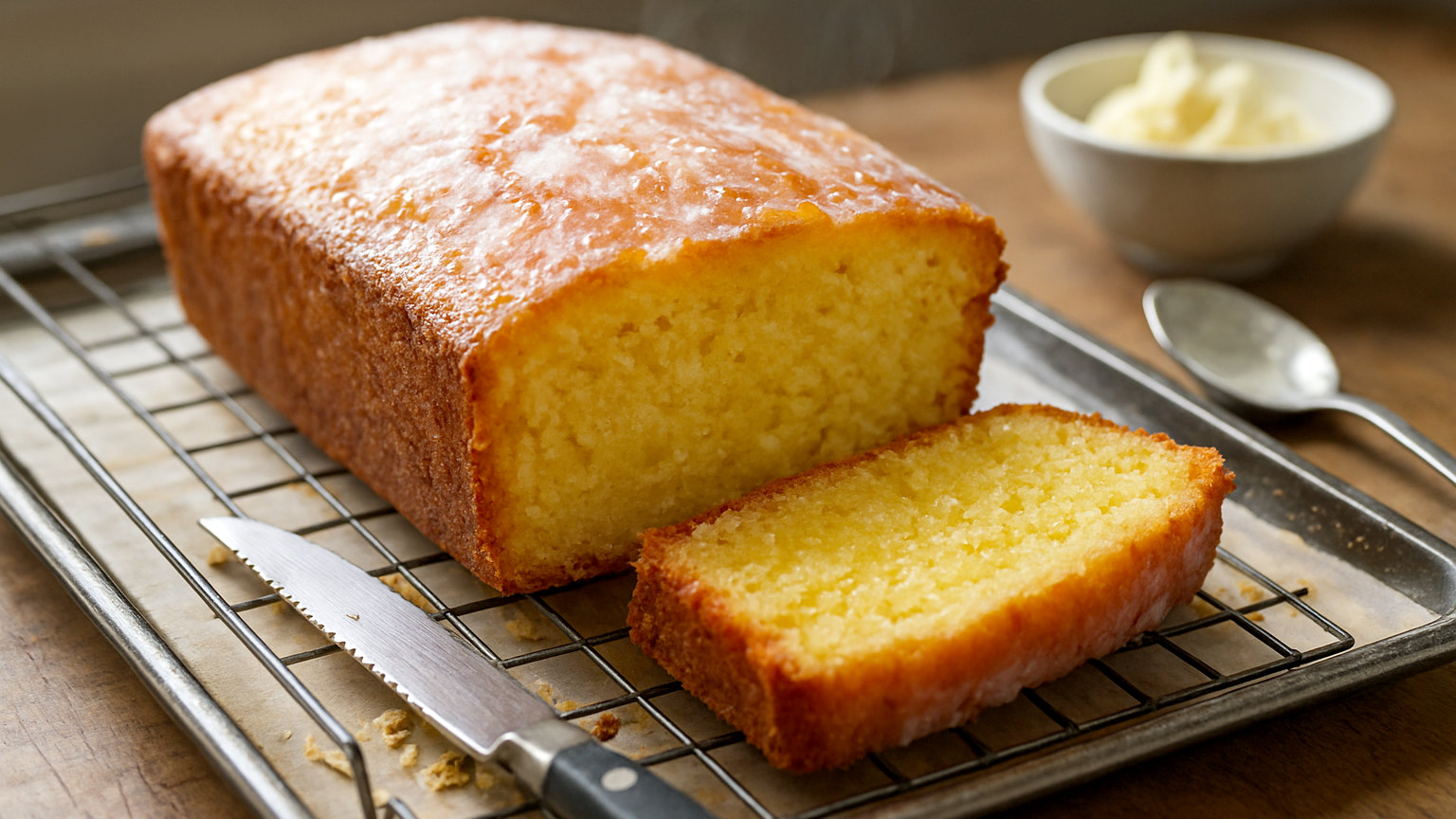
Lemon drizzle is the most popular cake in Britain by some measures and it rests entirely on the drizzle. A syrup of lemon juice and granulated sugar is poured over the cake the moment it comes out of the oven, soaks down into it and leaves a crunchy sugar crust on top. Both parts of that depend on temperature.
What do you need for a 900g loaf?
- 225g softened butter
- 225g caster sugar
- 4 eggs
- 225g self raising flour
- Zest of 3 lemons
- 2 tablespoons milk
- For the drizzle: juice of 2 lemons and 150g granulated sugar
How do you make it?
- Heat the oven to 160C fan and line a 900g loaf tin.
- Beat the butter and sugar until pale and light.
- Add the eggs one at a time, with a spoonful of flour if it curdles.
- Fold in the flour and lemon zest, then loosen with the milk.
- Bake for 45 to 50 minutes until a skewer comes out clean.
- Mix the lemon juice and granulated sugar without heating them.
- Prick the hot cake all over with a skewer, right to the base.
- Spoon the drizzle slowly over the surface and leave to cool in the tin.
Do not dissolve the sugar in the syrup. The undissolved granules are what form the crunchy crust on top. Heating the mixture to a smooth syrup gives a glossy cake with no texture at all.
Why must the cake be hot?
A hot cake is open and absorbent and takes the syrup down into the crumb. A cool cake has firmed up and the drizzle sits on the surface and runs off the sides.
Pour it within a minute or two of the cake leaving the oven.
Why prick it right to the base?
The holes are channels for the syrup. Shallow holes mean the top third is soaked and the bottom is dry.
Use a thin skewer and go all the way down, forty or fifty times.
Why granulated rather than caster sugar?
Granulated has larger crystals that stay intact and give a better crunch. Caster dissolves too readily in the lemon juice.
Demerara gives an even coarser crust and a slight toffee note.
How much lemon does it need?
Zest of three lemons in the cake and juice of two in the drizzle. Zest carries the aroma and juice carries the sharpness, so both are needed.
A cake made with juice alone tastes surprisingly bland.
Should it cool in the tin?
Yes, completely. The syrup needs time to work through and the cake is fragile while warm and soaked.
Turning it out early usually breaks it.
Can it be made as a traybake?
Yes, in a 20cm square tin for about 35 minutes, or a larger traybake tin for 30. Both take the same drizzle.
A shallower cake absorbs the syrup faster and more evenly.
Can you use other citrus?
Lime gives a sharper cake and needs about four limes to match two lemons. Orange is sweeter and benefits from a squeeze of lemon in the drizzle.
Grapefruit works and is worth trying if you like the bitterness.
Why is it soggy at the bottom?
Too much syrup, or it was poured all at once so it ran straight through the holes to the base.
Spoon it on gradually in three or four goes, letting each soak in.
Can you add poppy seeds?
Two tablespoons folded in with the flour makes a lemon and poppy seed cake, which needs no other change.
Blue poppy seeds are the usual choice and add texture rather than much flavour.
Should there be icing as well?
No. The drizzle is the topping, and adding glace icing over it makes the cake very sweet and hides the crust.
A little extra zest scattered on top is enough if it looks plain.
Can it be made ahead or frozen?
It keeps four days in a tin and is better on the second day. It freezes for three months, whole or in slices.
Wrap it once completely cold, since wrapping a warm cake makes the crust dissolve.
Worth reading next: Lemon Cake Slices. There is more in our Puddings recipes.

