
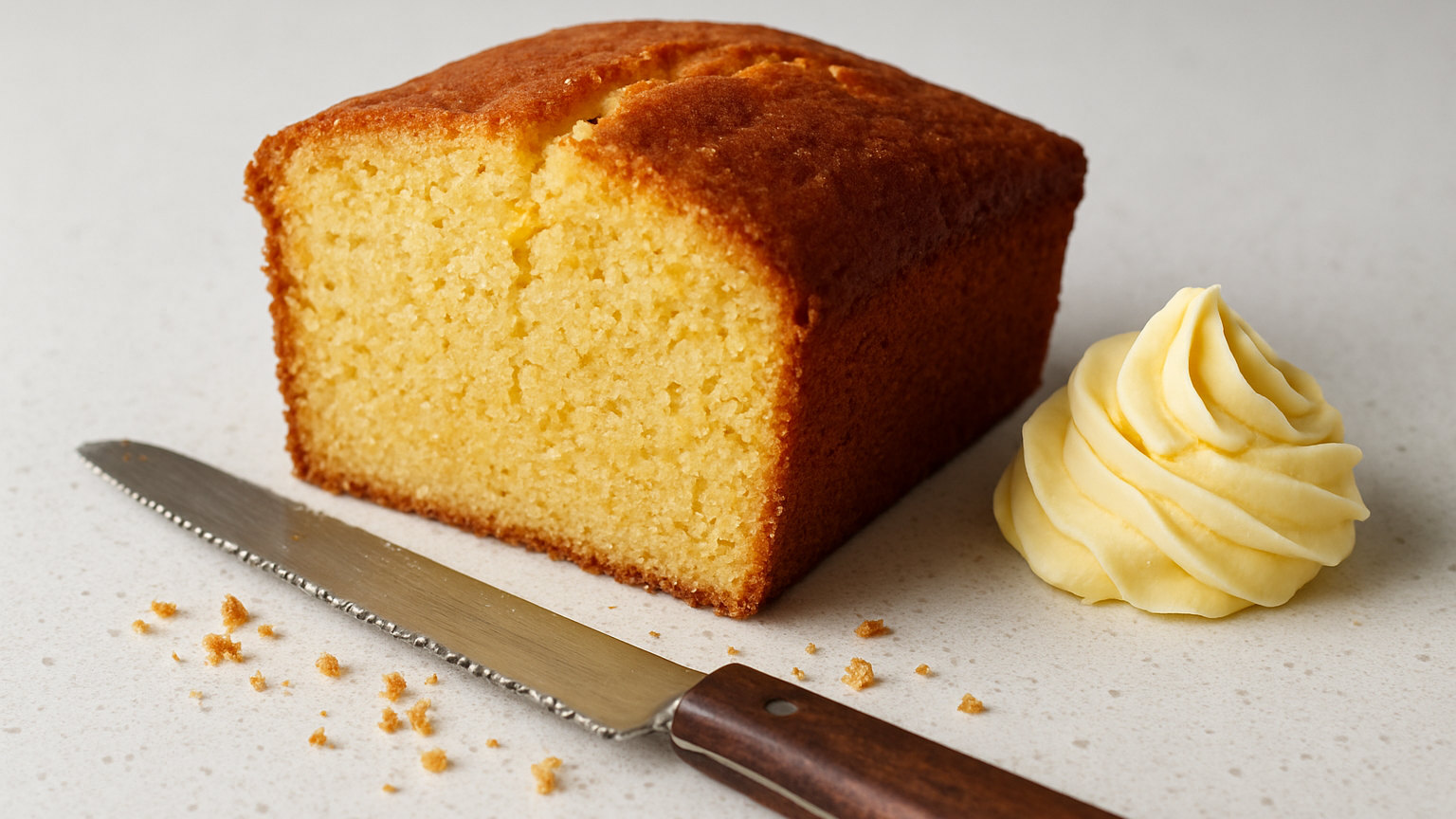
Madeira cake is a plain butter cake with a close, firm crumb, flavoured with lemon and traditionally marked by a crack down the middle. It has nothing to do with the island, and was named for the wine it was served with in the nineteenth century. Its firmness is the point: it is the cake bakers use when something has to be carved or covered.
What do you need for a 20cm cake?
- 225g softened butter
- 225g caster sugar
- 4 eggs
- 175g plain flour
- 100g self raising flour
- Zest of 2 lemons and 2 tablespoons lemon juice
- 2 tablespoons milk
- 2 thin slices of candied citron peel, optional
How do you make it?
- Heat the oven to 150C fan, 170C conventional, gas mark 3.
- Grease and line a deep 20cm round tin.
- Beat the butter and sugar until pale and light.
- Add the eggs one at a time, with a spoonful of flour if it curdles.
- Fold in both flours and the lemon zest.
- Add the lemon juice and milk to a soft dropping consistency.
- Spoon into the tin and level the top.
- Bake for 1 hour to 1 hour 15 minutes, laying the citron peel on top after 40 minutes.
The mixture of plain and self raising flour is deliberate. All self raising would give a light open sponge, and the higher proportion of plain flour is what produces the close, firm crumb a Madeira is supposed to have.
Why does it crack on top?
The surface sets before the cake has finished rising, so the middle pushes through and splits it. In a Madeira this is expected rather than a fault.
It is one of the few cakes where a crack is a sign it has been made correctly.
How is it different from a Victoria sponge?
A Victoria uses all self raising flour and equal weights throughout, giving a light open crumb meant to be filled.
A Madeira has more flour relative to the other ingredients and less raising, so it is denser and eaten plain.
Why is it used for celebration cakes?
It is firm enough to carve into shapes and to support fondant and marzipan without collapsing.
A light sponge crumbles under the weight and cannot hold a sharp edge.
Does it need the candied peel?
It is traditional and purely decorative. Most modern versions leave it out and the cake is unaffected.
Add it partway through baking, or it sinks into the batter.
Why a lower oven than a sponge?
It is a deep, dense cake and needs over an hour. A hotter oven browns the crust long before the centre has set.
150C fan for around 70 minutes is right for a 20cm tin.
Why is it called Madeira?
It was served with a glass of Madeira wine in the nineteenth century, which is the whole of the connection. The cake is entirely English.
It appears in cookery books from the 1840s onwards and has changed very little since.
Can you flavour it differently?
Orange or lime in place of lemon, a teaspoon of caraway seeds for a traditional seed cake, or vanilla for a plain version.
Almond extract with ground almonds replacing 50g of the flour also works well.
How should it be served?
Plain, in slices, with tea. It needs no icing and is not improved by any.
Why is the crumb close?
Less raising agent and more flour relative to the eggs and butter, so fewer and smaller air pockets form during baking.
That is what makes it firm enough to hold a shape and to slice thinly without crumbling.
Can it be baked in a loaf tin?
Yes, in a 900g loaf tin for about an hour. The crack down the length is even more pronounced in that shape.
How long does it keep?
Five days in a tin, which is longer than most butter cakes because of the close crumb. It freezes for three months.
It is at its best on the second and third days.
Worth reading next: Carrot Cake With Cream Cheese Icing. There is more in our Puddings recipes.

