
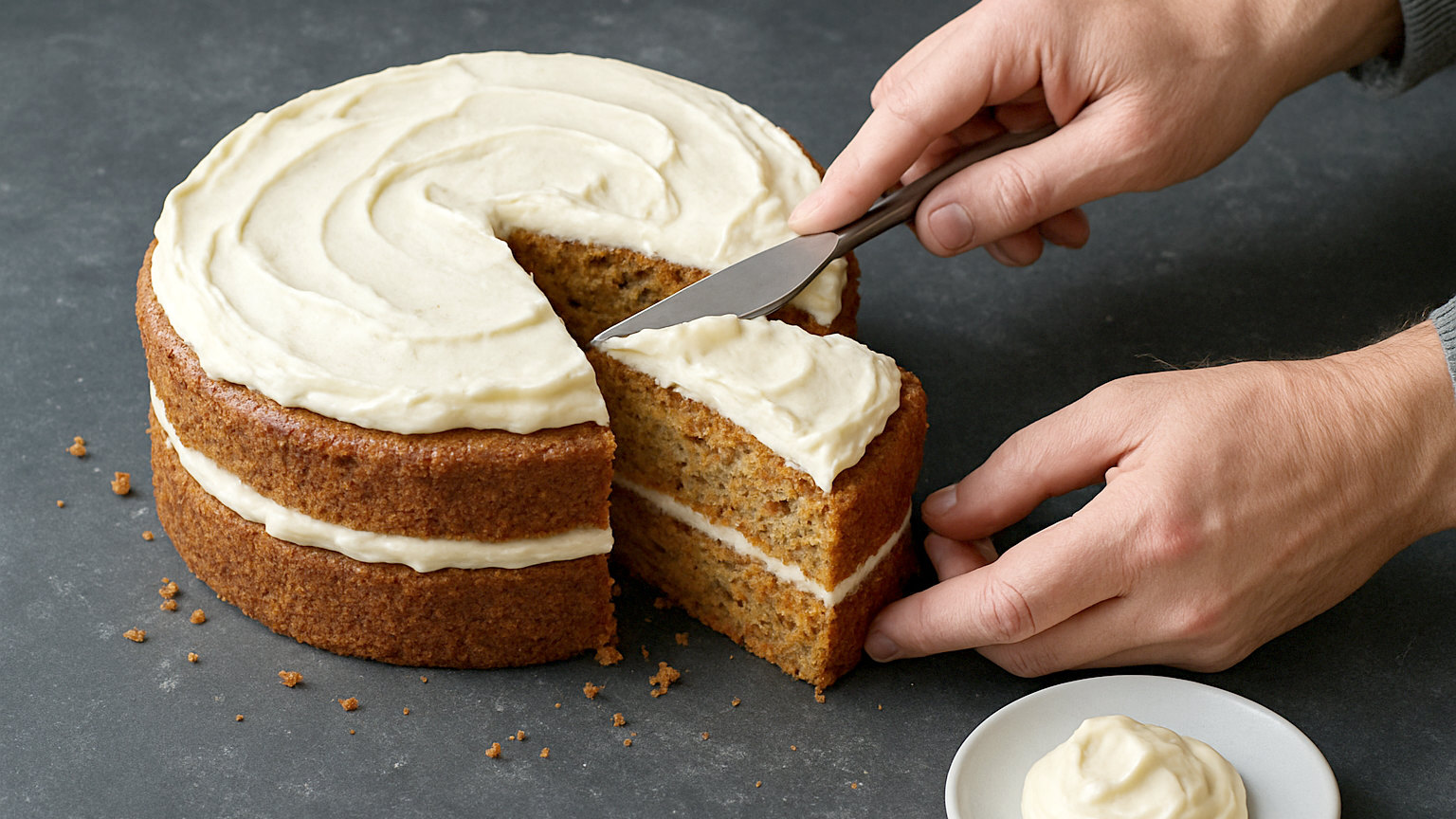
Carrot cake is made with oil rather than butter, which is the single most important thing about it. Oil is liquid at room temperature, so the cake stays soft and moist for days, where a butter sponge firms up overnight. It is also an all in one method, which makes it one of the easiest cakes to get right.
What do you need for a 20cm cake?
- 300g carrots, finely grated, about 4 medium
- 250ml sunflower or light olive oil
- 250g light brown soft sugar
- 4 eggs
- 300g self raising flour
- 1 teaspoon bicarbonate of soda
- 2 teaspoons mixed spice and 1 teaspoon cinnamon
- 100g walnuts, chopped, and 75g sultanas
- For the icing: 300g full fat cream cheese, 100g softened butter, 200g icing sugar, zest of 1 orange
How do you make it?
- Heat the oven to 160C fan and line two 20cm sandwich tins.
- Whisk the oil, sugar and eggs together until smooth.
- Fold in the flour, bicarbonate of soda and spices.
- Stir in the grated carrot, walnuts and sultanas.
- Divide between the tins and bake for 30 to 35 minutes.
- Cool completely in the tins.
- Beat the butter and icing sugar until smooth, then add the cold cream cheese and beat briefly.
- Sandwich and top the cake, and chill for 20 minutes before slicing.
Beat the cream cheese in briefly and no more. Over beating breaks it down and the icing turns to a runny liquid that cannot be recovered, which is the commonest failure with this cake.
How finely should the carrots be grated?
On the fine side of a box grater. Coarse shreds stay visible and slightly chewy, while fine gratings disappear into the crumb and release their moisture.
Do not use a food processor grating disc, which cuts them too coarsely.
Why oil rather than butter?
Butter is solid at room temperature so a butter cake firms as it cools. Oil stays liquid, so the cake remains soft for three or four days.
It also means no creaming, so the whole thing is mixed in one bowl.
Does it need bicarbonate of soda?
It reacts with the brown sugar and gives extra lift and a slightly darker colour. Self raising flour alone gives a denser cake.
Why full fat cream cheese?
Reduced fat versions contain more water and produce a slack icing that slides off the cake.
Use it straight from the fridge, and have the butter soft, which is the opposite of how it feels it should be.
Can you leave out the nuts?
Entirely, and the cake works without them. Sultanas, raisins, chopped dates or desiccated coconut can all take their place.
Should the sultanas be soaked?
Twenty minutes in hot water or orange juice stops them drawing moisture out of the cake around them. Drain and pat them dry before folding in.
It makes a noticeable difference to how moist the finished cake stays.
What spices work?
Mixed spice and cinnamon are the standard. Ginger, nutmeg and a little cardamom all suit it.
Be generous, since carrot itself is mild and the spice is doing much of the work.
How should it be stored?
Once iced it must be refrigerated, since cream cheese is perishable. Bring it back to room temperature for half an hour before serving.
Keep it covered and use within three days, in line with Food Standards Agency guidance.
Why did the icing go runny?
Over beating, warm cream cheese, or a reduced fat variety. All three release water that cannot be beaten back in.
Chilling it for half an hour firms it up enough to spread if it has only just started to slacken.
Can it be made as a traybake?
Yes, in a 20cm square or a larger traybake tin, baking for about 40 minutes and icing the top only.
It cuts into neat squares and travels better than a layer cake.
Can it be frozen?
The unfilled sponges freeze for three months. Cream cheese icing can be frozen but the texture suffers, so it is better made fresh.
If that was useful, Jam and Cream Sponge Cake covers related ground, and there is plenty more in Puddings recipes.

