
Almost every cake in British baking uses one of four methods, and each produces a distinctly different texture. Recognising which one a recipe is following explains why it asks for softened butter, or melted butter, or eggs whisked for eight minutes. It also means you can tell in advance roughly what the finished cake will be like.
What is the creaming method?
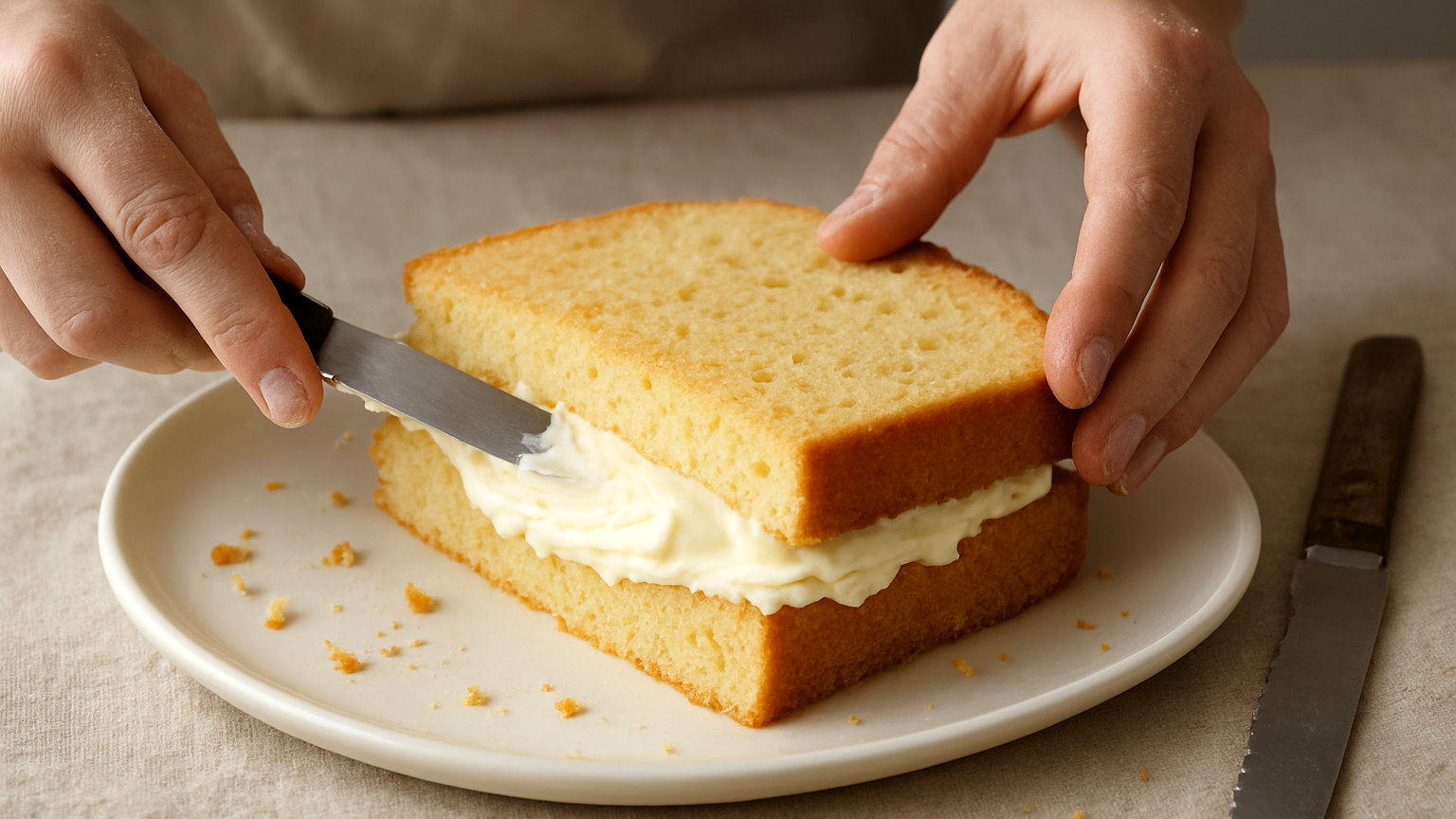
Softened butter and sugar beaten together until pale, then eggs added, then flour folded in. Victoria sponge, coffee and walnut and most layer cakes use it.
The creaming is the leavening. Sugar crystals cut air pockets into the butter, and those pockets expand in the oven. That is why four minutes of beating is specified rather than one.
What does it produce?
A fine, even, slightly springy crumb that holds its shape well and takes fillings and icings.
It is the most versatile method and the one most home bakers use.
What is the all in one method?
Everything beaten together in one bowl, usually with extra baking powder to compensate for the lack of creaming.
It is quicker and gives a slightly denser, more uniform cake. Very soft butter or a soft baking spread is essential.
What is the whisking method?
Eggs and sugar whisked to the ribbon stage, then flour folded in, with no fat at all. Swiss rolls and sponge fingers use it.
The air beaten into the eggs is the only raising, so the whisking cannot be rushed.
What does a whisked sponge give you?
The lightest and most flexible cake, which is why it can be rolled. It also stales fastest, since there is no fat to keep it soft.
Eat it within a day or two.
What is the melting method?
Butter, sugar and syrup melted together, then combined with dry ingredients and a good deal of liquid. Ginger cake, parkin and malt loaf use it.
It gives a dense, moist, sticky cake that improves over several days.
Where does an oil cake fit?
It is a variation on all in one, since oil cannot be creamed. Carrot cake and many chocolate cakes use it.
Oil stays liquid at room temperature, so these cakes stay soft for days longer than butter cakes.
Which method keeps longest?
Melted and oil based cakes keep for several days and often improve. Creamed butter cakes are best within two or three days.
Whisked fatless sponges are best on the day.
Which method suits a traybake?
All in one and melting both work well, since neither depends on a delicate structure and both scale up easily.
A whisked sponge is the wrong choice for a large flat cake, as it dries out before it is cut.
How do you tell which a recipe is using?
Look at the butter. Softened means creaming or all in one, melted means the melting method, and no butter at all means whisking.
That one line near the top of the ingredients tells you most of what follows.
Can you swap methods?
Not usually. The ratios are built around the method, and creaming an all in one recipe or melting a creamed one changes the balance of raising and liquid.
What about the rubbing in method?
Cold fat rubbed into flour, as for pastry, then bound with liquid. Rock cakes, scones and some fruit loaves use it.
It gives a short, crumbly texture rather than a soft sponge, and it is closer to baking than to cake making.
Does the method affect the tin?
Whisked sponges want shallow tins so they bake fast and stay flexible. Melted cakes want deep tins and a low oven for a long time.
Creamed cakes are the most adaptable and work in almost any shape.
Which should a beginner start with?
All in one or melting, both of which are hard to get wrong. Creaming needs a feel for when the mixture is properly light.
Whisking is the one that most rewards practice and is worth attempting once the others are comfortable.
Worth reading next: Madeira Cake. There is more in our Puddings recipes.

