
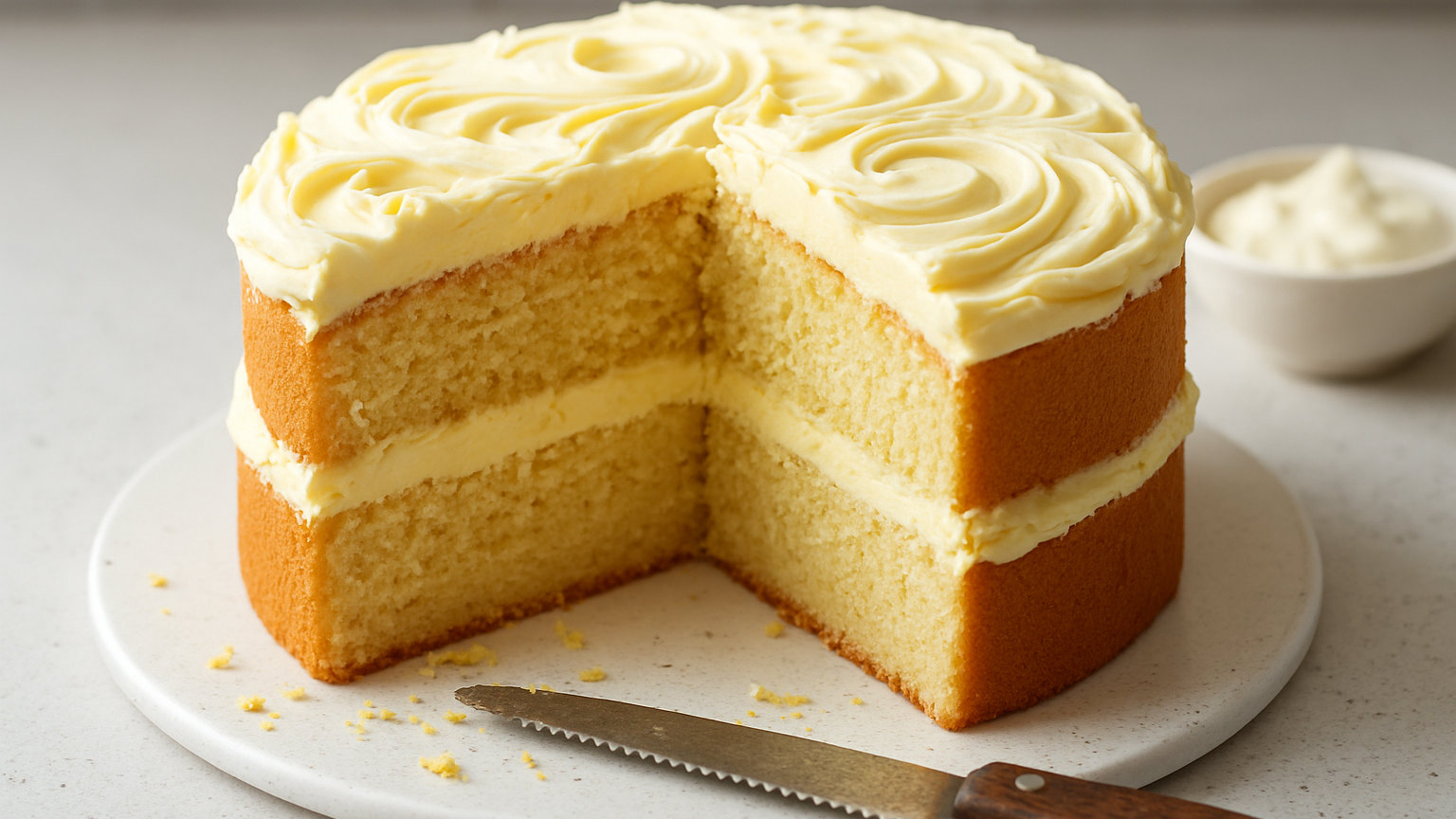
Most homemade buttercream is too sweet and too dense, and both faults come from the same place. The butter is not beaten enough before the sugar goes in. Properly beaten it doubles in volume and turns almost white, and the finished icing is light rather than claggy. The ratio matters too, and the usual one is sweeter than it needs to be.
What do you need to fill and top a 20cm cake?
- 200g softened unsalted butter
- 300g icing sugar, sifted
- 2 tablespoons milk
- 1 teaspoon vanilla extract
- A good pinch of salt
How do you make it?
- Beat the butter alone for 3 to 4 minutes until very pale and almost white.
- Add half the icing sugar and beat for 2 minutes.
- Add the rest with the milk, vanilla and salt.
- Beat for a further 3 minutes until light and fluffy.
- Use at room temperature.
Beat the butter before the sugar goes anywhere near it. Butter beaten alone takes in a great deal of air, and adding the sugar at the start weighs it down so it never gets there.
What is the right ratio?
Most recipes use two parts icing sugar to one part butter, which is very sweet. One and a half to one is better balanced and still holds its shape.
A pinch of salt makes a considerable difference to how sweet it tastes.
Why sift the icing sugar?
It compacts into hard lumps in the bag which will not beat out and leave gritty specks through the icing.
It also stops a cloud of sugar filling the kitchen if you add it gradually.
How soft should the butter be?
Soft enough to take a fingerprint easily but not melting or greasy. Butter that has gone oily will never hold air and the buttercream stays flat.
An hour out of the fridge is usually enough in a warm kitchen.
Salted or unsalted butter?
Unsalted, with salt added separately so you control the amount. Salted butter varies considerably between brands.
How do you flavour it?
Cocoa powder bloomed in a little boiling water, strong coffee, citrus zest, or a few tablespoons of fruit puree.
Add liquids at room temperature and a teaspoon at a time, or the buttercream splits.
Should it be coloured?
Use gel colours rather than liquid ones, since liquid adds water and can split the buttercream. A little goes a long way.
Colours deepen after half an hour, so mix slightly paler than you want.
What is glace icing?
Icing sugar mixed with a little water or lemon juice to a thick pouring consistency. About 200g of sugar to 2 tablespoons of liquid.
It sets firm and is the right icing for a lemon cake, iced buns or biscuits.
How do you make cream cheese icing hold?
Beat the softened butter and icing sugar first, then add cold full fat cream cheese and beat only briefly.
Over beating or reduced fat cheese both release water and the icing slumps.
Why is it grainy?
Unsifted icing sugar, or not enough beating after it went in. Three minutes at the end dissolves the sugar into the butter properly.
A tablespoon of milk also helps it come together smoothly.
Why did the buttercream split?
Cold liquid added to soft butter. Bring everything to room temperature and add liquid slowly.
Beating in another spoonful of icing sugar usually brings it back.
How much do you need?
About 500g of finished buttercream to fill and top a 20cm cake, or 800g to cover the sides as well.
Halve the quantity if you are only filling the middle.
What is royal icing?
Icing sugar beaten with egg white, which dries hard. It is the traditional covering for a Christmas or wedding cake over marzipan.
Use pasteurised egg white or royal icing sugar, which contains dried albumen.
Can it be made ahead?
Buttercream keeps a week in the fridge and freezes for three months. Bring it fully to room temperature and re beat before use.
Cakes iced with cream cheese icing must be refrigerated and used within three days, in line with Food Standards Agency guidance.
See also Carrot Cake With Cream Cheese Icing, or browse more Puddings recipes.

