
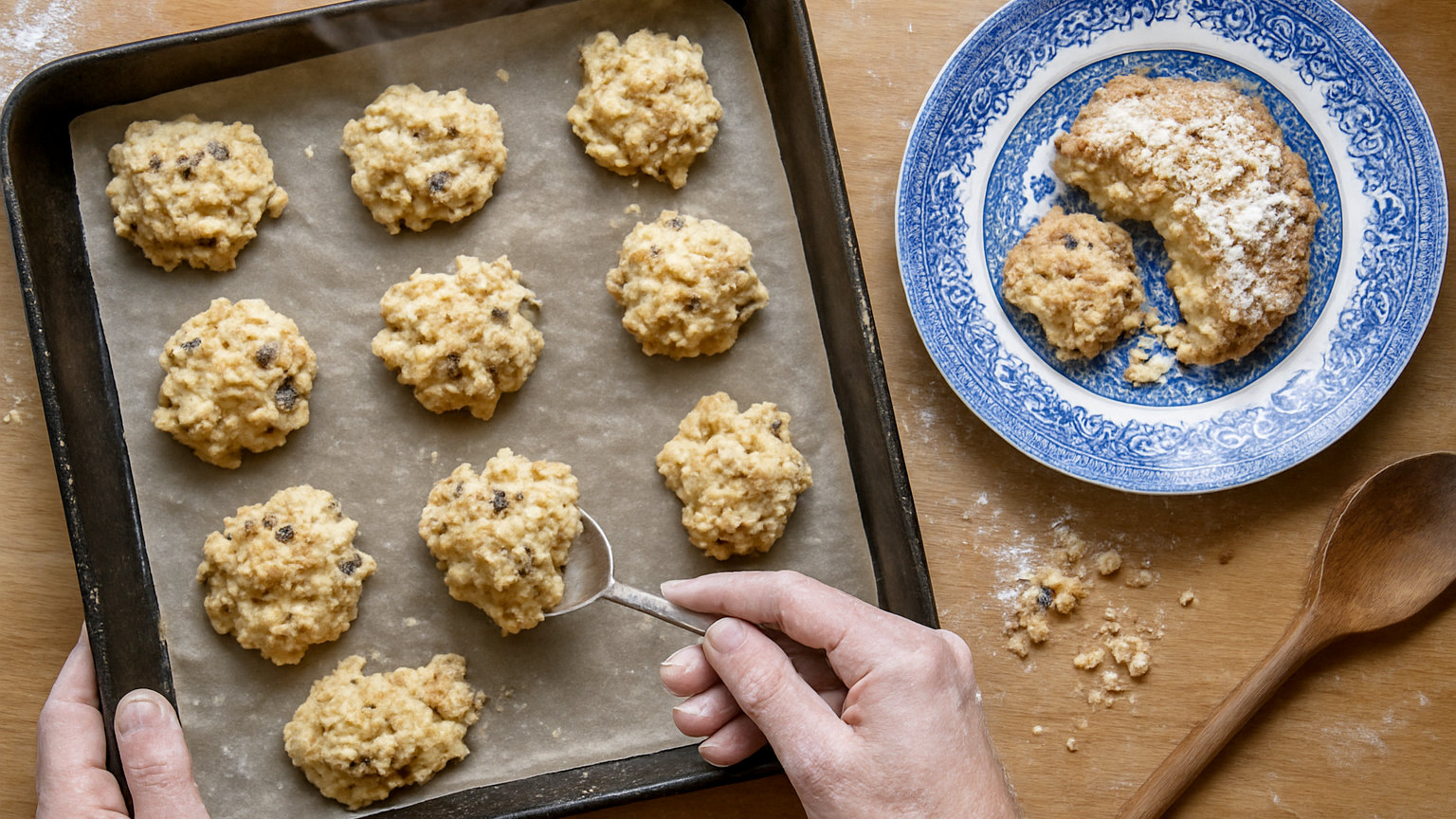
Rock cakes are a rubbed in mixture spooned onto a tray in rough heaps, somewhere between a scone and a biscuit. The name refers to the craggy shape rather than the texture, which should be light and short. They became popular during the Second World War because they need very little sugar and fat compared with a cake.
What do you need for 12 cakes?
- 250g self raising flour
- 1 teaspoon baking powder
- 125g cold butter, diced
- 75g caster sugar
- 150g mixed dried fruit
- 1 teaspoon mixed spice
- Zest of 1 lemon
- 1 egg and 2 tablespoons milk
- Demerara sugar for the tops
How do you make them?
- Heat the oven to 180C fan, 200C conventional, gas mark 6.
- Rub the cold butter into the flour and baking powder until it resembles breadcrumbs.
- Stir in the sugar, dried fruit, spice and lemon zest.
- Beat the egg with the milk and add most of it.
- Bring together into a stiff, rough mixture that just holds.
- Spoon 12 rough heaps onto lined trays, leaving them craggy.
- Sprinkle with demerara sugar.
- Bake for 15 to 18 minutes until golden.
Do not smooth them into neat mounds. The rough peaks catch the heat and go crisp while the inside stays soft, and a smoothed rock cake bakes into something closer to a heavy scone.
How stiff should the mixture be?
Stiff enough to hold its shape on the spoon. If it slumps on the tray there is too much liquid.
Add the egg and milk gradually and stop as soon as it just comes together.
Why rub the butter in?
It coats the flour in fat, which limits gluten and gives a short, crumbly texture rather than a chewy one.
Keep the butter cold and work quickly with fingertips.
Which dried fruit works?
Currants, sultanas and raisins, or a mixture. Chopped glace cherries, mixed peel or dried apricots all work.
About 150g for this quantity, which is a generous proportion.
What spices suit them?
Mixed spice is traditional, and cinnamon, nutmeg or a little ginger all work. Lemon or orange zest lifts them considerably.
Be generous, since the mixture is otherwise fairly plain.
Why do they go hard so fast?
They have a low fat and sugar content compared with a cake, so there is little to keep them soft.
They are genuinely best on the day and are worth eating warm.
Should they be served warm?
Ideally, within an hour of baking, when the outside is still crisp and the middle soft. They are one of the quickest bakes there is, at about twenty five minutes start to finish.
Can they be made larger?
Eight larger heaps bake in about 20 minutes. Twelve is the usual size and gives a good ratio of crisp outside to soft middle.
Can they be made without egg?
Yes, using an extra three tablespoons of milk in its place. They will be slightly shorter and more crumbly.
The wartime versions often had no egg at all for exactly this reason.
Are they a cake or a biscuit?
Neither exactly. They are a rubbed in bake, in the same family as scones, and they sit here because they are eaten like a biscuit.
Why were they a wartime staple?
Rationing limited fat, sugar and eggs. A rock cake uses far less of all three than a sponge and the Ministry of Food promoted them for that reason.
Should the fruit be soaked?
Not for rock cakes, since the mixture is stiff and extra moisture makes them spread. Use the fruit dry.
This is the opposite of what a rich fruit cake needs.
Why the demerara on top?
It gives a crunchy sugared crust on the craggy peaks, which is much of the pleasure of a rock cake.
Caster sugar dissolves and gives nothing.
How long do they keep?
Two days in a tin at most, and they are much better on the first. They freeze for a month and refresh at 160C fan for 5 minutes.
Split and buttered, a day old rock cake is perfectly good.
Worth reading next: Flapjacks. There is more in our Puddings recipes.

