
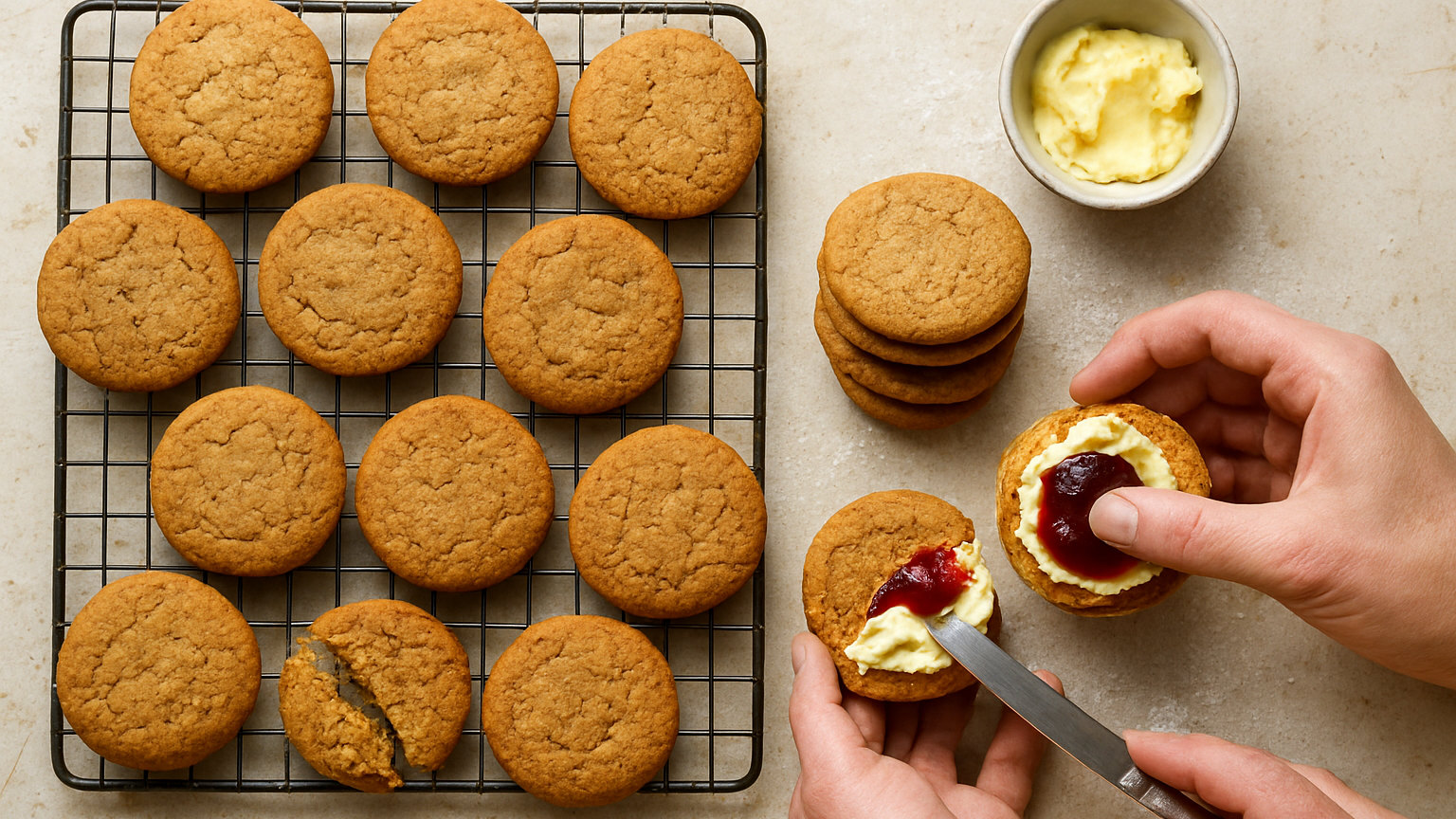
Ginger biscuits are a melted dough with golden syrup and a good deal of ground ginger, and the distinctive cracked tops come from the bicarbonate of soda reacting in the oven. The same recipe gives a chewy biscuit or a hard snapping one depending on nothing more than how long you leave them in.
What do you need for 20 biscuits?
- 115g butter
- 85g golden syrup
- 150g light brown soft sugar
- 300g self raising flour
- 1 teaspoon bicarbonate of soda
- 3 teaspoons ground ginger
- 1 teaspoon mixed spice
- 1 egg, beaten
- Demerara sugar for rolling
How do you make them?
- Heat the oven to 170C fan, 190C conventional, gas mark 5.
- Melt the butter, golden syrup and sugar together gently and cool for 10 minutes.
- Combine the flour, bicarbonate of soda, ginger and mixed spice.
- Pour in the melted mixture and the beaten egg and stir to a soft dough.
- Chill for 30 minutes so it firms up.
- Roll into walnut sized balls and toss in demerara sugar.
- Space well apart on lined trays, since they spread considerably.
- Bake for 10 minutes for chewy or 13 for crisp.
Leave at least 5cm between them. These spread more than almost any other biscuit, and a crowded tray produces one large sheet rather than twenty biscuits.
What makes the cracks?
Bicarbonate of soda reacts with the acidic syrup and sugar, producing gas that pushes the biscuit up. The surface sets first and splits as the middle continues to rise.
Rolling them in demerara emphasises the cracks by drying the surface further.
How do you get them chewy?
Take them out at ten minutes, when they still look slightly underdone and soft in the middle.
They firm up considerably on the tray, so what looks undercooked in the oven is right.
How do you get a proper snap?
Thirteen to fourteen minutes, until they are evenly coloured and firm at the edges.
They harden further overnight, so a gingernut for dunking is better on the second day.
How big should the balls be?
About 30g each, roughly a walnut. Larger ones stay chewier in the middle and smaller ones bake crisp throughout.
How much ginger is right?
Three teaspoons for this quantity, which is more than many recipes suggest. Ground ginger loses potency in the jar, so an older tin needs more.
A tablespoon of finely chopped stem ginger adds sharp bursts.
Why chill the dough?
A melted dough is very soft and warm dough spreads even more. Half an hour in the fridge makes it possible to roll and reduces the spread.
Why do they harden as they cool?
Sugar syrup sets as it cools, and these biscuits are largely sugar and syrup. That is why they must be judged before they leave the oven rather than after.
Can you make them without egg?
Yes. Add two extra tablespoons of golden syrup in place of the egg. The biscuits spread slightly more and are chewier.
The bicarbonate of soda still does the raising, so the cracks remain.
Can you make them into gingerbread men?
Not with this dough, which is too soft to hold a shape. A rolled gingerbread dough with more flour and less syrup is needed for cutters.
Why roll them in demerara?
It gives a crunchy sugared crust and dries the surface slightly, which encourages the top to crack rather than staying smooth.
Caster sugar works but dissolves and gives less texture.
What is the difference from gingerbread?
Gingerbread dough is stiffer, with more flour and less syrup, so it can be rolled and cut into shapes. This dough is soft and rolled into balls.
Both use the melting method and much the same spicing.
How long do they keep?
Ten days in an airtight tin, though chewy ones firm up over that time.
The raw dough freezes as rolled balls for three months and bakes from frozen with two extra minutes.
Worth reading next: Digestive Biscuits. There is more in our Puddings recipes.

