
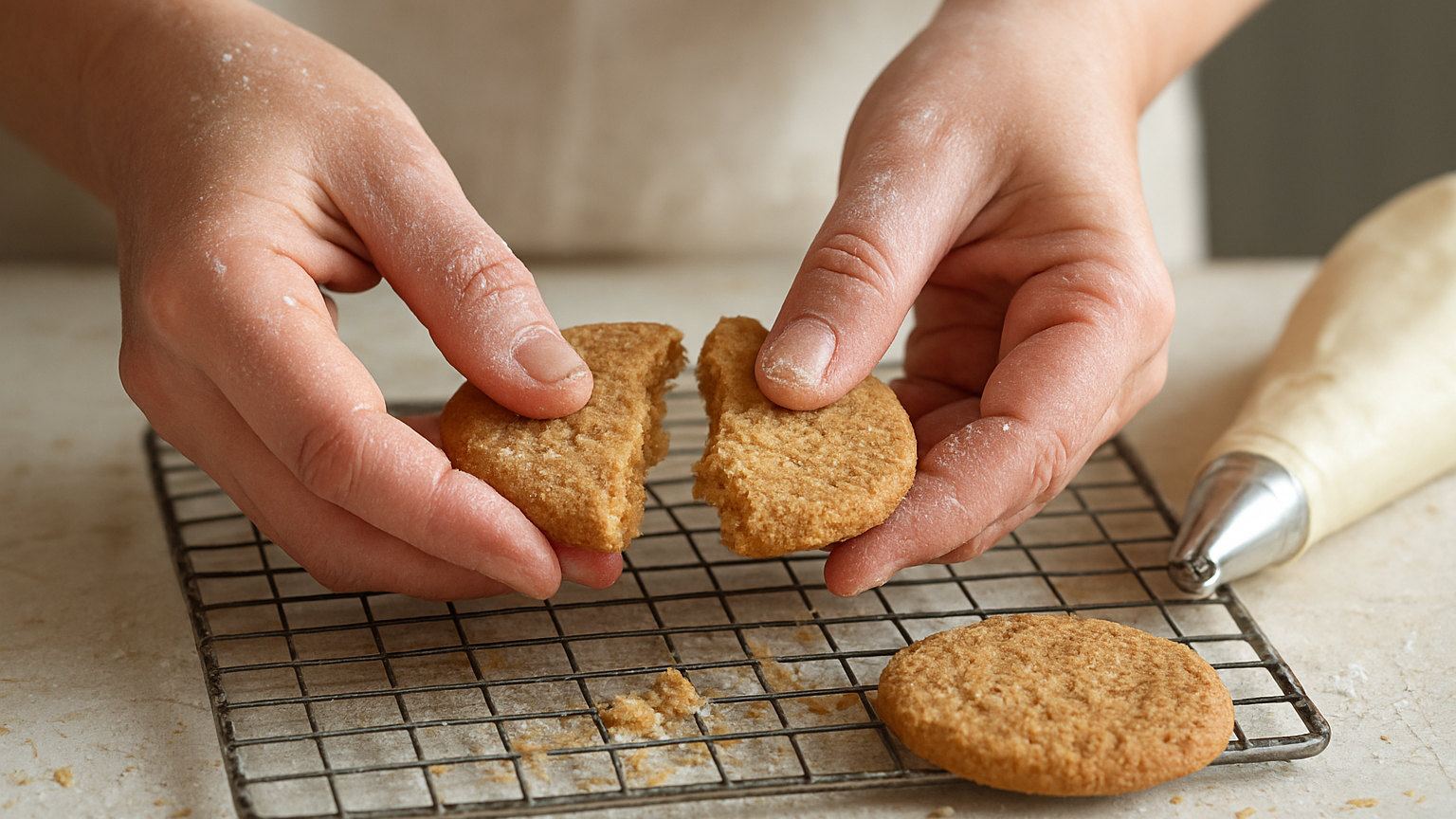
Digestive biscuits are wholemeal flour and oatmeal rubbed together with butter, sweetened lightly and rolled thin. Homemade ones are coarser and nuttier than the packet and take about twenty minutes to make. The name comes from the bicarbonate of soda they contain, which Victorian manufacturers claimed aided digestion, a claim that has not aged well.
What do you need for 20 biscuits?
- 150g wholemeal flour
- 100g medium oatmeal
- 75g plain flour
- 1 teaspoon bicarbonate of soda
- Half a teaspoon of fine salt
- 125g cold butter, diced
- 75g light brown soft sugar
- 3 to 4 tablespoons whole milk
How do you make them?
- Heat the oven to 170C fan, 190C conventional, gas mark 5.
- Combine the flours, oatmeal, bicarbonate of soda and salt.
- Rub in the cold butter until it resembles coarse breadcrumbs.
- Stir in the sugar.
- Add the milk a tablespoon at a time until it comes together into a firm dough.
- Roll out on a floured surface to about 3mm.
- Cut into 7cm rounds and prick each one several times.
- Bake for 12 to 15 minutes until golden at the edges.
Roll them thinner than feels right. Three millimetres looks too thin and is correct. A thick digestive is soft and cakey rather than snappy, and it will not crisp properly however long it bakes.
What is medium oatmeal?
Oats ground to a coarse powder, finer than rolled oats and coarser than flour. It is what gives digestives their characteristic texture.
If you cannot find it, blitz rolled oats briefly in a processor until sandy but not powdered.
Why rub the butter in?
It coats the flour in fat, which limits gluten development and gives a short, crumbly biscuit rather than a chewy one.
Keep the butter cold and work quickly, exactly as for pastry.
Why bicarbonate of soda?
It gives a slight lift and helps the biscuits brown. It is also the ingredient the name refers to.
Leaving it out gives a denser, paler biscuit.
Why prick them?
Steam escapes through the holes so the biscuits stay flat rather than doming in the middle.
It also gives the familiar appearance.
How thick should the dough be rolled?
Three millimetres, and it is worth measuring the first time. Roll between two sheets of baking paper if the dough sticks.
How do you know when they are done?
Golden at the edges and still slightly soft in the middle. They crisp as they cool, so a biscuit that feels firm in the oven will be hard.
Leave them on the tray for five minutes before moving them.
Can you make them chocolate covered?
Melt 200g of dark or milk chocolate and spread it over the flat underside of each cooled biscuit, dragging a fork across for the traditional wave pattern.
Leave them chocolate side up to set.
Can you use all wholemeal flour?
You can, and the biscuit is denser and heavier. The small amount of plain flour lightens it and helps it snap.
All plain flour makes something closer to a plain tea biscuit and loses the character.
Do they work as a cheesecake base?
Very well, and homemade ones give a coarser, more interesting base. Crush 200g with 100g of melted butter.
They are drier than shop bought ones, so you may need slightly more butter.
Are they actually digestive?
No. The Victorian claim rested on the bicarbonate of soda being an antacid, and the quantity in a biscuit is far too small to have any effect.
The name has stuck for nearly two centuries regardless.
Why do they taste different from shop ones?
Commercial digestives use finer flour and more sugar, so they are smoother and sweeter. Homemade ones are coarser and taste more of oats.
Most people find the homemade version better with cheese and the shop version better with tea.
How long do they keep?
A week in an airtight tin. They soften faster than shortbread because of the milk in the dough.
The raw dough freezes for three months, either as a block or as cut rounds ready to bake.
For something along the same lines, see Ginger Biscuits, or browse all our Puddings recipes.

