
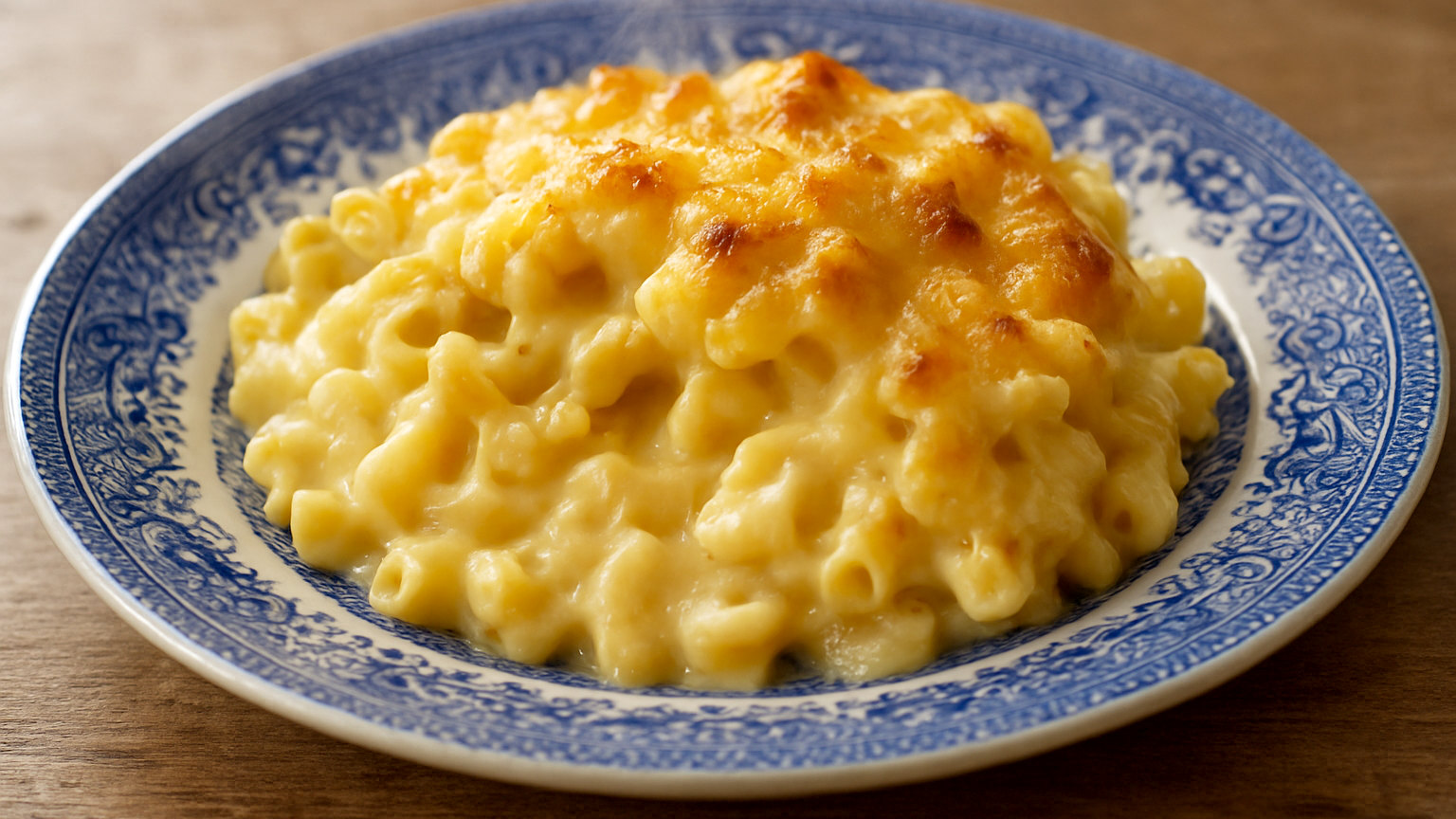
Macaroni cheese is a white sauce, some cheese and some pasta, and the two ways it goes wrong are both avoidable. The sauce splits and goes grainy because the cheese was added over heat, and the finished dish is thin because the sauce was made to a normal pouring consistency and then diluted by the pasta. Both are fixed before it reaches the oven.
What do you need for 4 people?
- 350g macaroni
- 60g butter and 60g plain flour
- 800ml whole milk
- 250g mature cheddar, grated
- 50g parmesan or extra cheddar for the top
- 2 teaspoons English mustard
- A good grating of nutmeg
- 50g fresh breadcrumbs
- Salt and white pepper
How do you make it?
- Cook the macaroni in well salted water for 2 minutes less than the packet says.
- Drain and set aside, keeping a mugful of the cooking water.
- Melt the butter, stir in the flour and cook for 2 minutes without colouring.
- Add the milk gradually, whisking, and simmer for 6 to 8 minutes until thick.
- Take the pan off the heat completely.
- Stir in the cheddar, mustard and nutmeg and season well.
- Fold in the pasta, loosening with cooking water if needed.
- Tip into a dish, top with parmesan and breadcrumbs and bake at 190C fan for 25 minutes.
Take the pan off the heat before the cheese goes in. Cheese sauce splits above about 80C, and once the fat has separated out and the proteins have tightened the texture cannot be recovered.
How thick should the sauce be?
Thicker than you would want to pour, closer to a thick custard. The pasta absorbs a good deal of liquid in the oven and the sauce loosens considerably.
Equal weights of butter and flour at 60g each to 800ml of milk is the right proportion.
Why undercook the pasta?
It continues cooking in the oven for another twenty five minutes. Pasta boiled to the packet time comes out soft and slightly mushy.
Two minutes short is about right for macaroni.
Which cheese should you use?
A mature or extra mature cheddar, since mild cheddar disappears entirely into the milk. Parmesan, gruyere or a little blue cheese add depth.
A mixture is better than one cheese, and about a third parmesan to two thirds cheddar works well.
Why mustard and nutmeg?
Both are traditional in a cheese sauce and neither is detectable as itself. Mustard sharpens the cheese and nutmeg rounds out the milk.
Leaving them out gives a noticeably flatter sauce.
How much sauce per person?
Roughly 200ml of finished sauce to 90g of dried pasta. Less than that and the dish is dry once it has been in the oven.
Keep back some pasta water to loosen it if it looks tight before baking.
Does it have to be baked?
No. Served straight from the pan it is quicker and the sauce is looser and creamier, which many people prefer.
Baking gives you the crisp top, which is the argument for it.
Why did it go grainy?
The sauce was too hot when the cheese went in, or it was boiled afterwards. Both split the emulsion and the texture cannot be recovered.
Off the heat, and never return it to the boil once the cheese is in.
What makes a good topping?
Fresh breadcrumbs mixed with grated parmesan and a little melted butter, which crisps properly. Dried breadcrumbs stay hard and sandy.
Slices of tomato on top are traditional in some households and add acidity.
What can you add?
Fried bacon or pancetta, leeks softened in butter, roasted tomatoes on top, or a spoonful of Worcestershire sauce in the sauce.
Can it be made ahead or frozen?
Assemble it a day ahead and bake from cold with an extra 10 minutes. It freezes for three months, though the sauce can be slightly grainy on reheating.
Cool leftovers quickly, refrigerate within two hours and reheat once only until piping hot, in line with Food Standards Agency guidance.
Worth reading next: How to Make a Proper Omelette. There is more in our Mains recipes.


