
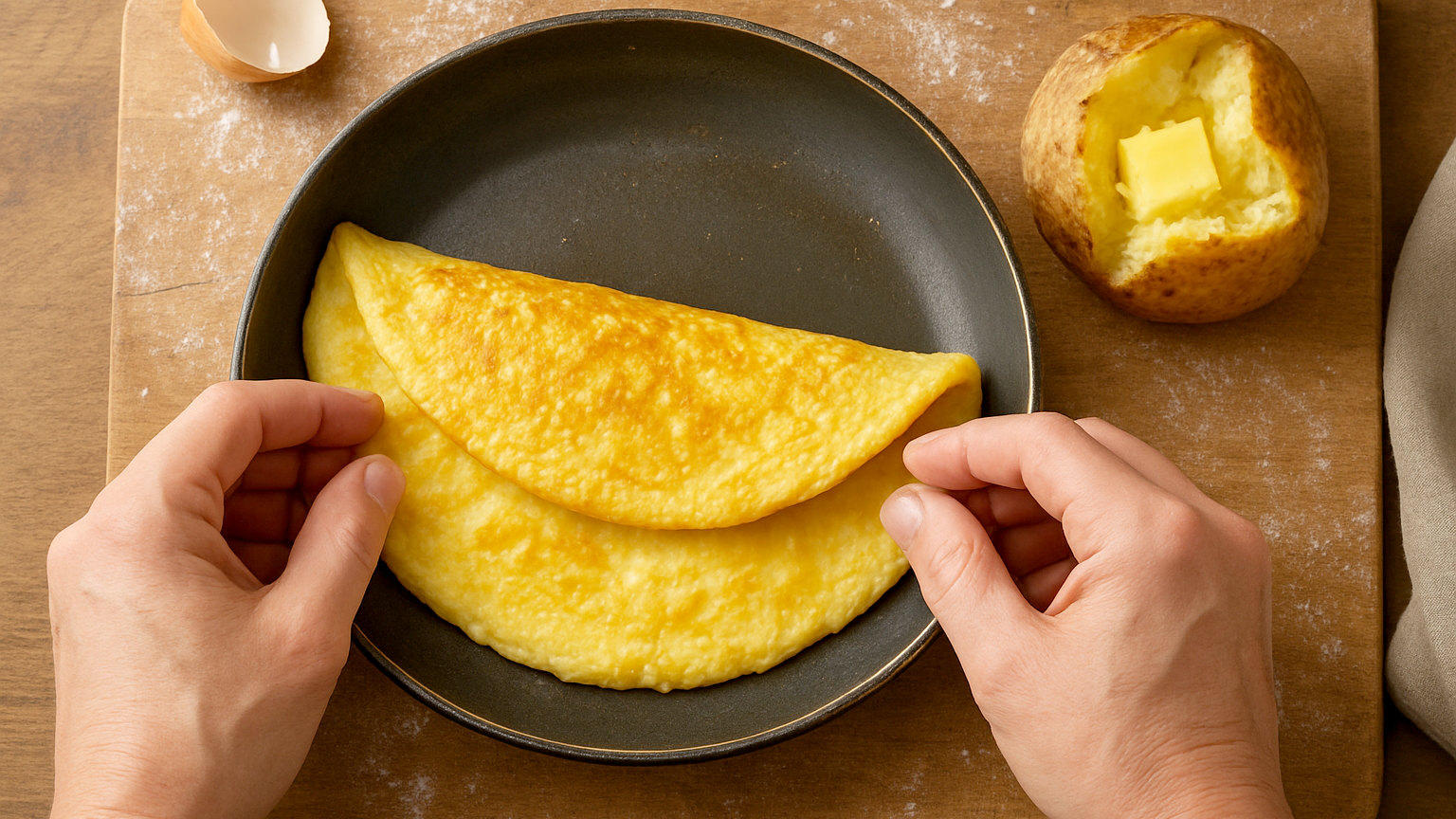
An omelette is the fastest hot meal there is and it takes about ninety seconds once the pan is hot. Almost every home omelette is overcooked, because people wait until it looks done in the pan, by which point the residual heat will carry it well past. It should come out looking slightly underdone and finish on the plate.
What do you need for 1 omelette?
- 3 eggs
- A knob of butter, about 15g
- Salt and black pepper
- 1 tablespoon of filling at most, such as grated cheese or chopped herbs
How do you make it?
- Beat the eggs with a fork until just combined, with no long strands of white left.
- Season with salt and pepper.
- Heat a 20cm non stick pan over a medium high heat until the butter foams but does not brown.
- Pour in the eggs and leave for 10 seconds.
- Stir with a fork or spatula, drawing the set edges into the middle and letting liquid run underneath.
- When it is mostly set but still glossy on top, stop stirring and let it settle for 15 seconds.
- Add the filling along the centre.
- Fold one third over, then tip the pan and roll it out onto the plate.
Take it out while the top still looks slightly wet. The eggs keep cooking for thirty seconds after they leave the pan, and an omelette that looks perfect in the pan will be dry by the time it is eaten.
How much should you beat the eggs?
Just enough to combine. Over beating incorporates air and makes the omelette puffy and slightly foamy rather than dense and silky.
A fork is better than a whisk for this reason.
What pan should you use?
A 20cm non stick pan for a three egg omelette, with sloping sides so it can be rolled out. A larger pan spreads the eggs too thin.
Keep one pan for eggs if you can, since a scratched non stick surface makes omelettes almost impossible.
Why so little filling?
An omelette is an egg dish, not a container. A tablespoon of cheese or herbs seasons it, while half a pan of vegetables prevents it folding and makes it watery.
Anything substantial should be cooked separately and served alongside, or made into a frittata instead.
Should the eggs be at room temperature?
It makes little difference over ninety seconds of cooking. What matters far more is that the pan and butter are at the right temperature.
What is the difference between French and English?
A French omelette is rolled, pale and slightly runny in the middle. An English one is flatter, cooked through and often folded in half over a filling.
Both are correct. The method above sits between the two.
Can you make it without butter?
Oil works and gives a slightly different flavour, and it is less likely to burn. Butter is traditional because it browns and adds richness.
A mixture of the two is a reasonable compromise if your pan runs hot.
Should it brown?
A French omelette should have no colour at all. An English one usually has a little, which is a matter of preference rather than error.
Burnt butter, on the other hand, is always a fault.
Are runny eggs safe?
Eggs with the British Lion mark are considered safe to eat runny or lightly cooked, including for vulnerable groups, according to Food Standards Agency advice.
Eggs without that mark should be cooked until both white and yolk are firm.
Why does it stick?
Either the pan is not non stick enough, or there was not enough butter, or the eggs went in before the butter was hot.
The butter should be foaming when the eggs arrive, which means the pan is at the right temperature.
How many eggs per omelette?
Three for a 20cm pan, which is one portion. Making a six egg omelette in a large pan is harder and the result is usually uneven.
Cook two omelettes in succession rather than one large one.
What should you serve with it?
A green salad and bread. An omelette is a complete supper and needs almost nothing else.
Worth reading next: Spanish Omelette and Other Frittatas. There is more in our Mains recipes.


