
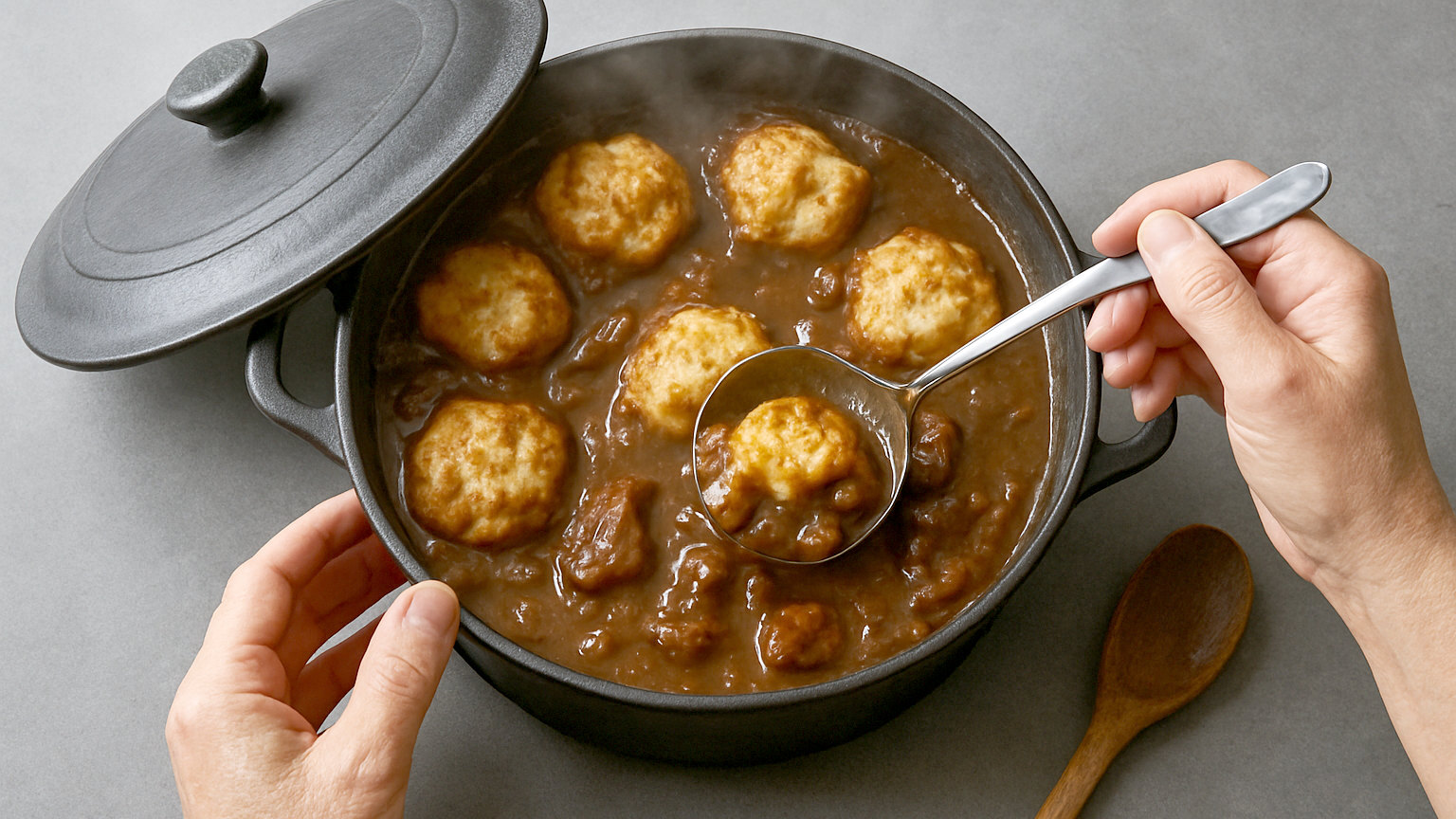
A stew is mostly self contained, so what goes with it is doing two jobs: absorbing the gravy and providing contrast. The choice of starch should follow the sauce. A thin brothy stew wants bread, a thick glossy one wants mash, and a stew with dumplings already in it wants very little at all.
What is the default?
Mashed potato and a green vegetable. It works with almost every stew in this section and it is what most British pubs would serve.
Make the mash slightly firmer than usual, since it has to hold up against a wet sauce rather than being eaten alone.
When are dumplings the answer?
When the stew is the whole meal and you want no separate side. Dumplings cook in the pot, absorb the gravy directly and need no extra pan.
Do not serve dumplings and mash together. Both are soft starches doing the same job, and the plate becomes heavy and monotonous.
What suits a thin or brothy stew?
Crusty bread, and plenty of it. A baguette or a good sourdough with butter is the right answer for anything with a lot of liquid.
Irish stew and Scotch broth both fall into this category, and soda bread is the traditional partner.
Which green vegetable works?
Something with a bit of bitterness to cut the richness. Savoy cabbage in butter, kale, spring greens or purple sprouting broccoli.
Peas are fine but add sweetness to a plate that is usually sweet enough already from the root vegetables.
Are roast potatoes appropriate?
Not really. Crisp potatoes go soft the moment gravy touches them, so the work is wasted.
Boiled new potatoes or plain mash are better vehicles, and both are less effort.
What about rice or pasta?
Neither is traditional with a British stew, though both work. Rice suits anything with a spiced or tomato based sauce.
Buttered noodles suit a beef stew well and are common in central European versions of the same dish.
Does it need something sharp?
It helps. Pickled red cabbage, a spoonful of chutney or a few cornichons cut through a long cooked sauce.
This is the element most often missing from a stew plate, and adding it makes more difference than another vegetable.
What about a salad?
A plain green salad with a sharp mustard dressing works better beside a rich stew than most people expect, and it does the same job as a pickle.
Serve it afterwards rather than alongside if the plate is already full, which is the French habit and a sensible one.
What suits a stew for a crowd?
A big dish of mash, a bowl of greens and plenty of bread, all on the table for people to help themselves. It scales far better than plated sides.
Can the potatoes go in the pot?
Yes, and it saves a pan. Add halved new potatoes or chunks of maincrop for the final 40 minutes.
They will absorb the gravy and thicken it slightly, which is a benefit rather than a problem.
What about a mash variation?
Champ with spring onions, colcannon with cabbage, or mash with mustard or horseradish stirred through. All three suit beef and lamb stews.
Celeriac mash or a mixture of potato and celeriac is lighter and suits a chicken casserole.
Does the meat change what you serve?
Beef takes the heaviest accompaniments and the sharpest pickles. Lamb suits mash and greens. Chicken and pork want something lighter, such as new potatoes or plain rice.
A vegetable or lentil stew is usually the lightest of the lot and benefits from bread and a substantial cheese on the side.
Should there be a second vegetable?
Rarely. A stew already contains vegetables, so one green thing beside it is enough and a crowded plate looks confused.
How much should you allow?
About 200g of potato per person for mash, 100g of greens, and two dumplings each. Bread is harder to overestimate.
Cool leftovers quickly, refrigerate within two hours and reheat once only until piping hot, following Food Standards Agency guidance.
For something along the same lines, see Can You Freeze a Stew?, or browse all our Mains recipes.


