
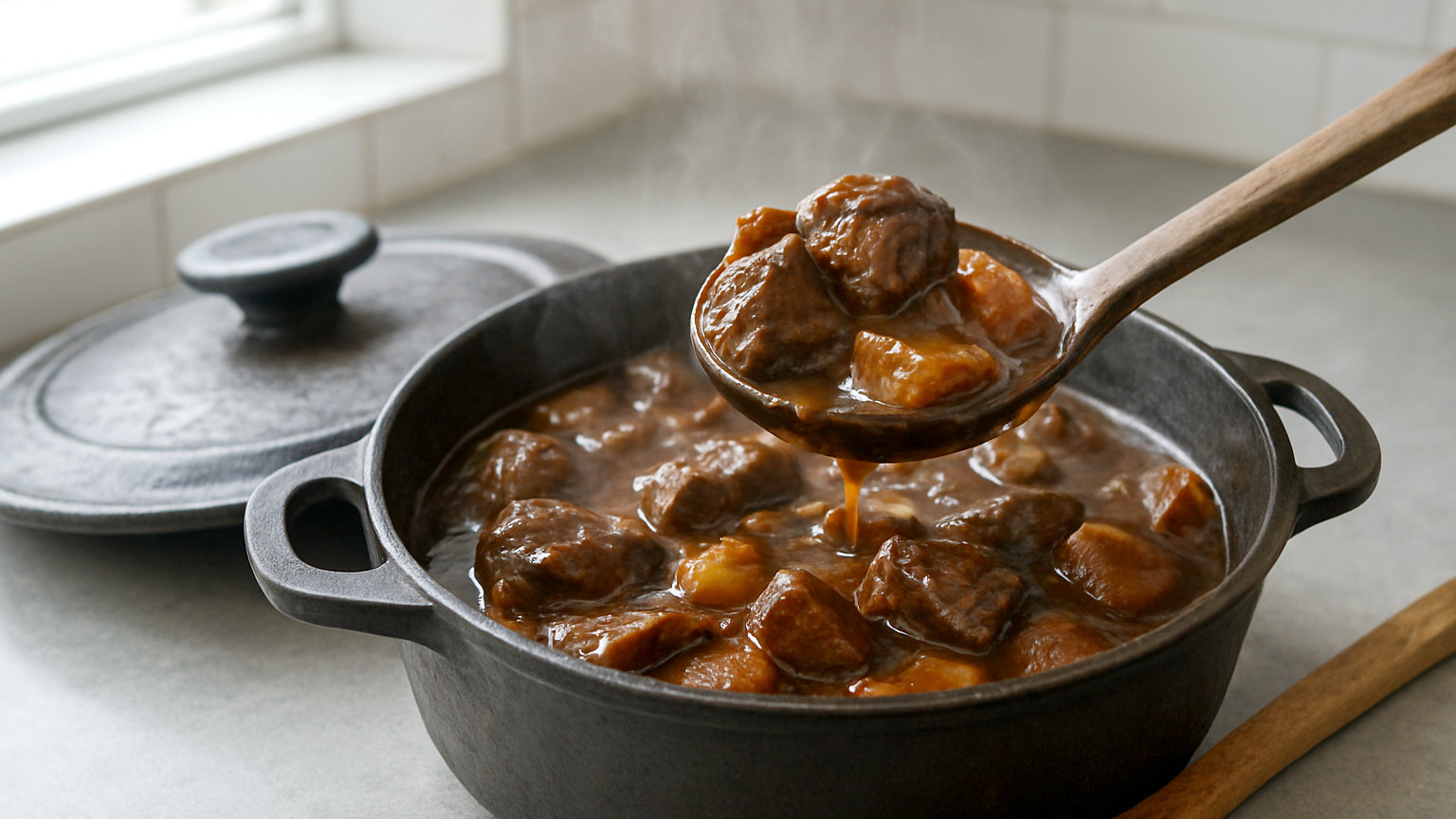
Stews are the best thing in a domestic freezer. They are cooked slowly to begin with, so a further round of freezing and reheating does them no harm, and the flavour genuinely improves. A few components behave badly, and knowing which ones lets you leave them out and add them fresh on the day.
How long does a stew keep frozen?
Three months at good quality. It remains safe for longer but the flavour flattens and the meat can dry.
Label every container with the contents and the date, since one dark stew looks much like another after a month.
How should it be cooled?
Quickly. Divide it into shallow containers rather than leaving a large pot to cool slowly, and get it into the fridge within two hours.
Never put a warm pot straight into the freezer. It raises the temperature of everything around it and cools too slowly through the range where bacteria multiply.
What does not freeze well?
Potatoes go grainy and slightly mealy. Cream and creme fraiche can split. Dumplings turn dense. Pasta and rice go soft.
Leave all of them out and add them when you reheat, which takes minutes and gives a much better result.
What freezes particularly well?
Anything based on beef shin, lamb shoulder, oxtail or shanks, where the gelatine keeps the meat moist through freezing and reheating.
Root vegetables hold up well, and pearl barley and lentils are fine.
How should it be portioned?
In the quantities you will actually use, which for most households is two portions rather than six. A large block is no help on a weeknight.
Freeze flat in bags where possible, since flat packages stack better and defrost far faster than blocks.
How do you defrost it?
Overnight in the fridge is best and safest. A large portion may need 24 hours.
Never defrost at room temperature on the worktop, in line with Food Standards Agency guidance.
Can you reheat from frozen?
Yes, gently in a covered pan with a splash of stock, stirring often, or in a covered dish at 170C fan for about an hour.
It must reach 75C throughout and be piping hot, with no cold spots in the middle. Stir halfway to even it out.
What about dumplings and toppings?
Freeze the stew plain and add dumplings, mash or a pastry lid on the day. All three suffer from freezing and all three take only minutes to add.
Uncooked dumpling dough freezes separately for a month and goes onto the reheated stew from frozen.
Can you refreeze it?
No. A stew that has been frozen, defrosted and reheated should not go back in the freezer.
You can freeze raw meat, cook it and then freeze the cooked dish, which is a different sequence and is fine.
Should you freeze it with the fat on?
Chill it first and lift the set fat off in a sheet, which keeps better and gives a cleaner result on reheating.
Keep the fat if it came from beef or lamb, since it is excellent for roasting potatoes.
Does it taste better afterwards?
Usually. The same processes that improve a stew overnight in the fridge continue during freezing, as flavours distribute and the sauce thickens.
Check the seasoning after reheating, since cold dulls salt and it often needs a little more.
Is it worth cooking a double batch?
Almost always. A stew for six takes barely longer to prepare than a stew for three, and the oven is on either way.
Browning is the only step that takes proportionally longer, since it has to be done in batches whatever the quantity.
Can you freeze the raw ingredients instead?
You can, though there is little advantage. Cooked stew takes up less space than raw meat and vegetables and needs no work on the day.
What should you freeze it in?
Rigid containers or heavy freezer bags. Leave a couple of centimetres of headroom, since liquid expands as it freezes.
Foil trays are useful if the stew is going to be reheated in the oven under a pastry lid or a mash topping.
See also What Do You Serve With a Stew?, or browse more Mains recipes.


