
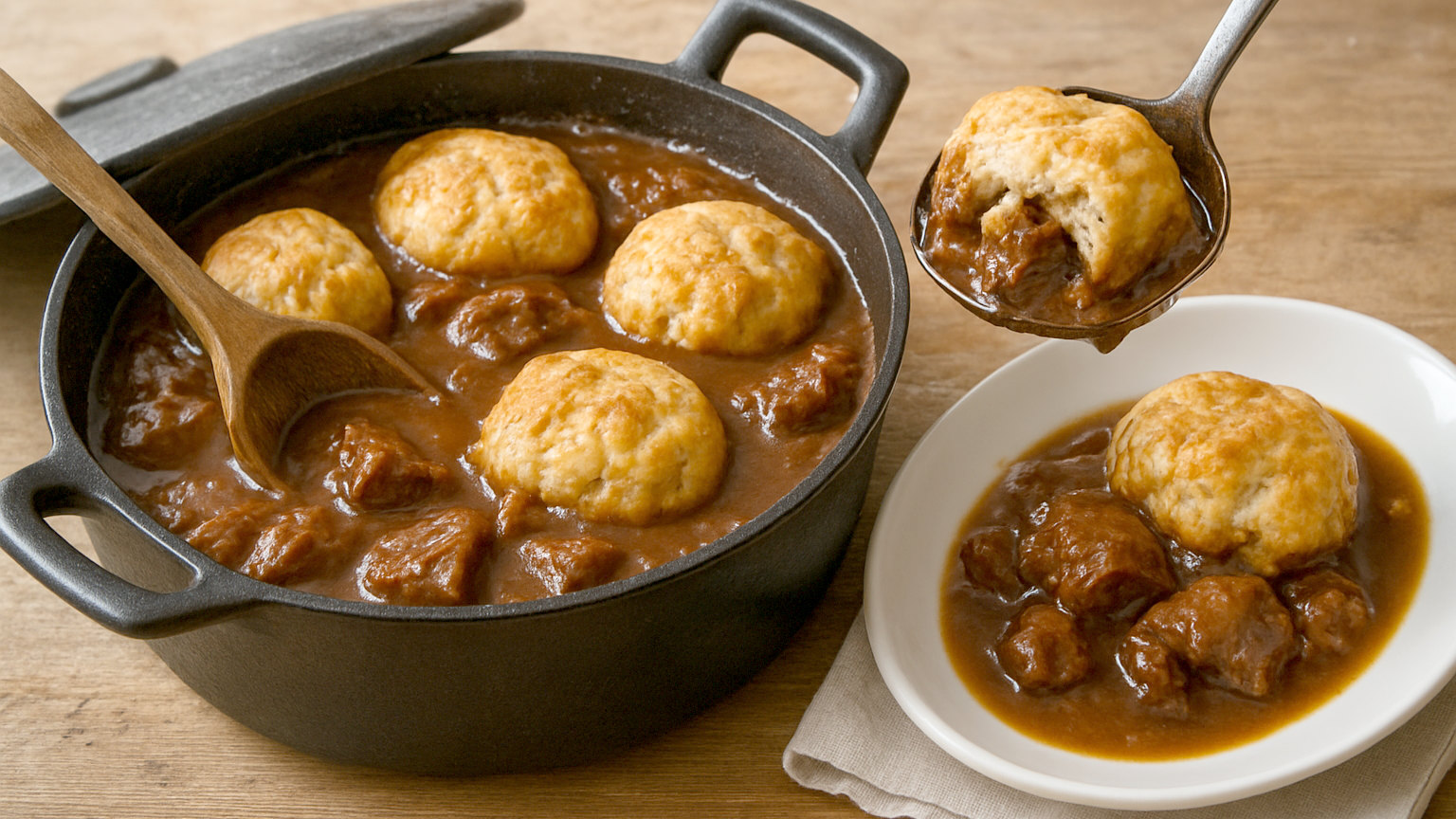
Suet dumplings are two ingredients and about four minutes of work, and they turn a stew into a full meal without any additional starch. They also go wrong in one predictable way, which is that they come out dense and heavy. That is almost always a handling problem rather than a recipe problem, and it is easily avoided.
What do you need for 8 dumplings?
- 150g self raising flour
- 75g shredded suet
- Half a teaspoon of salt
- Plenty of black pepper
- 2 tablespoons chopped parsley or thyme, optional
- About 100ml cold water
How do you make them?
- Mix the flour, suet, salt, pepper and herbs in a bowl.
- Add the water a little at a time, stirring with a knife, until it just comes together.
- Bring it into a ball with as little handling as possible.
- Divide into 8 and roll each lightly into a ball.
- Sit them on the surface of the simmering stew, spaced apart.
- Cover with a tight lid and cook for 20 to 25 minutes.
- Do not lift the lid for the first 15 minutes.
Handle the dough as little as possible. Kneading develops the gluten and the dumplings turn rubbery, so a rough, slightly untidy ball is exactly what you want.
What is the ratio?
Two parts self raising flour to one part suet by weight, with enough cold water to bind. Once you know that you do not need a recipe.
If you only have plain flour, add two teaspoons of baking powder per 150g.
Why must they be covered?
They steam rather than boil, and the trapped steam is what makes them rise and stay light. An uncovered pot gives you dry, cracked tops and dense middles.
Lifting the lid early releases the steam and they collapse, which is the same principle as a Yorkshire pudding.
Should they sit in the liquid?
Only partly. They should rest on top of the stew with roughly half of each dumpling above the surface.
Fully submerged dumplings become soggy and can disintegrate into the gravy.
What can you use instead of suet?
Vegetarian suet is a straight substitute by weight and widely available. Cold butter or vegetable shortening grated in works, giving a slightly richer, softer dumpling.
Frozen butter grated on the coarse side of a box grater is the best of the substitutes.
What can you add to them?
Chopped parsley, thyme or chives, a teaspoon of English mustard powder, grated horseradish, or grated cheddar. Mustard suits beef particularly well.
Keep additions dry, since anything wet changes how much water the dough needs.
Why are they heavy?
Too much water, too much handling, or the lid came off. All three are common and all three are avoidable.
Add the water gradually and stop as soon as the dough holds together, even if it looks slightly dry in places.
Can they be browned?
Yes. Take the lid off for the final five minutes and raise the oven to 200C fan, which crisps the tops while the bases stay soft in the gravy.
Some cooks prefer them pale throughout, which is the more traditional finish.
Can they be made ahead?
Mix the dry ingredients up to a week ahead and keep them in a jar. Add the water only when the stew is nearly ready.
Made up dough can wait an hour in the fridge but no longer, since the raising agent starts working as soon as the water goes in.
How big should they be?
About the size of a walnut before cooking, since they roughly double. Eight from this quantity is right for six people alongside a substantial stew.
Larger dumplings need 30 minutes rather than 20 and can stay doughy in the middle.
Do they freeze?
Uncooked dumplings freeze for a month and go straight onto a simmering stew from frozen with an extra 8 minutes.
Cooked dumplings do not freeze well and go dense on reheating, so make only as many as you need.
If that was useful, Beef Stew and Dumplings covers related ground, and there is plenty more in Mains recipes.


