
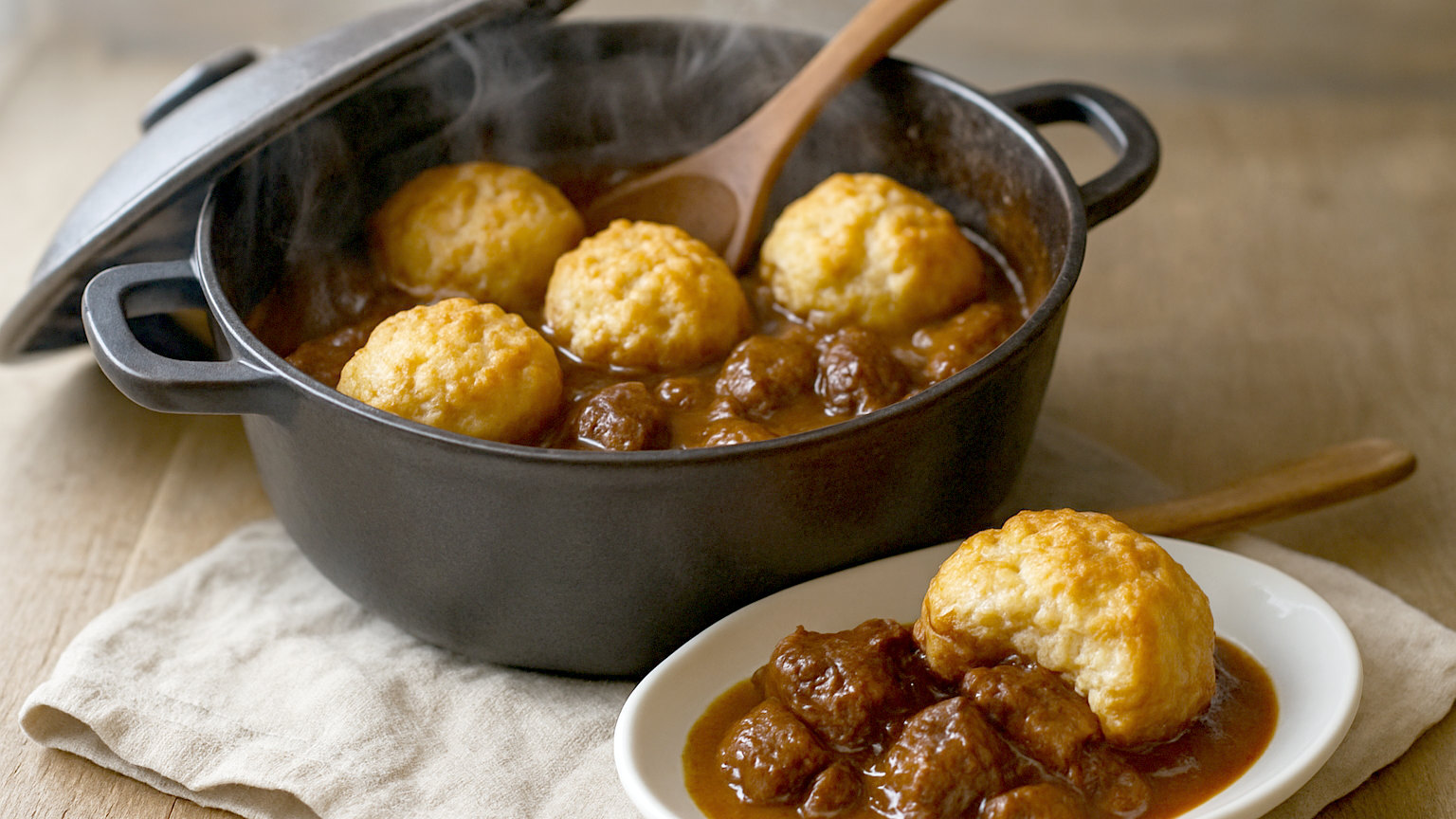
Beef stew is a dish where almost all the quality comes from two decisions made at the start: which cut you buy, and how hard you brown it. After that it is a matter of leaving it alone for three hours at a low temperature. The dumplings are a twenty minute job at the end and they change it from a good stew into a proper dinner.
What do you need for 6 people?
- 1kg beef shin or chuck, cut into 4cm cubes
- 3 tablespoons plain flour, well seasoned
- 2 tablespoons beef dripping
- 2 onions, roughly chopped
- 3 carrots and 2 sticks of celery, cut into chunks
- 2 tablespoons tomato puree
- 300ml stout or red wine
- 600ml beef stock
- 2 bay leaves and 4 sprigs of thyme
- 1 tablespoon Worcestershire sauce
How do you make it?
- Heat the oven to 150C fan, 170C conventional, gas mark 3.
- Toss the beef in the seasoned flour.
- Brown it hard in the dripping in three or four batches, setting each aside.
- Soften the onions, carrots and celery in the same pot for 10 minutes.
- Stir in the tomato puree and cook it out for a minute.
- Pour in the stout and let it bubble down by half, scraping the base clean.
- Return the beef, add the stock, herbs and Worcestershire sauce.
- Cover and cook in the oven for 3 hours.
- Add the dumplings, cover and cook for a further 20 to 25 minutes.
Brown the beef in batches with space around each piece. A crowded pan drops in temperature and the meat steams grey in its own juices, and browning is where most of the savoury depth in the finished stew comes from.
Which cut should you use?
Shin gives the best result, since it is full of collagen that turns to gelatine and thickens the gravy without any help. Chuck and blade are the next best.
Avoid anything sold as lean stewing steak, which is usually cut from leaner muscles and stays dry however long it cooks.
Why cook it in the oven?
The heat surrounds the pot evenly, so nothing catches on the base and the temperature stays steady without attention.
On the hob it will work, but it needs the lowest possible flame, a heavy pan and an occasional stir.
When do the dumplings go in?
For the last 20 to 25 minutes, sitting on the surface with the lid firmly on. They steam rather than boil, which is what makes them light.
Leave the lid off and the tops dry out and go hard. Some cooks remove the lid for the final five minutes to brown them, which is a matter of preference.
What can you use instead of stout?
Red wine, brown ale, or extra stock with a tablespoon of balsamic vinegar. Strong black tea adds tannin without sweetness and is an old substitute.
Whatever you use, reduce it hard before the stock goes in so the alcohol and raw acidity cook off.
How do you know it is done?
The beef should give way completely under a fork with no resistance at all. If it is still firm at three hours it needs longer, not a hotter oven.
Raising the temperature dries the meat out without speeding up the collagen breakdown.
Can it be made ahead?
It is better for it. Make the stew a day ahead, cool and refrigerate, then reheat and add fresh dumplings.
It keeps three days in the fridge and freezes for three months without the dumplings, which are best made fresh.
Can it be cooked in a slow cooker?
Yes, but brown the meat and vegetables in a pan first, since a slow cooker cannot brown anything. Use two thirds of the liquid, as almost nothing evaporates.
Eight hours on low. Add the dumplings for the final 45 minutes with the lid on.
What should you serve with it?
Very little, since the dumplings are the starch. Buttered greens or a plain green vegetable, and bread for the gravy.
Cool leftovers quickly, refrigerate within two hours and reheat once only until piping hot, in line with Food Standards Agency guidance.
Next, try Suet Dumplings for a Stew, or see the rest of our Mains recipes.


