
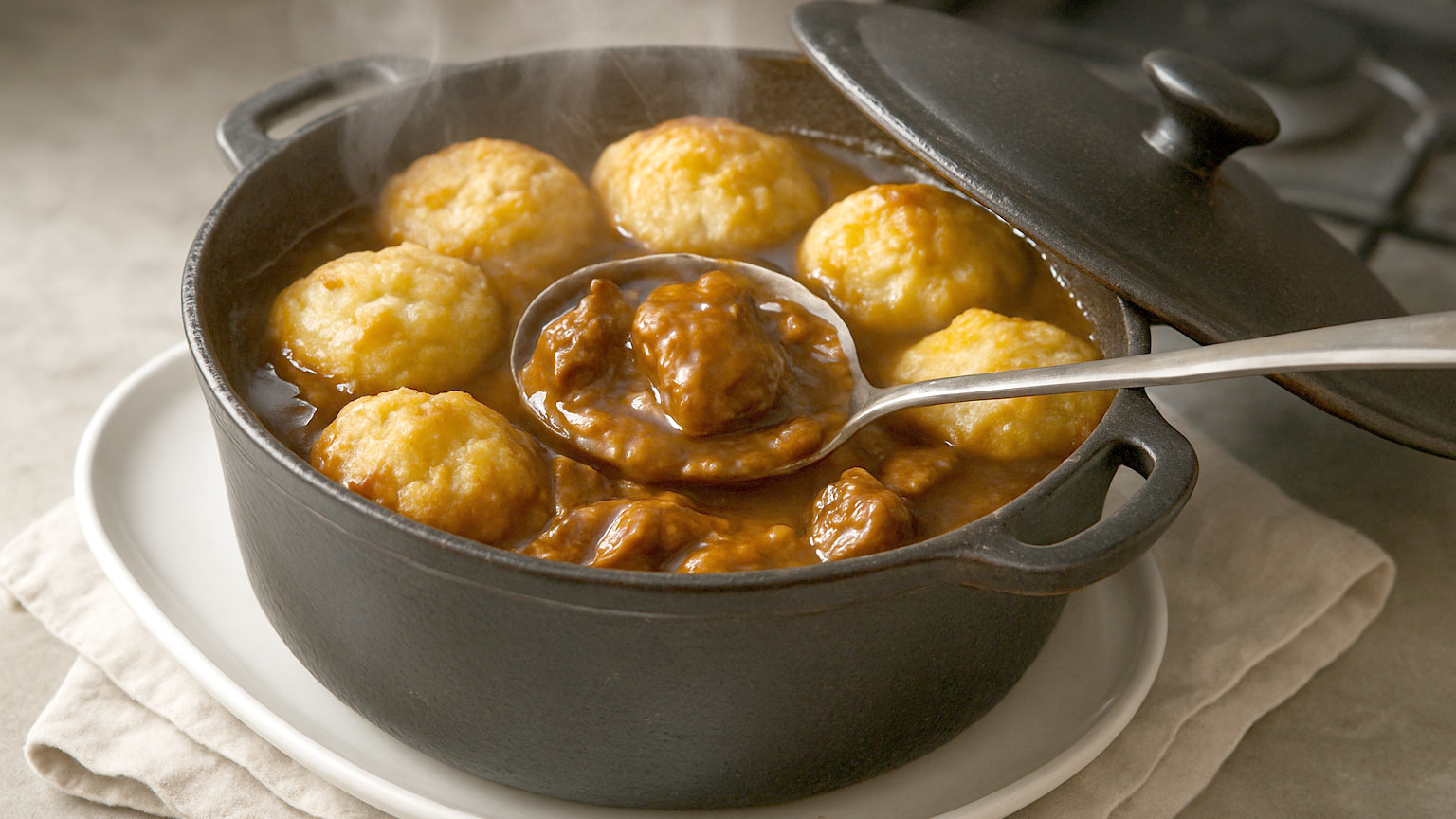
The same stew can be cooked three ways and the results differ more than you might expect. The oven surrounds the pot with even heat and needs no attention. A slow cooker holds a low temperature for many hours but concentrates nothing. The hob is the least reliable, since all the heat comes from below. What none of them does is brown the meat.
Why is the oven best?
Heat comes from all sides, so the liquid never boils hard at the base and nothing catches. The temperature is steady and no stirring is needed.
150C fan in a covered pot gives a bare simmer, which is exactly what braising wants.
What does a slow cooker do differently?
It holds a low steady temperature for eight hours or more with no supervision, which suits a working day. It is genuinely good at the tenderising part of the job.
Almost nothing evaporates from a sealed slow cooker. That means an oven recipe transferred directly will produce a watery stew, so use about two thirds of the liquid.
How do the timings compare?
- Oven at 150C fan: 3 hours for beef, 2 and a half for lamb, 1 hour for chicken thighs
- Slow cooker on low: 8 hours for beef, 7 for lamb, 5 for chicken
- Slow cooker on high: 5 hours for beef, 4 for lamb, 3 for chicken
- Hob on the lowest flame: 3 hours for beef, with stirring
Why must you brown separately?
No slow cooker gets hot enough or dry enough to brown meat, and a covered pot in the oven does not either. Browning happens in a frying pan or in the casserole on the hob before anything else.
Skipping it saves five minutes of washing up and costs a good deal of flavour.
What is wrong with the hob?
All the heat arrives at the base, so the bottom of the pot is much hotter than the top. Without regular stirring the stew catches and scorches.
A heavy cast iron pot and the lowest possible flame make it workable, and a heat diffuser helps considerably.
How much liquid does each need?
In the oven or on the hob, enough to come two thirds up the meat. In a slow cooker, about two thirds of that again.
If a slow cooker stew comes out thin, lift the meat out and reduce the sauce hard in a wide pan.
Which gives the best flavour?
The oven, because some evaporation concentrates the sauce as it cooks. A slow cooker produces tender meat in a sauce that has not concentrated at all.
The gap closes almost entirely if you reduce the slow cooker liquid afterwards.
Can you use a pressure cooker?
Yes, and it does in 45 minutes what the oven takes three hours to achieve. The texture is very slightly different and the sauce needs reducing afterwards.
It is the right tool when you have forgotten to start dinner.
Does the method change the liquid you add?
It changes it more than anything else. Oven and hob recipes assume evaporation, so a slow cooker version of the same dish needs roughly a third less liquid.
Does the pot matter?
A heavy cast iron casserole with a tight lid is the best of all, since it holds heat evenly and seals well.
If your lid is loose, lay baking paper directly on the stew before putting it on.
Can you start on the hob and finish in the oven?
That is the standard approach and the best of both. Brown the meat and vegetables and reduce the wine on the hob, then put the lid on and move the whole pot into the oven.
It needs a casserole that is safe on both, which most cast iron and enamelled pots are.
Which should you use?
The oven on a weekend, the slow cooker on a weekday, and the hob only if you have neither. All three benefit from being made a day ahead.
Cool leftovers quickly, refrigerate within two hours and reheat once only until piping hot, following Food Standards Agency guidance.
If that was useful, How to Thicken a Stew covers related ground, and there is plenty more in Mains recipes.


