
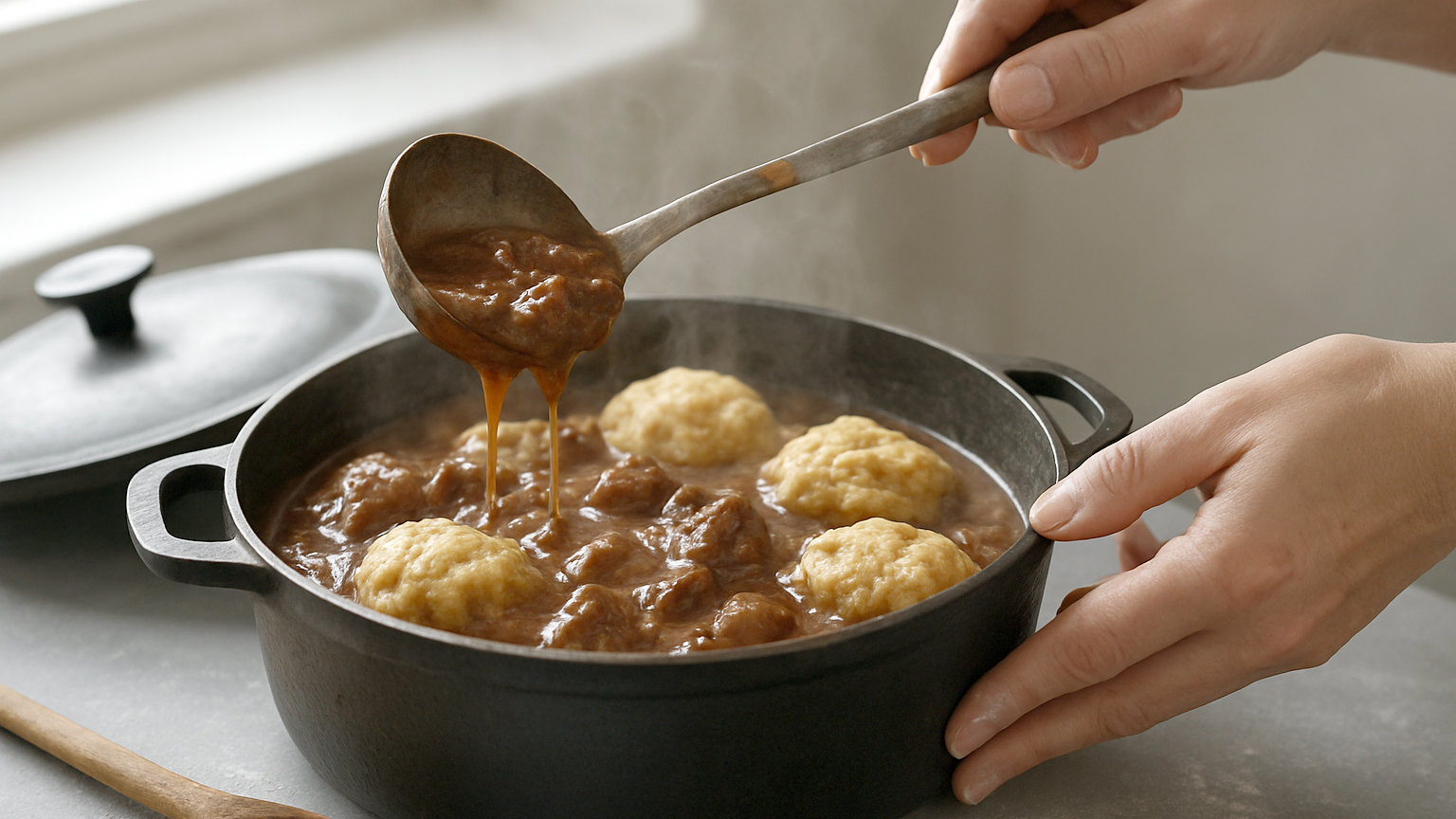
A thin stew is a common complaint and there are five reliable fixes, each suited to a different moment. Some have to be decided at the start and some can rescue a pot at the end. The best of them, reducing the liquid, is also the one that takes the longest, which is why the others exist.
Why is the stew thin?
Usually too much liquid at the start, or a lid that sealed too well so nothing evaporated. A lean cut with little collagen also leaves the sauce watery, since there is no gelatine to give it body.
Slow cookers are particularly prone to this, because almost nothing evaporates from a sealed pot.
Should you just reduce it?
It gives the best result, since it concentrates flavour as well as thickening. Lift out the meat, bring the liquid to a hard boil in a wide pan and let it reduce by a third.
A wide pan reduces far faster than a deep one. Surface area is what matters, so a frying pan will do in ten minutes what a casserole takes half an hour to achieve.
Does flouring the meat work?
Yes, and it is the traditional method. Tossing the meat in seasoned flour before browning thickens the stew as it cooks and helps the meat colour.
Use about 3 tablespoons per kilo of meat. This has to be decided at the start, since it cannot be added later.
What is beurre manie?
Equal parts soft butter and plain flour mashed together into a paste, whisked into a simmering stew a teaspoon at a time.
It thickens within two minutes and leaves no floury taste because the flour is coated in fat. It is the best late fix and the one professional kitchens use.
How do you use cornflour?
Mix a tablespoon with two tablespoons of cold water into a smooth slurry, then stir it into the simmering stew and cook for two minutes.
Never add cornflour dry, which produces lumps that will not disperse. It gives a slightly glossy finish that some people dislike.
Can potato thicken it?
Very well, and it is the traditional method in Irish stew. Mash a few of the cooked potatoes into the liquid, or grate a raw potato in for the last thirty minutes.
Instant mashed potato powder is an unglamorous but genuinely effective emergency thickener.
What about pearl barley or lentils?
Both release starch as they cook and thicken the stew while adding substance. A handful of barley added at the start does both jobs.
Red lentils dissolve completely and thicken without being visible, which is useful in a vegetable stew.
Does the cut of meat affect it?
Considerably. Shin, oxtail and shanks release gelatine that thickens the sauce and gives it a glossy body that flour cannot replicate.
A stew made with lean meat will always need help, however long it cooks.
Does a roux work?
It does, though it is awkward once the stew is made. Cook equal weights of butter and flour in a separate pan, add a ladle of the hot stew liquid to loosen it, then stir it back in.
Beurre manie is the same idea without the cooking, and it is easier at this stage.
What if you have thickened it too much?
Add hot stock a little at a time rather than water, and check the seasoning again afterwards since you will have diluted it.
Does gravy browning help?
It colours rather than thickens, so it does nothing for consistency. A pale stew usually needs better browning at the start rather than colouring at the end.
A teaspoon of Marmite or a splash of soy sauce adds both colour and savouriness, which gravy browning does not.
Which should you choose?
Flour the meat at the start as a matter of routine. If it is still thin at the end, reduce it if you have time and use beurre manie if you do not.
Cool leftovers quickly, refrigerate within two hours and reheat once only until piping hot, in line with Food Standards Agency guidance.
For something along the same lines, see Slow Cooker, Oven or Hob for a Stew?, or browse all our Mains recipes.


