
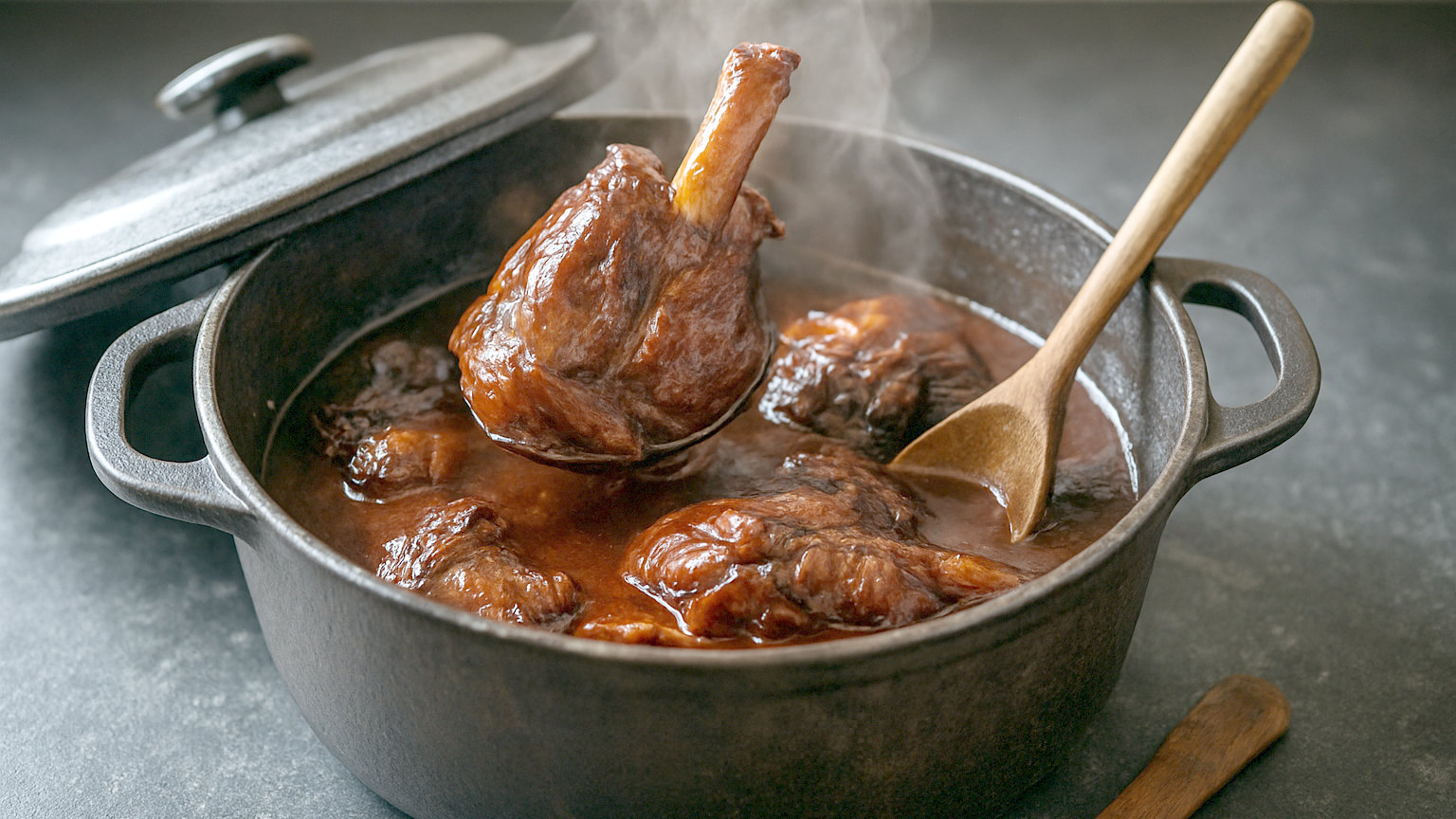
Lamb shanks are among the cheapest cuts on the counter and they produce the most impressive looking plate of anything in this section. They are also close to impossible to get wrong, since three hours of gentle braising will render even a neglected shank tender. The only real work is browning them properly and reducing the sauce at the end.
What do you need for 4 people?
- 4 lamb shanks, about 400g each
- 2 tablespoons plain flour, seasoned
- 3 tablespoons olive oil
- 2 onions, 3 carrots and 2 sticks of celery, chopped
- 1 whole head of garlic, halved across
- 2 tablespoons tomato puree
- 400ml red wine
- 600ml lamb or chicken stock
- 4 sprigs of rosemary and 2 bay leaves
- 2 anchovy fillets, optional
How do you make them?
- Heat the oven to 150C fan, 170C conventional, gas mark 3.
- Dust the shanks in seasoned flour and brown them hard on all sides in the oil, two at a time.
- Set aside and soften the vegetables in the same pot for 10 minutes.
- Stir in the tomato puree and the anchovies if using, and cook for a minute.
- Pour in the wine and reduce by half, scraping the base.
- Return the shanks, add the stock, garlic and herbs. The liquid should come two thirds up.
- Cover tightly and cook for 3 hours, turning once at the halfway point.
- Lift out the shanks, strain the sauce and reduce it hard for 10 minutes.
Turn them once halfway through. The part of the shank above the liquid cooks differently from the part below it, and a single turn is the difference between evenly tender meat and one dry side.
Why do the anchovies go in?
They dissolve completely and leave no fishiness at all, contributing a deep savouriness that lifts the whole sauce. It is an old English trick with lamb.
A teaspoon of Worcestershire sauce or a small spoonful of miso does a similar job if anchovies are unwelcome.
What can you use instead of red wine?
Extra stock with two tablespoons of balsamic vinegar, or a bottle of dark ale. Both give the acidity and depth the sauce needs.
Reduce whatever you use by half before the stock goes in, so nothing tastes raw.
Why strain and reduce the sauce?
After three hours the vegetables have given everything up and are mushy, and the liquid is thin. Straining and reducing turns it into something glossy that coats the meat.
Press the vegetables through the sieve rather than discarding them, which thickens the sauce naturally.
Can you cook them uncovered?
Only for the last thirty minutes, to reduce the sauce and colour the tops. Uncovered from the start and the exposed meat dries out before it is tender.
How do you know they are done?
The meat should be visibly shrinking back from the bone and give way completely under a fork.
If it is still clinging at three hours, give it another thirty minutes rather than raising the heat.
Can it be made ahead?
It is better for it. Cook a day ahead, cool and refrigerate, then lift off the set fat and reheat gently in the sauce.
It keeps three days and freezes for three months, sauce and all.
Can you use a slow cooker?
Yes. Brown everything in a pan first, then give the shanks 8 hours on low with two thirds of the liquid, since nothing evaporates.
Reduce the sauce hard in a pan afterwards, which the slow cooker cannot do.
How much do you need per person?
One shank each, which sounds generous until you allow for the bone. A 400g shank yields roughly 200g of meat, which is about right.
Very large shanks can be shared, though most people manage a whole one.
What should you serve with them?
Mashed potato, which is the right vehicle for the sauce, and a green vegetable. Creamed leeks or buttered cabbage both work.
Cool leftovers quickly, refrigerate within two hours and reheat once only until piping hot, following Food Standards Agency guidance.
Next, try Which Cut of Beef Is Best for Stewing?, or see the rest of our Mains recipes.


